

Overview

The Operations, Supply Chain Management and Quantitative Methods (OSCQM) department at SPJIMR focuses on the design, management and transformation of operating systems and supply networks that enable organisations to create and deliver value. The department brings together operations strategy, supply chain management, analytics and quantitative decision-making to address complex challenges across manufacturing, services, digital platforms, healthcare and developmental contexts.

Across programmes, the department equips participants to understand operating systems, analyse complex trade-offs and use data and technology to make better decisions and design better processes and supply networks.
Strategic focus areas


The department’s strategic focus areas integrate faculty research, industry collaboration, and emerging managerial challenges through student projects, live industry engagements, internships, and Management Development Programmes (MDPs)

Demand forecasting using machine learning

Apply forecasting methods and machine-learning approaches to identify demand patterns, respond to uncertainty, and support decisions related to inventory, capacity and resource allocation.

Supply chain planning

Coordinate demand, supply, production, capacity and inventory decisions across interconnected supply networks to improve responsiveness, resilience, and operational performance.

Warehousing

Examine the role of warehousing in inventory positioning, order fulfilment and logistics, including decisions concerning storage, handling, capacity, productivity, and service levels.

Platform operations

Understand how digital platforms coordinate participants, transactions, information and service delivery while managing scale, quality, fulfilment, and operational complexity.

Procurement and strategic sourcing

Address supplier selection, strategic sourcing, commercial decision-making, supplier relationships, risk and sustainability to strengthen long-term supply performance.

Strategic focus area for research are Sustainability supply chain and Tech-enabled supply chain planning

Faculty research across the department can be viewed through seven interconnected domains

Domain Topics

AI, forecasting and decision sciences
Machine learning, demand forecasting, time-series analysis, optimisation, simulation, probability models, multi-criteria decision-making

Supply chain strategy and resilience
Planning, inventory, coordination, network design, resilience, risk, agility, performance measurement

Logistics, warehousing and fulfilment
Warehouse design, logistics, transportation, distribution, e-commerce fulfilment, perishable supply chains

Digital and platform operations
Platforms, marketplaces, sharing economy, quick commerce, D2C, dynamic pricing, digital supply chains

Healthcare and service operations
Healthcare supply chains, transplantation systems, insurance, service design, service quality and delivery

Sustainable and responsible supply chains
Circular economy, responsible sourcing, reverse logistics, waste management, sustainability and supply chain transparency

Developmental and inclusive supply chains
Agriculture, farmer ecosystems, microenterprises, financial inclusion, livelihoods and inclusive supply networks

Faculty

Curriculum

The department’s curriculum develops a strong foundation in operations and quantitative decision-making before allowing participants to explore specialised areas in supply chain management, analytics, technology, and sector-specific operations. Learning can combine conceptual frameworks, cases, quantitative models, simulations, data analysis, and application to live business problems.

Topic Courses offered

Operations and process excellence
Operations Management; Operations Strategy; Service Operations Management; Operational Excellence through Simulation; Operations and Supply Chain Strategy & Design; Strategy Implementation – Daily Work Management, Policy Deployment and Control Systems; Project & Quality Management

Supply chain planning and analytics
Supply Chain Planning & Coordination; Supply Chain Customer Analytics; Advanced Forecasting and Inventory Planning; Supply Chain Operations and Planning; Quantitative Models for Supply Chain Management

Logistics and fulfilment
Logistics Management; Logistics & Fulfilment in E-Business; Fashion & Lifestyle Supply Chain

Procurement, cost and commercial SCM
Procurement & Strategic Sourcing; Commercial Aspects of Supply Chain Management; Strategic Cost & Profitability Management

Supply chain strategy, integration and simulation
Supply Chain Practice & Simulation; Integrated Business Planning with The Fresh Connection; Platforms and Technology in Operations

Innovation and sustainability
Innovation in Services & Supply Chain Management; Sustainable Supply Chain to Sustainable Business

Statistics and quantitative methods
Basics of Statistics; Quantitative Methods – I; Quantitative Methods – II

Decision and research methods
Data Driven Decision Making; Decision Science; Qualitative Research & Statistical Literacy

Conferences and workshops

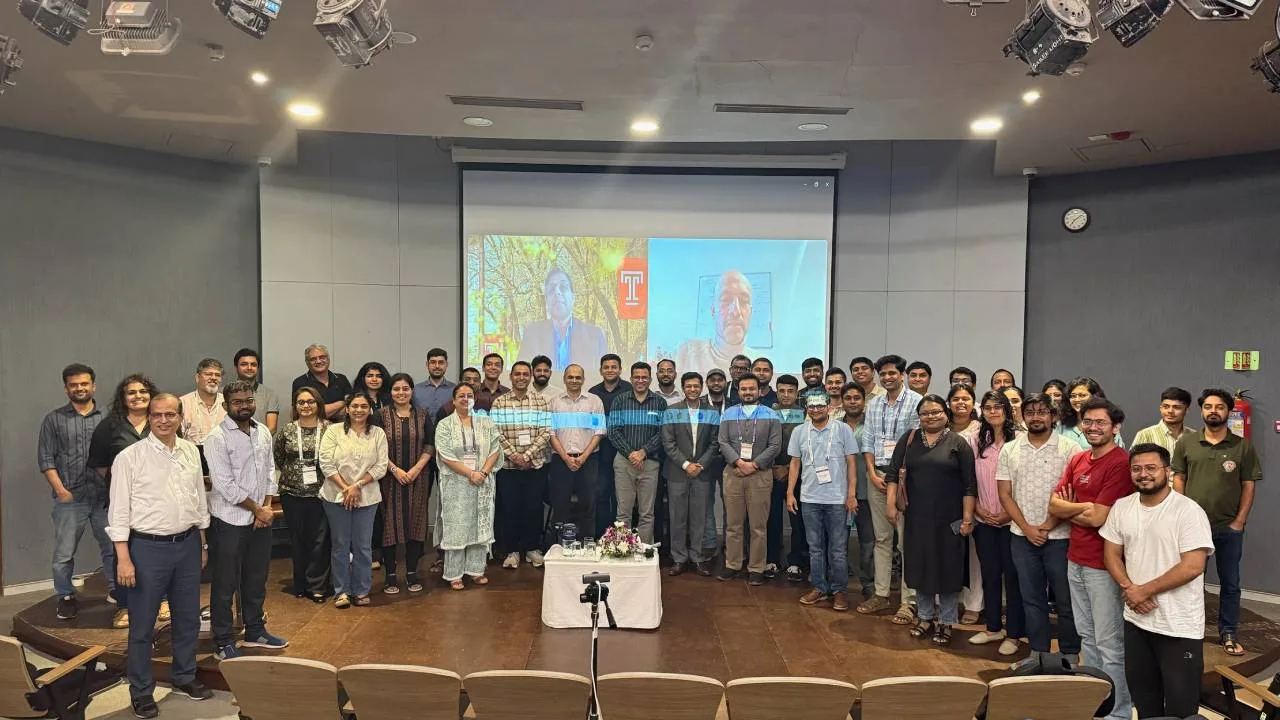
SPJIMR conducts multidisciplinary research conferences, academia-industry conclaves, paper development workshops, faculty development programmes and seminars as a natural extension of its commitment to responsible, impact-driven knowledge creation. These platforms bring together leading scholars, industry practitioners, policymakers, and emerging researchers to exchange diverse perspectives, challenge existing paradigms, and co-create solutions to complex real-world problems.

Upcoming SOAR 2027

SOAR 2027

Summer School in Operations and Analytics Research

  • Workshop dates 12 – 16 April 2027

Submissions open Read more

Past Journal of Supply Chain Management

Journal of Supply Chain Management

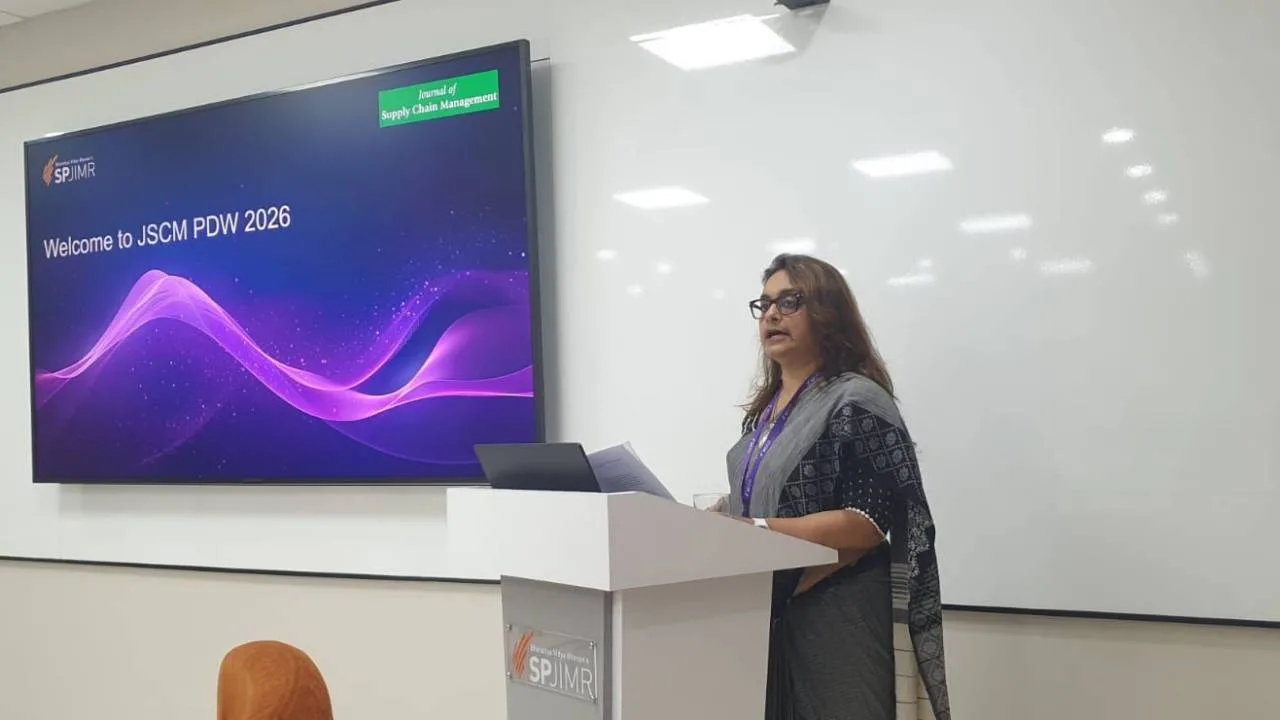
JSCM Paper Development Workshop 2026

  • Dates 6 – 7 July 2026

Read more

Past Summer School in Operations and Analytics Research 2026

Summer School in Operations and Analytics Research 2026

Game theory and laboratory experiments

  • Dates 6 – 10 April 2026

Read more

Doctoral alumni


AppLy Now