






Development work is often driven by a genuine desire to create positive change. Yet, anyone who has worked closely with communities knows that good intentions alone do not guarantee meaningful outcomes. Even well-designed interventions, backed by funding and committed teams, may not achieve the desired impact if they fail to account for the realities in which people live and work.
This is because development challenges are rarely straightforward. They are shaped by interconnected systems, human behaviour, institutional structures and local contexts. Addressing these challenges requires more than technical expertise. It requires development managers who can understand complexity, work with people and lead change thoughtfully.
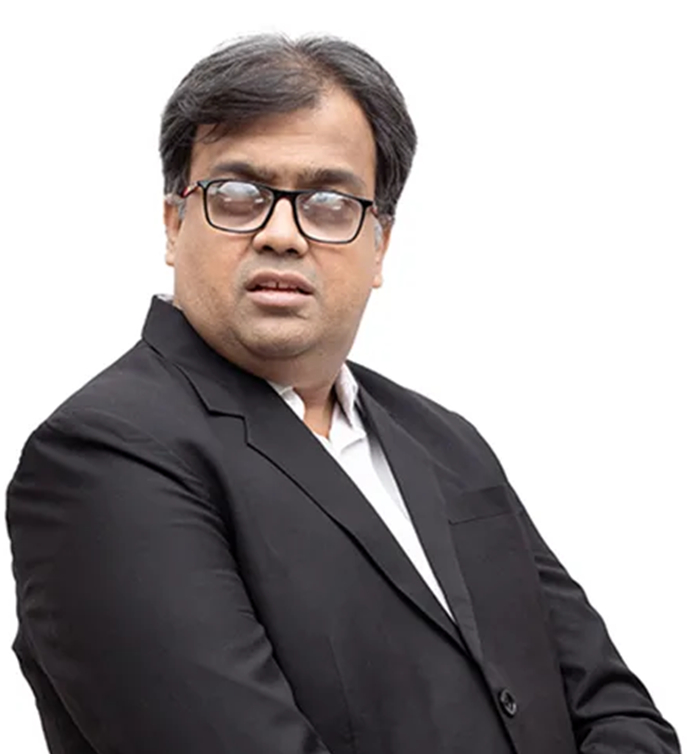
At the Post Graduate Programme in Development Management (PGPDM) at S.P. Jain Institute of Management & Research (SPJIMR), these ideas are central to the learning experience. Over the past ten batches, I have had the opportunity to teach participants across different courses and have seen how theory, reflection, and practical application come together to prepare professionals for the realities of development work.
Understanding why change is difficult
One of the most important lessons for development managers is that social challenges rarely have simple solutions. It is easy to assume that increasing resources or expanding infrastructure will automatically solve a problem. In practice, however, development outcomes are influenced by multiple factors that interact with one another.
For example, adding more roads does not necessarily reduce traffic congestion. Building more schools does not automatically improve student attendance. Constructing toilets does not guarantee that people will use them.
These examples illustrate an important reality: lasting change requires understanding the systems within which people make decisions. Development managers must therefore move beyond looking at isolated problems and instead examine the relationships, incentives and behaviours that shape outcomes.
Systems thinking helps us ask better questions
This is why systems thinking forms an important part of my teaching at PGPDM.
Rather than looking for quick solutions, systems thinking encourages participants to ask deeper questions. Why does a particular intervention succeed in one context but not another? What assumptions are we making? Which factors are influencing the outcome, even if they are not immediately visible?
These discussions become especially meaningful because participants bring their own professional experiences into the classroom. Many are already managing projects, working with communities or leading initiatives within their organisations. As they connect management concepts with their own experiences, the classroom becomes a space where theory and practice continuously inform one another.
The result is not simply a better understanding of management frameworks, but a richer appreciation of how development challenges unfold in the real world.
Leadership begins with understanding yourself
Creating change in communities begins with leading oneself.
One of the courses I developed at PGPDM is the Personal Exploration and Empowerment Lab (PUL). The purpose of this experiential learning journey is to give participants an opportunity to better understand themselves, their strengths, their behaviours and the ways in which they respond to different situations.
Self-awareness is an essential foundation for leadership. Before professionals can guide teams, influence organisations or work effectively with communities, they need to recognise how they approach challenges, interact with others and exercise their own influence.
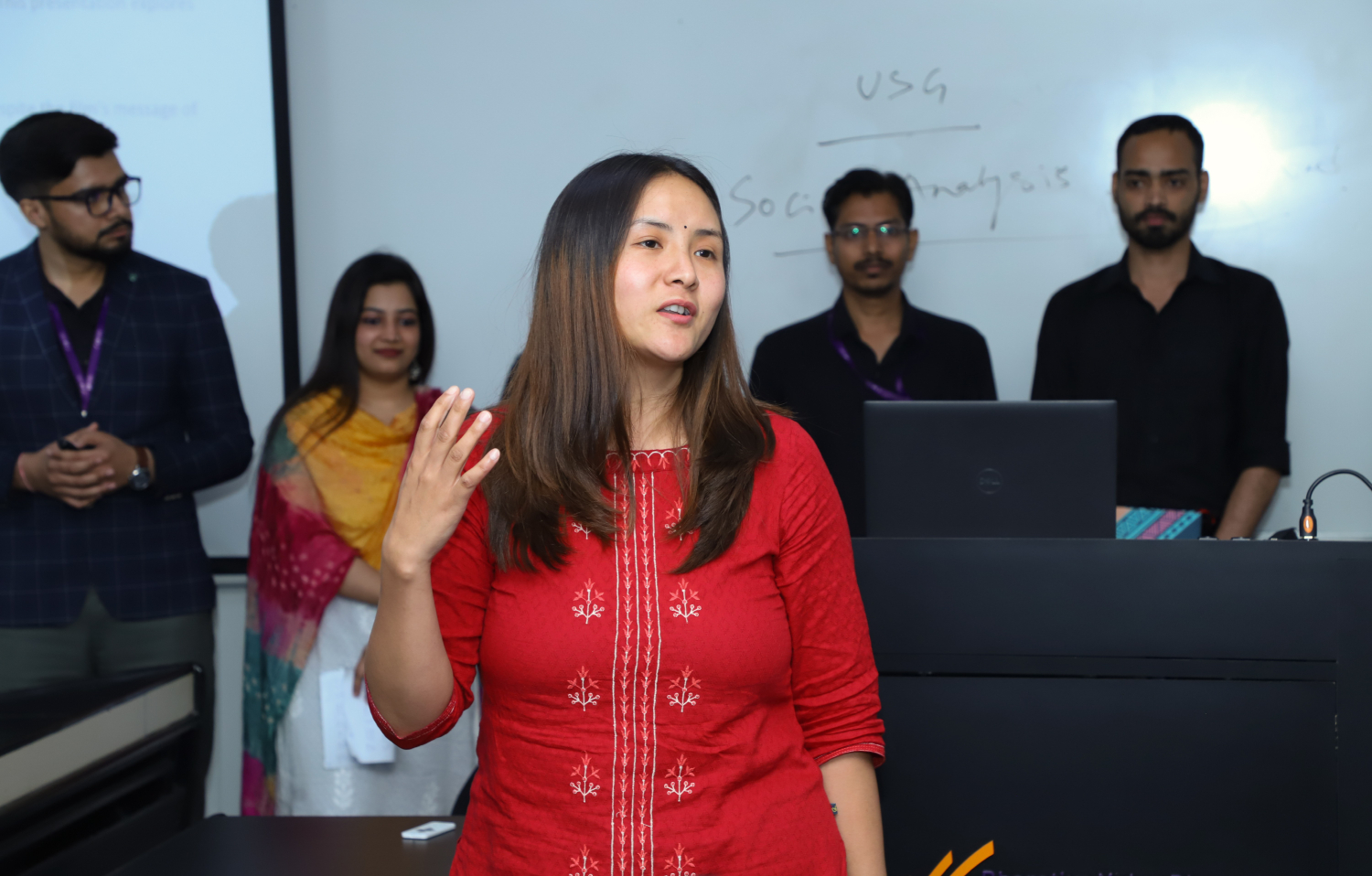
This personal exploration naturally connects with leadership development. As participants gain greater clarity about themselves, they become better equipped to lead meaningful change in increasingly complex environments.
From organisational change to societal change
Leadership in development management is different from leadership in many other sectors.
In many organisations, discussions around change focus on improving business performance, transforming organisational culture or responding to shifts within an industry. While these are important forms of change, development management asks a much broader question.
How do we create lasting change for communities and society? This requires leaders who can look beyond immediate organisational goals and consider the wider impact of their decisions. It calls for empathy, long-term thinking and the ability to engage with multiple stakeholders while remaining focused on meaningful social outcomes.
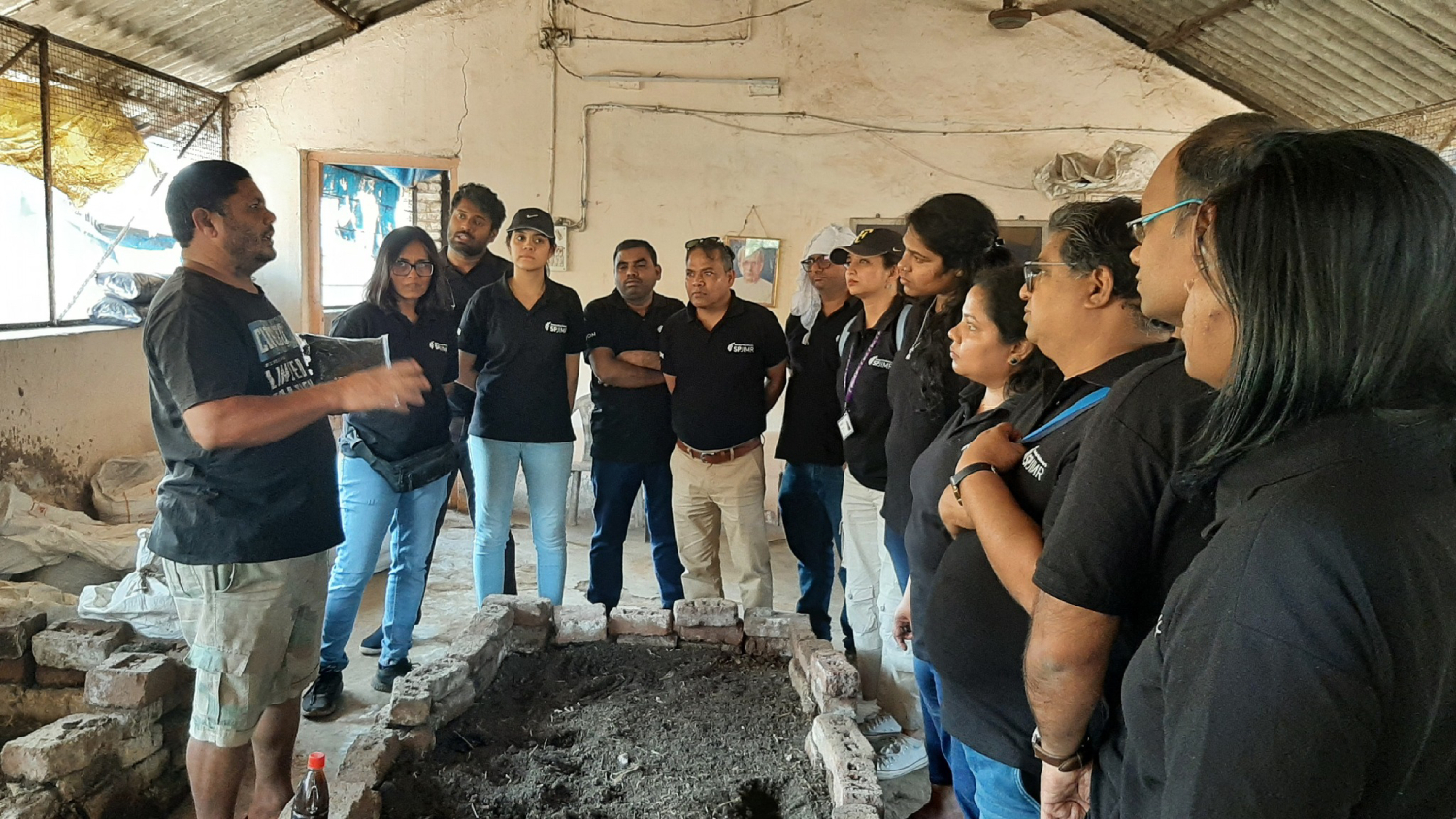
For development professionals, leadership is ultimately about creating conditions that enable sustainable change in people’s lives.
Learning from one another
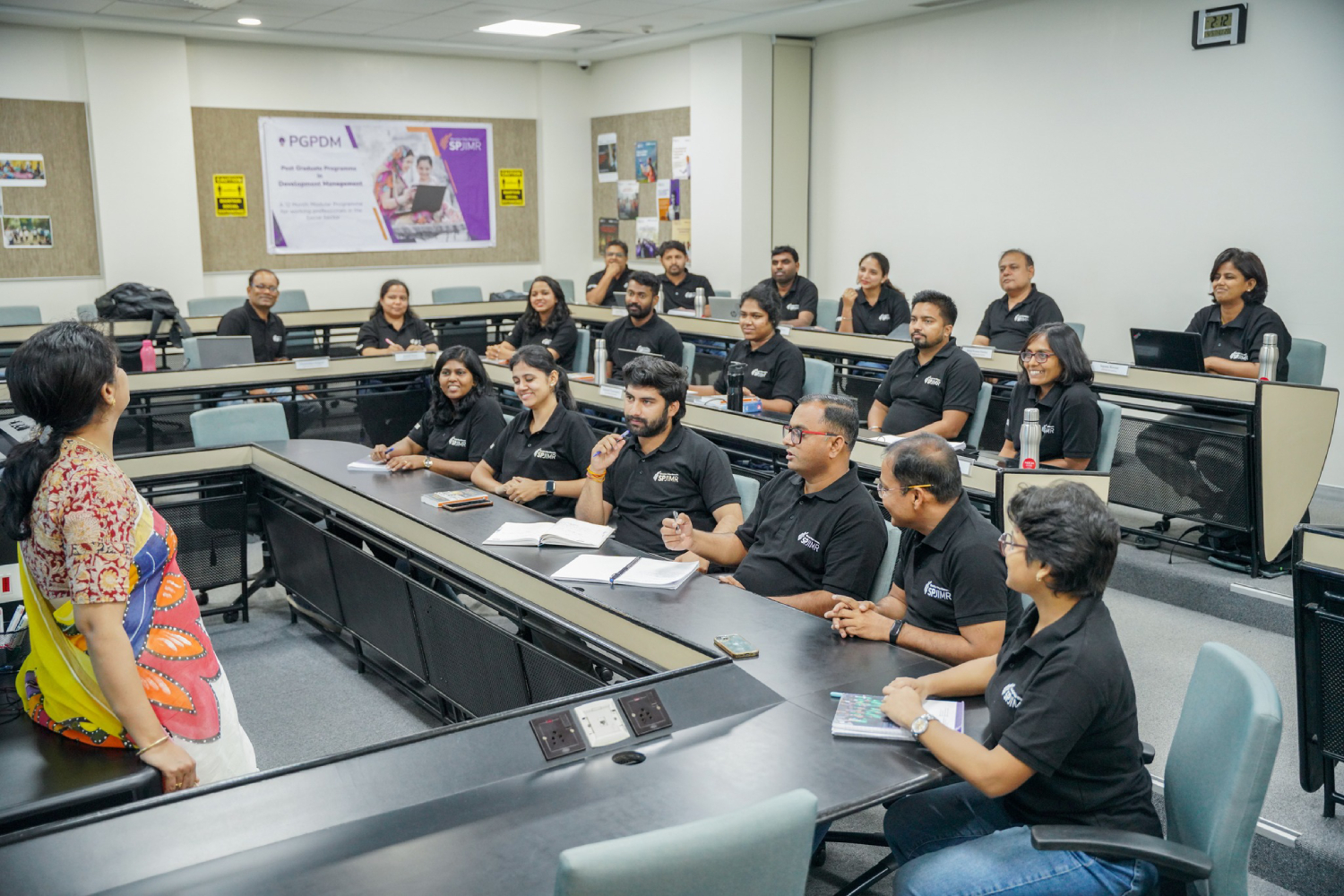
One of the most rewarding aspects of teaching at PGPDM is the diversity of experiences that participants bring into the classroom.
Professionals come from different organisations, sectors, and parts of the country. Each participant contributes practical insights drawn from their own work, creating conversations that are grounded in real challenges rather than hypothetical situations.
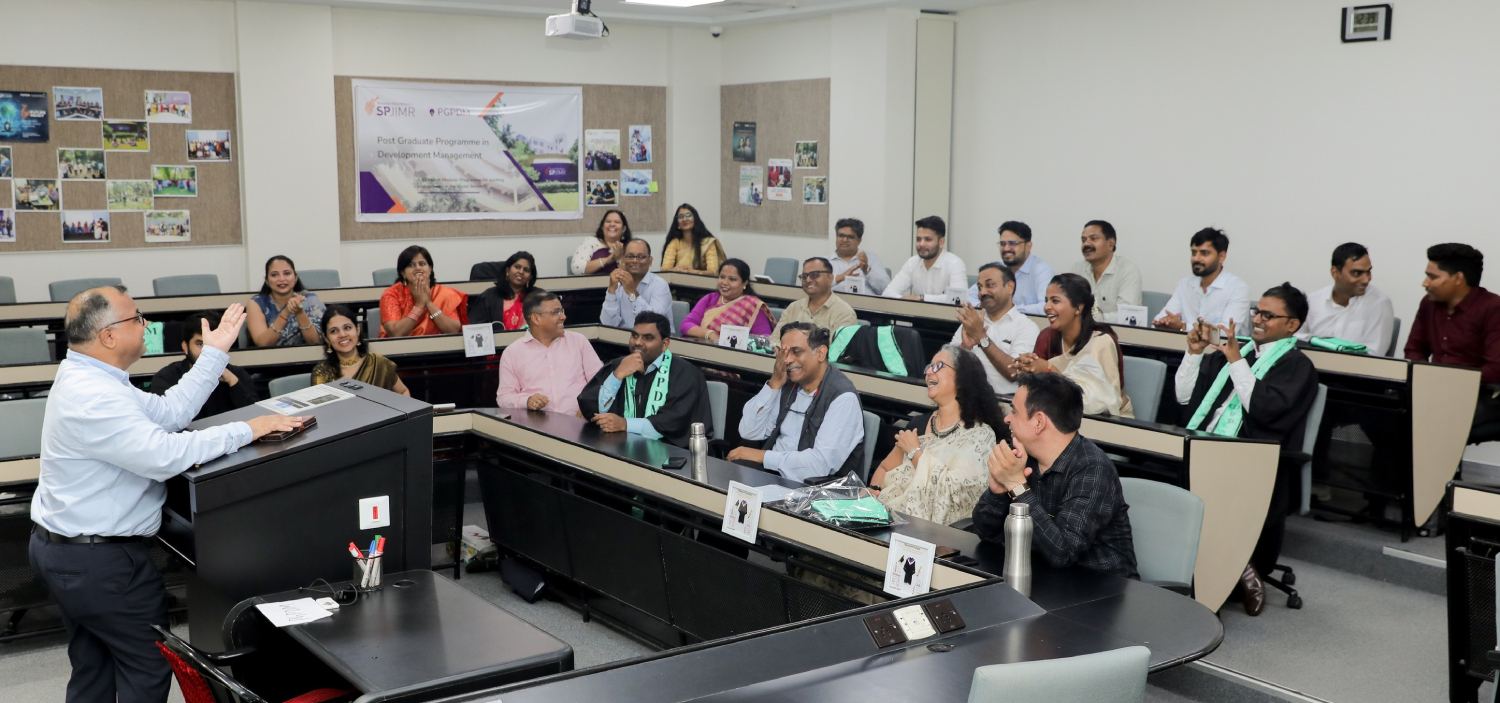
As faculty members, we certainly teach management concepts and frameworks. At the same time, we also learn continuously from our participants. Their experiences, perspectives, and commitment to addressing complex development issues enrich classroom discussions and often challenge us to think differently.
This exchange of ideas creates a collaborative learning environment where everyone grows together.
Bridging theory and practice
One of the defining strengths of PGPDM is its emphasis on applying learning in real organisational contexts.
An important part of the programme is the Development Management Project (DMP), the programme’s capstone project. It gives participants an opportunity to apply the concepts and frameworks they learn during the programme within their own organisations. Rather than remaining theoretical, classroom learning becomes closely connected to practical challenges and organisational realities.
The programme also benefits from a strong alumni network that enables participants to learn from the experiences of professionals who have worked across different development contexts. Together, these elements strengthen the programme’s emphasis on practical learning and long-term professional growth.
Preparing leaders for real India
Perhaps the most meaningful aspect of teaching in PGPDM is that it continually reminds us why management education matters.
Development management is not about solving abstract business cases in isolation. It is about engaging with the realities of communities, understanding the challenges faced by ordinary citizens and applying management thinking where it can create meaningful social impact.
As faculty, we leave the classroom having shared knowledge but often having learned just as much from the participants. Their commitment to addressing real issues affecting real people makes every discussion more relevant and every classroom experience more rewarding.
Ultimately, meaningful social change requires more than good intentions. It demands thoughtful leadership, systems thinking, continuous reflection and a willingness to learn from both theory and practice. These are the qualities that development managers need, and they are the qualities that PGPDM seeks to nurture.
Build the leadership skills to drive meaningful social change. Learn more about SPJIMR’s PGPDM.
Register your interest in this programme
Please fill in the following details