



The anarchic world
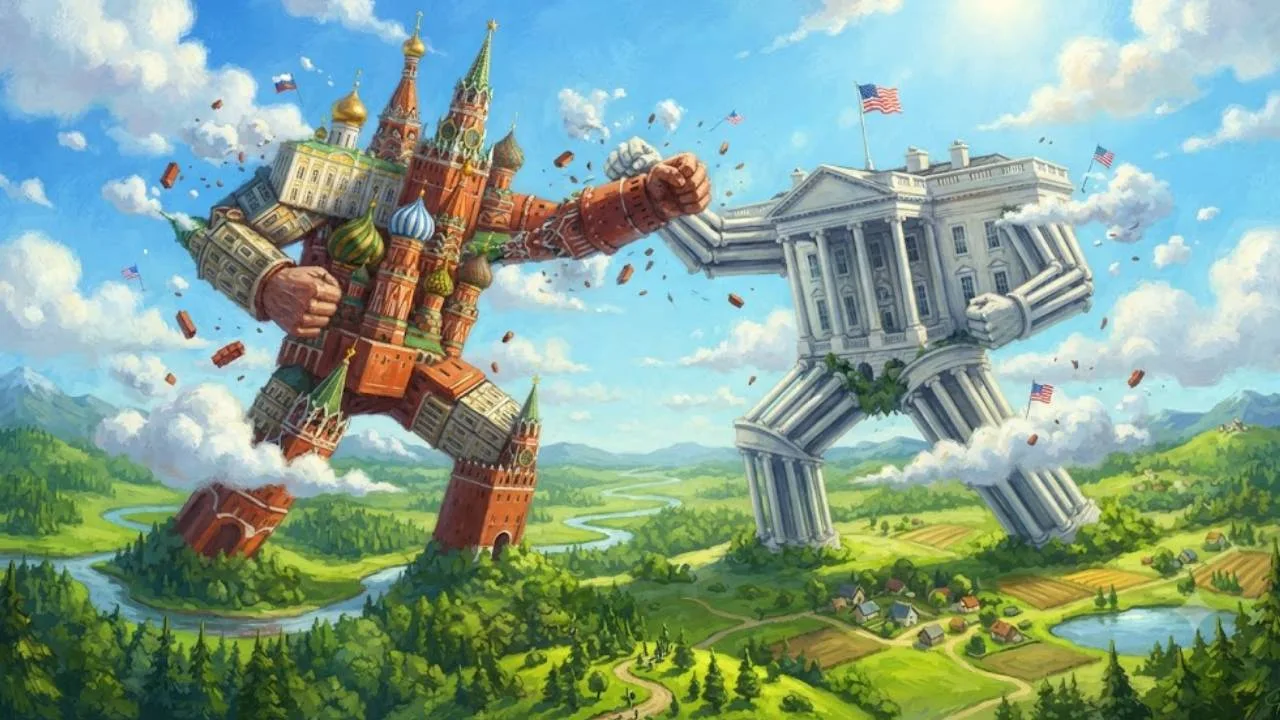
In the Realist ideology the term ‘Anarchy’ represents absence of a super-sovereign that can monitor and control behaviour of the sovereign states. In realist political theory states are expected to be rational actors. In liberal political philosophy states are expected to cooperate with each other to attain peace and security for all. Post-WWI, the League of Nations and post-WWII, the United Nations were founded in agreement of all states along these guiding principles. United Nations came into existence defining equality and sovereignty of every state irrespective of its size, location or any other factor. Today there are 192 members of this organisation. The world seemed stable in the pre-WWII days of the British Empire and the bipolar environment post-WWII. Every other state seemed aligned with one of the superpowers.
The USSR disintegration in 1991 brought into the era of unipolar world again. USA being the only superpower, the world appeared to be governed by a super-sovereign USA. Facing such overbearing power, other states started bonding together. BRIC, later BRICS, was one such attempt to attain balance of power. Besides, China, ASEAN countries and India started building economic power. The transformation of the unipolar world began with the rise of Asian powers and the Global South. Over the past two decades, multiplexed multipolarity has arrived.
In the 2020s, the world witnessed unilateral actions and unilateral decisions impacting the global community. Russia-Ukraine conflict has been on for the past 4 years and shows no respite. Hamas raid on Israel in 2024 and subsequent Israeli response in Gaza, now in Lebanon, seems never-ending. This year’s military escalations between Israel, the US, and Iran have effectively turned the global economy into a hostage. The energy costs have escalated, resulting in economic woes and protests across European continent. And no super-sovereign power can control or restrict anyone. International organisations such as the ICC, ICJ and UN appear to be powerless to have any control over the situation.
Concept of world order is relegated to the archives; it does not exist.
Every state and non-state actor behaves the way it can.
About the faculty

Anil V. Vaidya
Prof. Anil Vaidya holds a Doctor of Business Administration from the University of Bradford, UK. His dissertation was in Information Systems and Technology Strategy. He has pursued his MBA from the University of Akron, Ohio, USA. He has more than 45 years of overall experience, with 35 years of industry engagement in senior IT management and leadership roles.
More from Anil V. Vaidya
Recent faculty blogs
-
Liberal Europe is turning right in 2026!
Read more -
Imagination reorganised in a responsive world
Read more -
India’s backyard: The challenges of the Indian Ocean region
Read more -
How systems thinking helps development leaders create lasting social impact
Read more -
Intelligence on trial: What Kafka, Sternberg, and Advaita Vedānta can teach us about possibility
Read more
Most read faculty blogs
-
Organisational responses to hybrid work—Rethinking culture and civility in India
Read more -
When Amazon arrived late to India’s quick commerce party
Read more -
The 2013 RBI FCNR(B) Swap Window – Review & Takeaways
Read more -
Reimagining travel through AI: Making every journey smarter and more personal
Read more -
Budget 2025: Unlocking opportunities for the private sector
Read more