



India’s backyard: The challenges of the Indian Ocean region
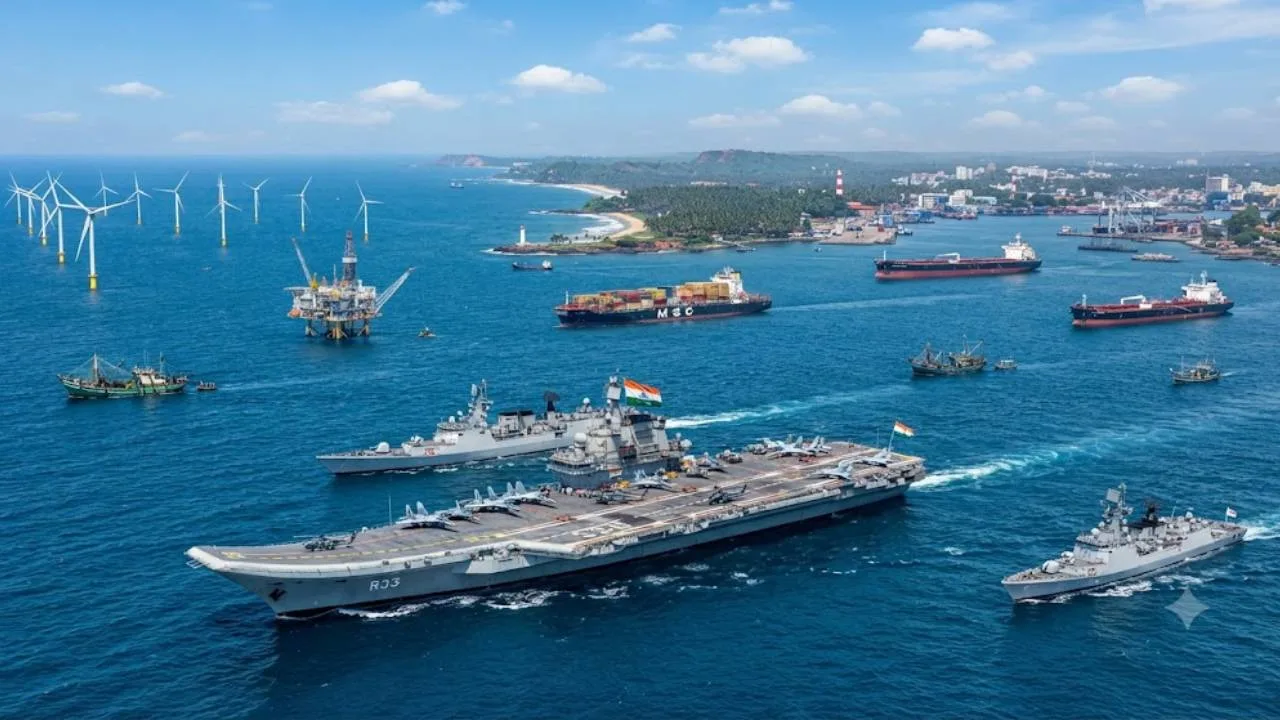
For centuries, India has been a predominantly continental power, focusing inland while largely neglecting its vast shores. The neglect of coasts during the princely states resulted in India becoming a colony of British Empire which ruled over two centuries. Over past two decades, however, a strategic paradigm shift has taken place. As global trade increased, protecting the seas and oceans became critical.
India has two not-so-friendly neighbours on both sides. There is little possibility of developing feasible land routes. India’s exports and imports of goods solely depend on the Indian Ocean remaining free. Over 90% of goods by volume arrive/leave by water. In the past few years, China has been making inroads into the vast Indian Ocean, with much larger naval power compared to India. Its ‘String of Pearls’ strategic move, coupled with Pakistan’s dream of controlling the Arabian Sea, poses a major threat to Indian security and economic well-being. Besides, European countries and USA have established naval bases in Indian Ocean.
The Indian Ocean Region is India’s backyard; India is actively pursuing its maritime strategy. Currently, India spends approximately $93 B on defence; a portion of that goes to the navy. A larger allocation has been made for maritime infrastructure, port modernisation, the blue economy, shipping, etc., contributing to the maritime strategy. K. M. Panikkar in 1945 wrote about the importance of protecting oceans for India. It took decades for India to raise its economic output to a level, aspiring to become recognised as a world power. Now scripting it into practice through various strategic initiatives in the Indian Ocean.
The ‘Net Security Provider’ role of Indian Ocean, promotion of ‘Zone of Peace’, the QUAD initiative and many other engagements has been building India’s reputation as rising Naval power. It is still a long way to go; however, there have been enough instances where India has rescued ships from pirates and helped IOR island nations.
In the 17th century, the Maratha Navy controlled the west coast of India, preventing the Dutch, the British and the Portuguese from roaming free in Indian waters.
In the 21st century, India wants to repeat the feat across the IOR.
About the faculty

Anil V. Vaidya
Prof. Anil Vaidya holds a Doctor of Business Administration from the University of Bradford, UK. His dissertation was in Information Systems and Technology Strategy. He has pursued his MBA from the University of Akron, Ohio, USA. He has more than 45 years of overall experience, with 35 years of industry engagement in senior IT management and leadership roles.
More from Anil V. Vaidya
Recent faculty blogs
-
Liberal Europe is turning right in 2026!
Read more -
Imagination reorganised in a responsive world
Read more - Read more
-
How systems thinking helps development leaders create lasting social impact
Read more -
Intelligence on trial: What Kafka, Sternberg, and Advaita Vedānta can teach us about possibility
Read more
Most read faculty blogs
-
Organisational responses to hybrid work—Rethinking culture and civility in India
Read more -
When Amazon arrived late to India’s quick commerce party
Read more -
The 2013 RBI FCNR(B) Swap Window – Review & Takeaways
Read more -
Reimagining travel through AI: Making every journey smarter and more personal
Read more -
Budget 2025: Unlocking opportunities for the private sector
Read more