


Artificial intelligence, automation, and rapid technological change are dominating conversations across industries today. From boardrooms to team meetings, professionals are increasingly being asked the same questions: Which skills will remain relevant? Which roles will evolve? And how can leaders keep growing through continuous upskilling when the environment seems to change constantly?
It is understandable why many professionals view this kind of change and disruption with uncertainty. Entire industries are being reshaped by digital transformation, business cycles are becoming shorter, and workplace expectations are evolving faster than before.
But there is another way to look at this shift. The professionals who remain most valuable during periods of disruption are often not the ones resisting change. They are the ones continuously learning alongside it.
In many ways, continuous upskilling is becoming one of the biggest confidence boosters in modern careers. Professionals who actively build new capabilities, broaden their business understanding, and adapt to changing environments are often better positioned not only to survive disruption but to benefit from it.
Disruption, therefore, becomes less of a threat and more of an opportunity for reinvention.
Key takeaways
- AI is reshaping which skills matter, so staying relevant means learning continuously.
- Learning agility, not technical depth alone, is what keeps professionals valuable through disruption.
- Continuous upskilling builds “capability security”: confidence rooted in the ability to evolve.
- Structured executive education, such as SPJIMR’s PGEMP, lets experienced professionals learn alongside peers while continuing their careers.
Why disruption feels more intense today
Every generation experiences workplace change, but the pace of transformation today feels particularly accelerated. AI is changing how businesses analyse data, make decisions, engage customers, and manage operations. At the same time, organisations are navigating economic uncertainty, changing workforce expectations, evolving customer behaviour, and increasing competitive pressure.
This creates an environment where:
Roles evolve faster than before
Business models shift
more rapidly
Skills become outdated
more quickly
Leadership expectations continue expanding
For many professionals, this creates anxiety around long-term relevance.
Yet the real risk is often not disruption itself. It is stagnation. Professionals who stop learning may eventually find themselves relying on expertise built for business environments that no longer exist in the same form.
Why learning agility matters more than technical skills alone
One of the biggest misconceptions around AI is that future success belongs only to highly technical professionals. In reality, organisations still depend heavily on human capabilities that technology alone cannot fully replace. These include:
- Strategic thinking
- Leadership
- Communication
- Decision-making
- Cross-functional collaboration
- Judgement in uncertain environments
- Relationship-building
AI can process information rapidly, but businesses still need leaders who can interpret complexity, align teams, navigate ambiguity, and make thoughtful decisions. This is why learning agility is becoming increasingly important.
Learning agility is the ability to learn from experience and quickly apply that learning in new, unfamiliar situations. In practice, it means staying curious, seeking feedback, and adjusting how you work as conditions change.
Professionals who continually broaden their perspectives and remain open to evolving ways of working often become more adaptable, resilient, and valuable during periods of change.
Why continuous upskilling builds career confidence
Continuous upskilling is often discussed in terms of employability or career protection. But its impact goes much deeper than that. Learning creates confidence.
Professionals who continuously develop new skills and business understanding often approach change differently. Instead of fearing disruption, they become more comfortable navigating uncertainty because they trust their ability to adapt.
This creates a significant psychological shift.
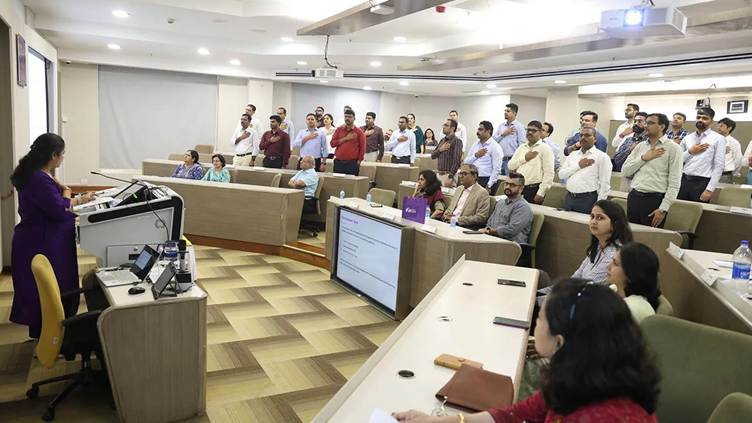
Rather than relying only on job security, professionals begin developing what could be described as capability security, confidence rooted in their ability to evolve alongside changing business realities.
Over time, this mindset can fundamentally change how professionals respond to organisational transformation, technological shifts, leadership transitions, new business models and even industry disruption. In many cases, the professionals who remain calmest during periods of change are not those with the most stable environments, but those with the strongest learning mindset.
How leading organisations are building a culture of continuous upskilling
Many global organisations now recognise that long-term competitiveness depends not only on technology adoption but also on continuous upskilling and workforce adaptability.
Accenture
Accenture has invested heavily in workforce reskilling and continuous learning initiatives as AI and digital transformation reshape consulting and technology services. According to media reports, the firm has trained more than 550,000 employees in the fundamentals of generative AI, from a global workforce of roughly 780,000. The organisation has consistently emphasised the need for employees to develop new capabilities alongside evolving technologies, particularly in AI, cloud, analytics, and leadership adaptability.

Image credit: Accenture
Siemens
Siemens has similarly focused on continuous workforce development as part of its broader digital transformation journey. The company has invested in digital learning ecosystems and future-ready capability building to help employees adapt to changing industrial and technological environments.
These examples reflect a broader shift across industries: organisations increasingly view learning not as a one-time activity, but as a long-term strategic capability.
Image credit: Siemens
Why executive education is becoming important for working professionals
As business environments become more complex, many professionals are recognising that self-learning alone may not always be enough. Structured executive education programmes increasingly provide:
- Broader business perspective
- Cross-functional understanding
- Leadership development
- Exposure to diverse industries and peer groups
- Opportunities for strategic reflection
- Learning frameworks that can be applied directly within organisations
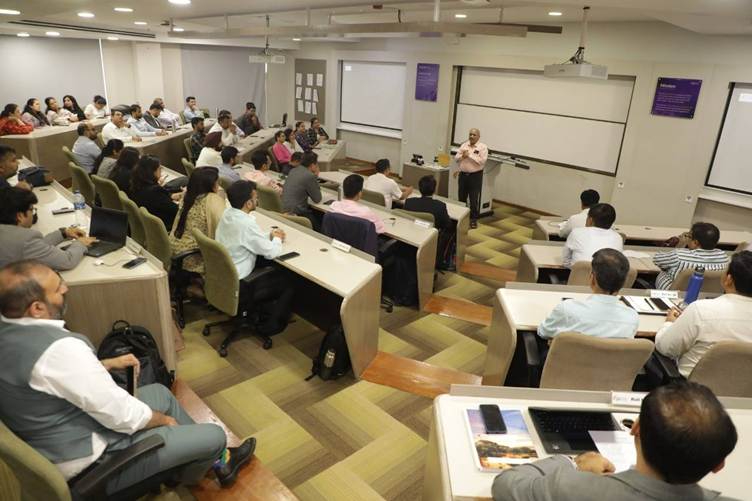
For experienced professionals, especially, learning alongside peers from different industries and functions can significantly expand managerial thinking.
Executive education is therefore becoming less about acquiring a qualification and more about strengthening long-term adaptability and leadership relevance for working professionals.
Considering structured learning alongside your career? Explore the PGEMP programme at SPJIMR to see how it is designed for experienced professionals.
How the PGEMP at SPJIMR supports professionals navigating disruption
The Post Graduate Executive Management Programme (PGEMP) at S.P. Jain Institute of Management & Research (SPJIMR) is designed for experienced professionals seeking broader managerial capability while continuing their careers. The programme focuses on helping professionals strengthen:
Strategic thinking
Leadership capability
Cross-functional understanding
Business
decision-making
Managerial perspective
Its structure allows working professionals to continue their careers while engaging with management education, helping participants connect classroom learning with real workplace challenges.
The programme also creates opportunities for peer learning across industries and functions. Participants engage with professionals from diverse organisational backgrounds, allowing exposure to different leadership perspectives, business challenges, and approaches to problem-solving.
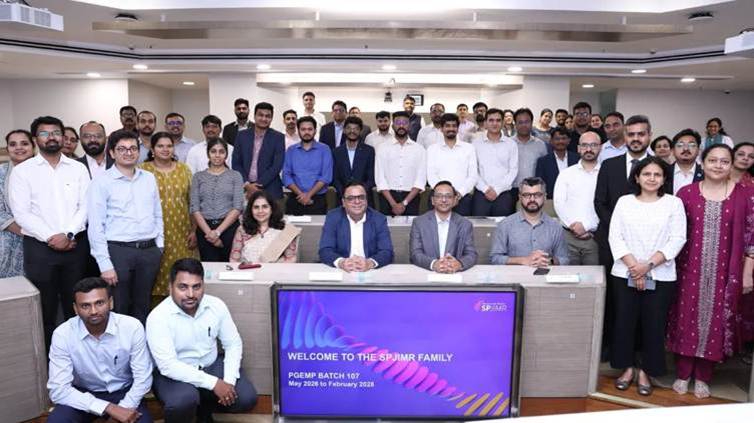
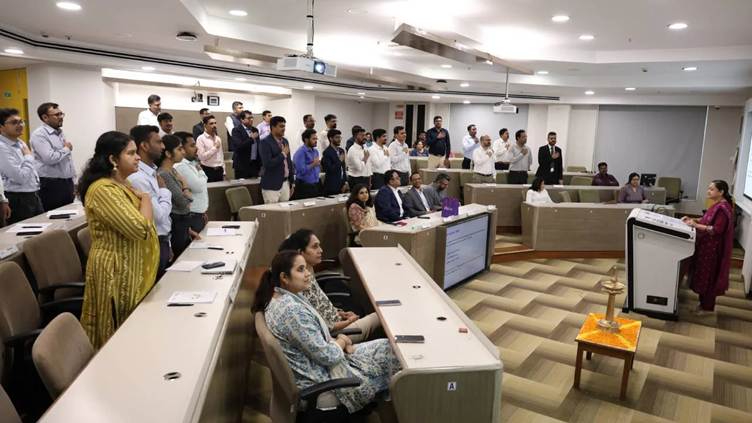
In 2026, SPJIMR inaugurated the 107th batch of the PGEMP, marking 25 years of the programme. The cohort included mid- to senior-level professionals from organisations such as Larsen & Toubro, BPCL, Mahindra & Mahindra, and Elekta Medical Systems India Pvt. Ltd., reflecting the programme’s long-standing relevance among experienced industry professionals.
Importantly, the programme is not positioned as a way to “AI-proof” careers. Instead, it supports professionals in becoming more adaptable, strategically aware, and confident in environments shaped by continuous change. As industries continue evolving through AI adoption and disruption, this kind of broader managerial perspective is becoming increasingly valuable.
The real competitive advantage in the AI era
The greatest advantage professionals can build today may not be mastering a single technology or predicting every future trend.
It may simply be the ability to continue learning consistently.
Professionals who remain curious, adaptable, and open to reinvention often become far more resilient during periods of uncertainty than those who rely solely on past expertise.
Disruption stops feeling threatening when learning becomes part of professional identity.
In many ways, the future may belong less to those who know the most today and more to those who can continue evolving as the world changes around them.
Ready to build the skills that will help you lead through change?
As industries continue to evolve, the ability to adapt, think strategically, and lead across functions is becoming increasingly valuable. If you’re looking to strengthen your leadership capabilities while continuing your career, SPJIMR’s Post Graduate Executive Management Programme (PGEMP) offers an opportunity to learn alongside experienced professionals and apply new perspectives to real workplace challenges.
Whether you’re exploring executive education or planning your next career move, our admissions team is here to help you understand the programme, eligibility, curriculum, and admissions process.
Register your interest for this programme
Please fill in the following details