





The demand for flexible management education has grown sharply in recent years. Working professionals now have access to a wide range of online MBA and management programmes that let them keep working while they study.
But as more institutes launch online management courses, professionals are increasingly comparing blended learning against fully online MBAs before choosing one. Flexibility matters, but so does faculty interaction, peer collaboration, and the ability to apply concepts to real work.
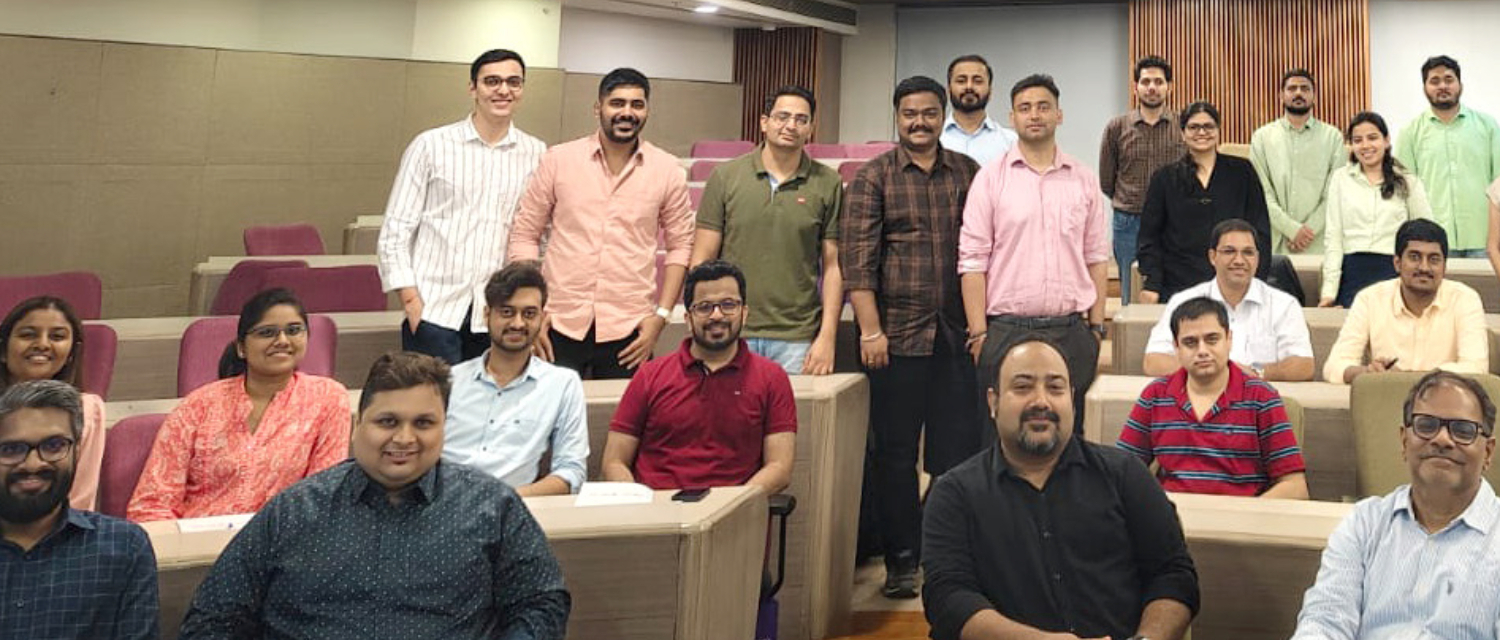
This is where SPJIMR’s Blended Post Graduate Diploma in Management, an AICTE-approved, two-year programme delivered in collaboration with TimesPro, takes a different approach. Backed by more than 45 years of legacy and a global alumni network of over 18,000 professionals, it pairs online learning with structured, live, in-person engagement.
What makes a Blended PGDM different from a regular online MBA?
Many online MBA programmes rely heavily on recorded lectures and self-paced study, although some also include live virtual classes. A blended programme adds live faculty interaction, campus immersion, and structured peer collaboration on top of that flexibility.
SPJIMR’s Blended PGDM runs on 80 credits, equivalent to roughly 2,400 hours of engagement, delivered primarily through live, synchronous sessions rather than one-way recorded content, over a base duration of 24 months with an extension option up to 48 months, a structural difference worth knowing before you compare programmes on flexibility alone.
Live learning instead of learning alone
Classes run through live, faculty-led sessions rather than pre-recorded lectures alone. The faculty includes both full-time academics and industry practitioners, so sessions mix theory with real-world operating experience.
The curriculum uses case discussions, simulations, tutorials, and group work to keep sessions interactive, supported by pre-recorded material for core concepts. Sessions are scheduled around working hours, with evening slots on Tuesday and Thursday and daytime/evening slots on Saturday and Sunday, so the format is built for people with full-time jobs, not around a fully self-paced model.
| Days | Sessions | Timings in IST |
|---|---|---|
| Monday / Friday (Optional) | Tutorials/guest sessions | 8:00 pm – 9:30 pm |
| Tuesday and Thursday | Live session | 8:00 pm – 9:30 pm |
| Saturday | Live sessions | 6:00 pm – 7:30 pm | 8:00 pm – 9:30 pm |
| Sunday | Live sessions | 11:00 am – 12:30 pm | 2:30 pm – 4:00 pm | 4:30 pm – 6:00 pm |
Campus immersion adds an in-person learning experience
The programme includes two on-campus immersions of four days each at the SPJIMR Mumbai campus, with academic sessions, leadership workshops, and guest talks by industry leaders and alumni built into the core curriculum rather than treated as optional extras.
It also goes a step further with an international immersion at the Denmark Innovation Centre, one of Europe’s innovation and design-thinking hubs. Over three days, participants work on real business challenges with local professionals, culminating in prototyping and a final presentation, providing participants with practical international exposure through a live business project.
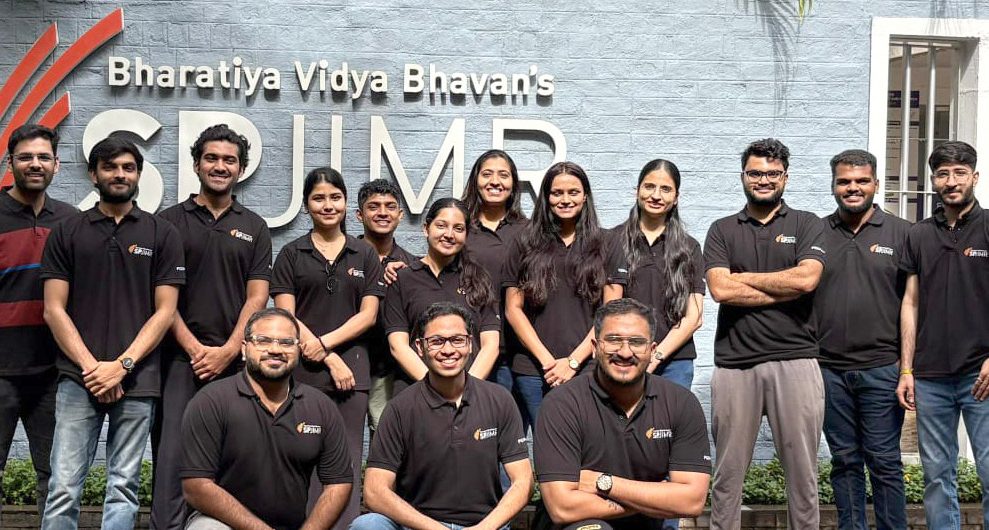
These in-person experiences strengthen peer learning and create opportunities to interact directly with faculty, alumni, and industry professionals.
Learning is designed to be applied at work
Because participants continue working through the programme, the curriculum is built around experiential learning and live projects that connect classroom frameworks to real workplace problems. That creates a continuous loop: learn a concept, apply it at work, and bring the outcome back into class discussion, rather than a purely academic exercise completed in isolation from a job.
The programme runs across two years and four terms. Year I covers core functional and general management courses, including Financial Reporting and Analysis, Data Analysis, Applied Economics for Business, Organisational Behaviour and HRM, Finance for Decision-Making, Marketing Management, Strategic Management, IT Strategy, and Legal Aspects of Business, alongside workshops on business negotiation and critical thinking and an experiential Personal Growth Lab. Year II moves into micro-specialisations and industry projects.
Participants can personalise their learning
In Year II, participants choose from three micro-specialisations to align the second half of the programme with their career direction while still building a common foundation in general management. The programme also brings in industry experts for sessions on current business practices, so the personalisation isn’t limited to a fixed track chosen on day one.
Flexibility without putting your career or budget on hold
Professionals don’t have to step away from work to pursue this programme. Classes are scheduled for evenings and weekends, and while the programme is designed to be completed in 24 months, there’s an extension option up to 48 months, giving participants room to pace their studies around work demands.
A few practical details worth knowing before applying:
- Programme fee: ₹8 lakhs
- Payment option: ‘Pay per Semester’ allows participants to pay for one semester at a time rather than the full programme fee upfront.
- Work experience: preferred, but not mandatory
- Accepted entrance scores: CAT, XAT, CMAT, GMAT, or SPJIMR’s own SBAT (Blended PGDM admission test)
Full details are on the fees and admissions pages.
Blended PGDM vs a typical online MBA, at a glance
| Difference | SPJIMR Blended PGDM | Typical fully online MBA |
|---|---|---|
| Delivery mode | Primarily live, synchronous sessions | Mostly recorded, self-paced |
| In-person component | Two 4-day campus immersions at SPJIMR Mumbai | Often limited or optional |
| Specialisation | 3 micro-specialisations in Year II | Varies; often fixed track |
| Duration | 24 months base, extendable up to 48 months | Typically 2 years, self-paced |
| Accreditation | AICTE-approved | Varies by provider |
| Peer interaction | Structured group work, mentorship, alumni network of 18,000+ | Often limited to discussion forums |
Why this matters for working professionals
Professionals today are expected to adapt quickly, lead diverse teams, and make cross-functional decisions. A programme that only offers flexibility isn’t enough; it also needs to build in collaboration, application, and continuous feedback. SPJIMR’s blended model is built around that combination rather than flexibility alone.
Why choose SPJIMR’s Blended PGDM?
18000+
Global alumni
45+
Years of legacy
#35
FT MiM 2025 globally
#3
FT MiM 2025 India
SPJIMR is ranked #35 globally and #3 in India in the Financial Times Global MiM 2025 rankings and has been recognised among the top five business schools worldwide for social impact by the Positive Impact Rating. Participants join a global alumni network of 18,000+ professionals, gain access to SPJIMR’s library and career-guidance resources, and work with faculty who are both accomplished academics and industry practitioners.
For professionals who want meaningful engagement and practical learning alongside flexibility, the Blended PGDM is built for that balance rather than treating flexibility as the only differentiator.
Explore the Blended PGDM at SPJIMR to see how the programme can help you build stronger management capabilities without stepping away from your career.
Register your interest for this programme
Please fill in the following details