


#AbhyudayaKatha: An ode to our city and its people
Vrinda Sharma, PGDM BM 2026-28, participant

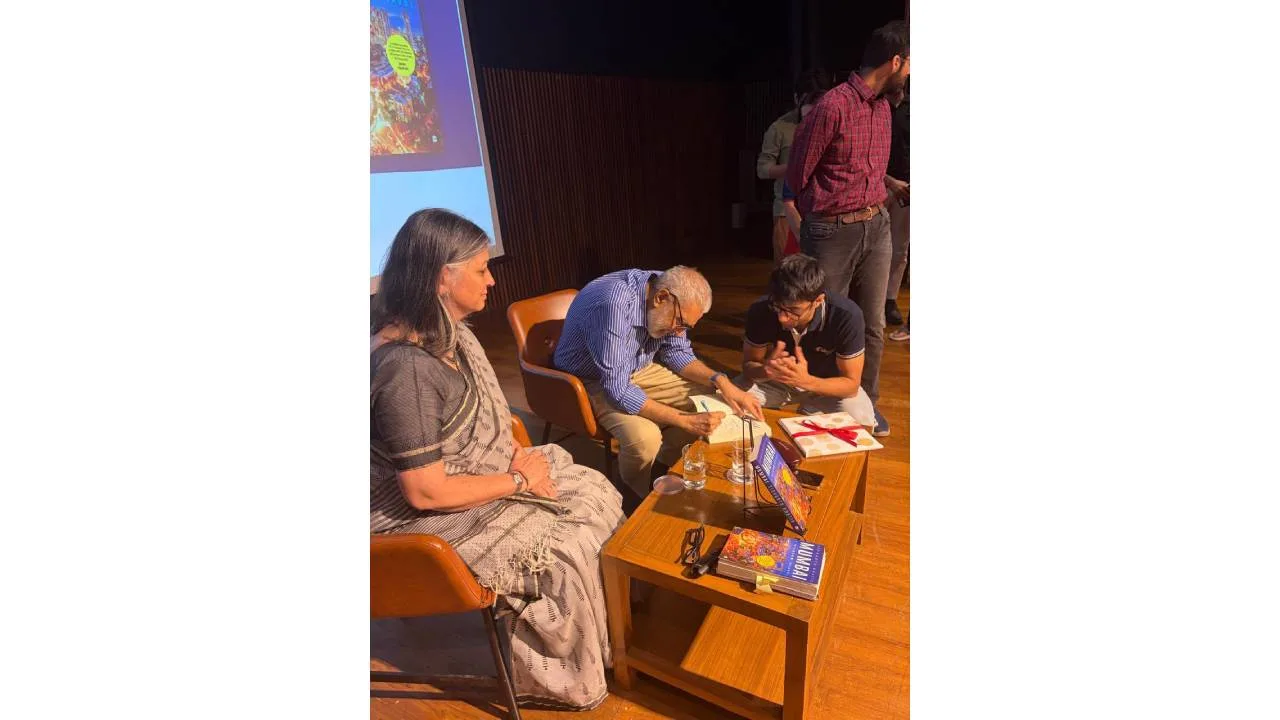
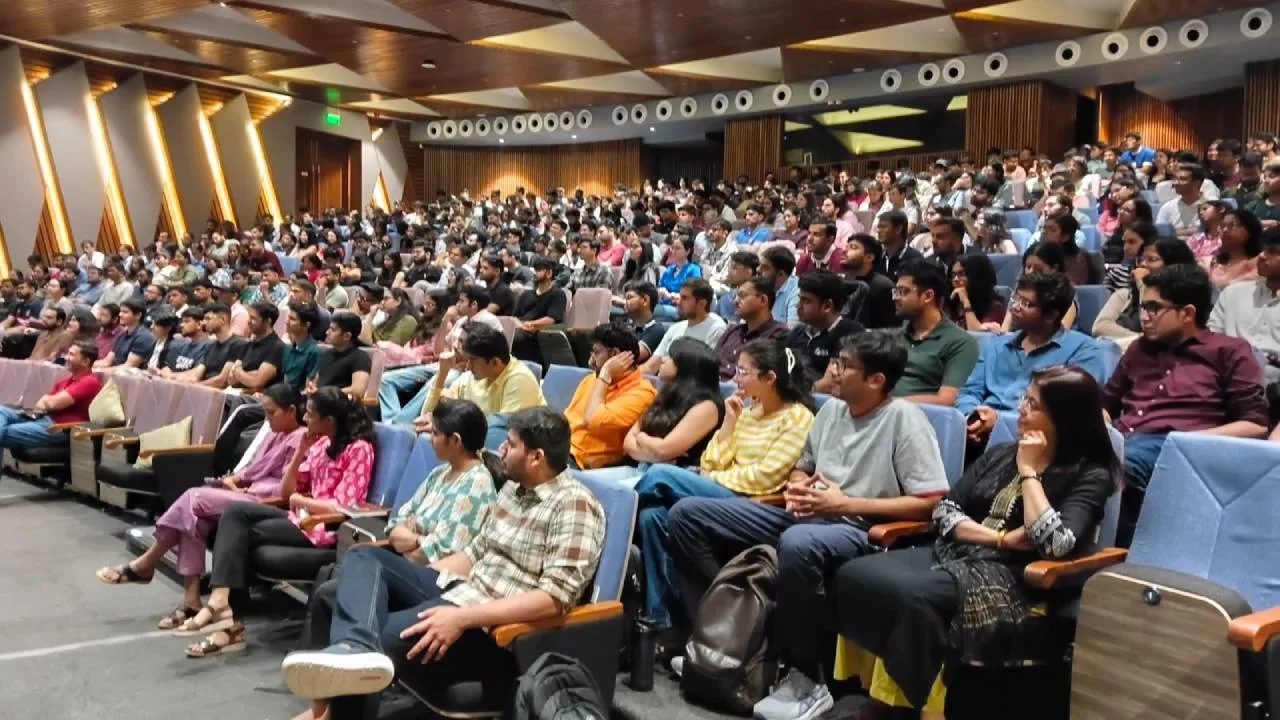
Abhyudaya is SPJIMR’s community-based mentorship programme that maps every PGDM student to a sitara – a bright, talented student from schools in Mumbai’s Andheri K-Ward (West). For a sitara, Abhyudaya is a constant part of their lives from Class 7 until they complete their school education. For first-years like me, it is a journey of a few months, measured in bi-weekly home visits. As a student mentor and a Mumbaikar, I am learning from every single visit. As I weave through ‘gullies’ less than a meter wide between houses, and climb the steep metal step-ladder to my sitara’s home, I think about how different my Mumbai is from hers.
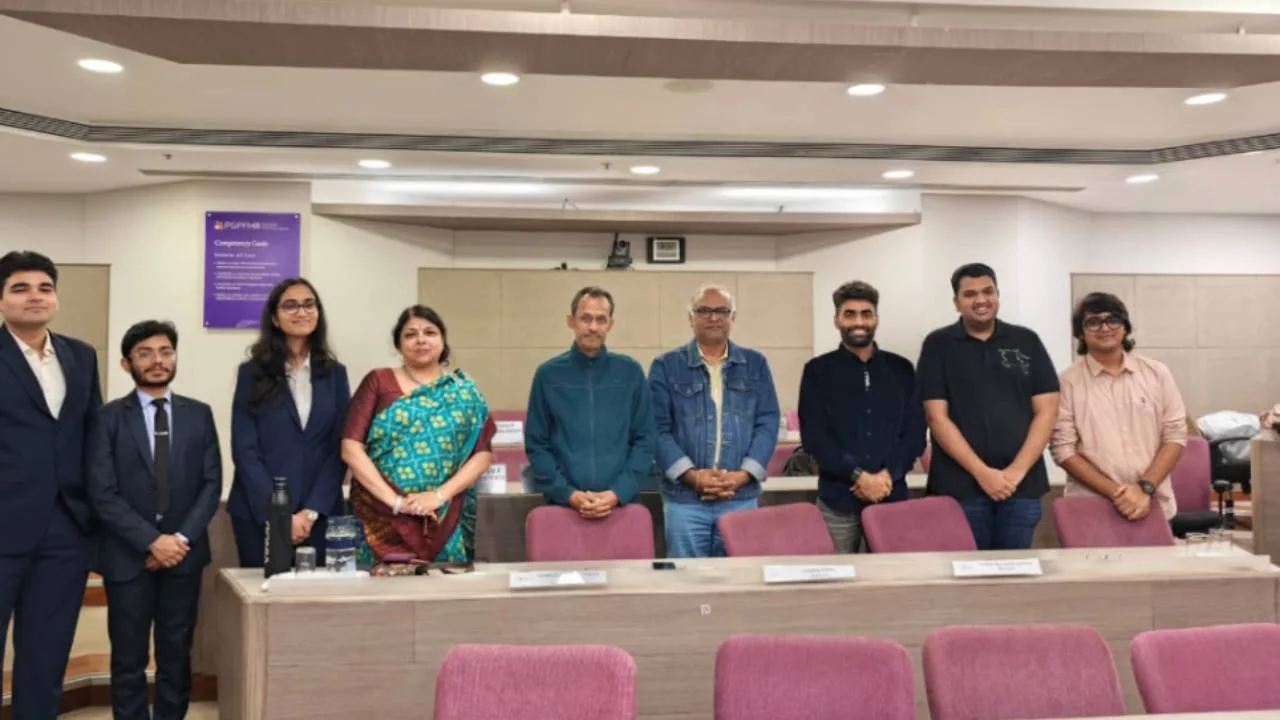
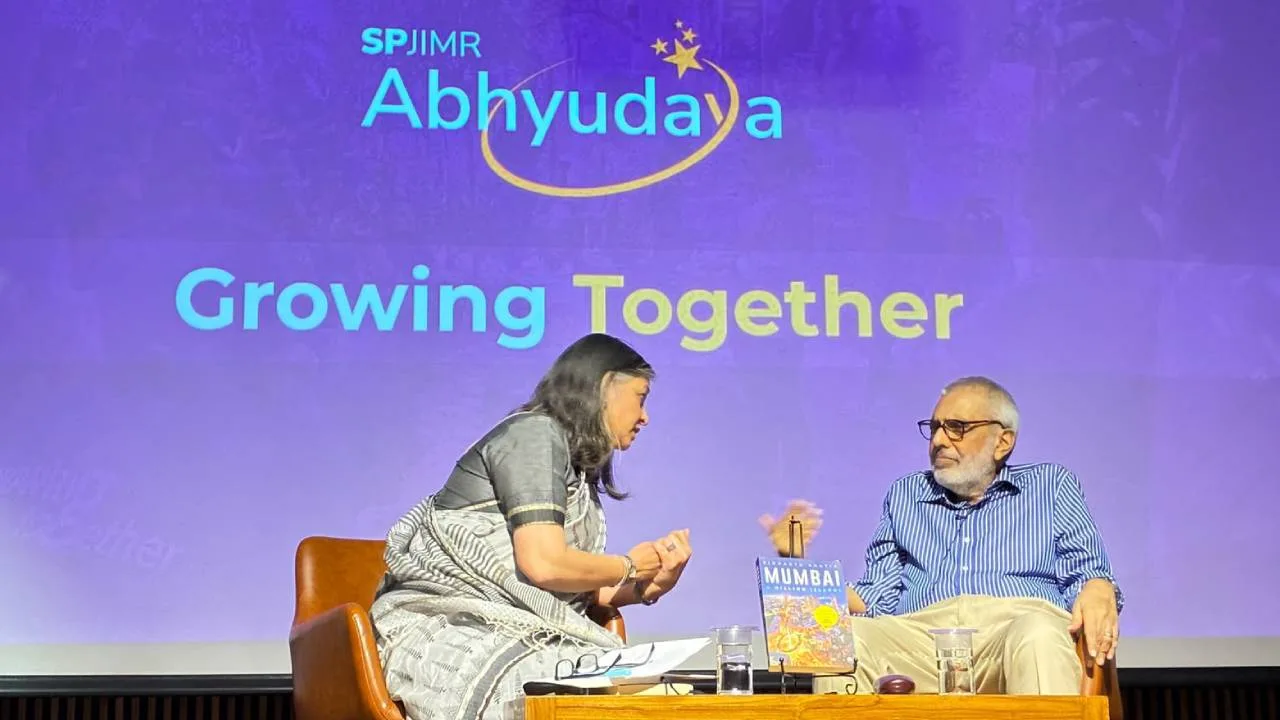
The required reading for every student mentor this year is Mumbai: A Million Islands by Sidharth Bhatia. On 17 November 2026, Bhatia visited our campus for a fireside chat. What ensued was a morning of looking at my city in a whole new light, through the lens of its history, its people and its permanent state of transition.
Bhatia started by highlighting that Mumbai has always been inclusive, nurturing a connection between people and the street. He painted a nostalgic picture: an apartment dweller lowers a basket from their window to buy something from a vendor in the street below. He aptly described how this culture is systematically fading as real estate developers create ‘exclusive’ complexes that are meant to be an ‘oasis’ from the bustle of the city.
An integral part of the book is interviews with residents from different parts of Mumbai. These interactions bring out the resilience and inherent absurdity that characterises low-income housing in the city. Bhatia recounted one such interview with a business owner who lives on the terrace of Queens Mansion, a heritage building in the Fort area that was once a hotel. The hotel staff lived on the terrace and later sold their plots to other families. Now, 28 families occupy the space. Many members of these families were born there, with some having lived in the building since the 1950s. However, there is no lift that goes up to the terrace. There are narrow cast-iron staircases leading to the top, and any large object must be moved up or down using strong ropes. Other tenants of the building have tried to have these families relocated, but no better alternative has been created or offered. Hence, the families continue to live there, despite a lack of space, privacy and basic amenities, open to the elements.
I had heard of slum areas in the city undergoing redevelopment, but I was not aware of where these residents were relocated. Bhatia told us about Lallubhai Compound in Mankhurd, a complex with more than 70 buildings built under the Slum Rehabilitation Act (SRA). These apartments, although an upgrade from slum dwellings, are still poorly equipped in terms of space, lighting and sanitation. There is an even larger impact of relocation: residents lose their communities of neighbours, extended families, businesses and shop owners. Because these citizens are not granted housing in situ (in the same locality where they live), they lose an entire ecosystem and sometimes even their livelihoods, as they may be moved much farther away from their original homes.
What is interesting is that these settlements have existed for more than 100 years. The book talks about a meeting held by the Bombay Improvement Trust in 1915 to discuss the outlay for demolishing and relocating 1,200 acres of slums. Over a hundred years and multiple governments later, an exhaustive solution that benefits the residents holistically has not been found.
An interesting question posed to Bhatia during the session was how he could set aside his personal biases and pity while touring these areas and interviewing their residents. His response will stay with me for a long time. He said that he does not look at these people with pity, because they are citizens at par with anyone else and are simply underserved. Not one person he interviewed had an air of victimhood about them. He spoke of Bombil aapa, a resident of Behrampada (Bandra East), an area where slum dwellings are proliferating vertically. Bombil aapa’s home now stands five storeys high, although no light reaches the bottom floor where she lives. The tube light remains on throughout the day. She has lived in the area for 60 years and vows to remain in her small home until her final breath.
This points to a poignant truth every Mumbaikar is privy to: Mumbai is a resilient city, but in the celebration of its spirit, its citizens have been short-changed. Going back to work the next day after battling monsoon floods or taking a dangerously overcrowded local train to get to one’s workplace is helplessness. This spirit is not meant to be romanticised; it is not a choice. The people of this city deserve better.
As part of Abhyudaya, we are introduced to two ‘EQs’. The first is the popular emotional quotient. The second is the lesser-known entitlement quotient. Bhatia’s entire session was an exercise in understanding our own entitlement quotient.
Creating quiet and exclusive living spaces probably requires moving an entire community away from its homes. Infrastructure projects with huge outlays and relatively limited impact may be taking precious funding away from improving the lives of underserved citizens. As future managers and residents of this city, our foremost duty is to be aware of how almost half the population lives. The next step is to engage meaningfully with the communities around us and add whatever little value we can in the process.
I always looked at Abhyudaya as a way of helping talented youngsters get the mentorship and support they need. This session made me realise that the programme is also about bringing down the high walls between us and the communities that live next door.
About Post Graduate Diploma in Management (Business Management)
Post Graduate Diploma in Management (Business Management) is a two-year, full-time residential programme with a General Management focus. Built on identical pillars as the current PGDM programme, it is an AICTE-approved programme and admits only 120 participants. PGDM (BM) gives its participants the unique flexibility to choose a preferred mix of courses to align with their career goals and help them develop a holistic overview of all functional areas to excel in cross-functional business decision-making.