




For many professionals, pursuing an MBA has traditionally been viewed as a straightforward equation: invest in a degree, secure a better salary, and recover the cost over time. While that equation still matters, it is no longer sufficient in a landscape shaped by economic uncertainty, technological disruption, and evolving leadership expectations.
As a result, the MBA ROI (Return on Investment) question has become more nuanced. For professionals with 4+ years of experience, the real return lies in career mobility, leadership readiness, strategic capability, and long-term professional resilience.
Why traditional MBA ROI thinking is incomplete
Historically, ROI was measured using short-term metrics such as post-MBA salary growth and payback periods. However, for mid-career professionals, these figures often fail to capture the full value of management education.
Recent insights from Harvard Business School Online and the Graduate Management Admission Council (GMAC) emphasise that outcomes like long-term employability and leadership development are now critical dimensions of return. Today, professionals are prioritising skill relevance and career applicability over qualification alone.
What MBA ROI means for professionals today
Career acceleration and leadership progression
ROI is increasingly linked to moving from functional execution to broader strategic responsibilities. The long-term value emerges through expanded business ownership and accelerated movement into senior leadership positions.
Strategic and managerial capability
Many professionals encounter “growth ceilings” where functional expertise is no longer enough. Leadership requires a holistic understanding of finance, operations, strategy, and organisational dynamics. Management education creates value by strengthening decision-making and strategic thinking in complex environments.
Immediate workplace application
For an experienced professional, the highest ROI often comes from learning while earning. Programmes like the PGPGM-Executive at SPJIMR use an application-oriented pedagogy that relates classroom assignments directly to your current work context. This eliminates the disconnect between academic theory and workplace reality, allowing for immediate impact.
Long-term career resilience
As AI and digital transformation reshape industries, the ability to remain adaptable and strategically relevant is the ultimate ROI. An MBA strengthens the resilience needed to navigate these changing business models over a decades-long career.
Why ROI calculations differ in the context of an Executive MBA
As MBA aspirants increasingly question the financial return on investment (ROI) of traditional degrees, Executive MBA programmes offer a compelling alternative. For experienced professionals, the traditional path involves stepping away from employment, incurring relocation costs, and facing the high opportunity cost of lost income. For those with 4+ years of experience, these trade-offs are substantial and often difficult to justify.
In contrast, an Executive MBA like the PGPGM-Executive provides a superior ROI by allowing participants to continue earning while learning. This model eliminates the significant opportunity cost of a career break while positioning professionals for accelerated advancement into senior leadership roles.
Because the total financial investment is lower when accounting for maintained wages, and the application-oriented pedagogy allows for immediate impact in your current role, the return is both immediate and sustainable. This is why two-year weekend programmes have gained such global relevance; they allow you to maintain your career trajectory while building a professional network that influences long-term growth.
Case study: Leadership perspective as long-term ROI
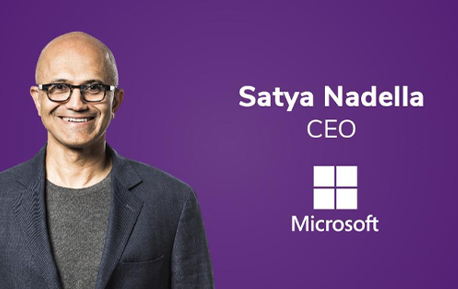
Satya Nadella’s career as Chairman and CEO of Microsoft serves as a powerful example. Nadella pursued his MBA at the University of Chicago Booth School of Business on weekends while continuing his professional career. He has often noted how this helped broaden his thinking beyond technical expertise into business strategy and organisational dynamics. His trajectory reflects the idea that broader managerial capability is the engine of long-term growth.
Similarly, Bodhisattwa Dasgupta, CTO and Head of Proposals at JWIL Infra Limited and a PGPGM participant, reflects: “The programme gave me the background to understand why I was doing things… It really broadened my perspective as a leader”.
Reframing the conversation
Ultimately, the value of an MBA is no longer defined only by the role you secure immediately after graduation. It is defined by the kind of professional you become over the course of your career.
How the PGPGM-Executive at SPJIMR approaches executive learning
The Post Graduate Programme in General Management (PGPGM-Executive) is specifically designed for professionals with 4+ years of experience.
- Duration: 2 years (alternate weekends).
- Locations: Dual-city access at Mumbai and Delhi campuses.
- Certification: Participants are awarded the AICTE-approved ‘PGDM – Executive Management Programme’.