



At SPJIMR, journalist and author Sidharth Bhatia explores the Mumbai that lies beyond its skyline
17 November 2026
Mumbai is described as the city where dreams come true, a metropolis that promises to provide limitless opportunities, fulfil ambitions and offer a better future to everyone who arrives on its shores. However, beneath its iconic skyline, the ever-bustling streets and expanding infrastructure, there exists an extremely complex reality, shaped by widening economic disparities, disappearing neighbourhoods and diverse communities struggling to keep pace with the city’s transformation.
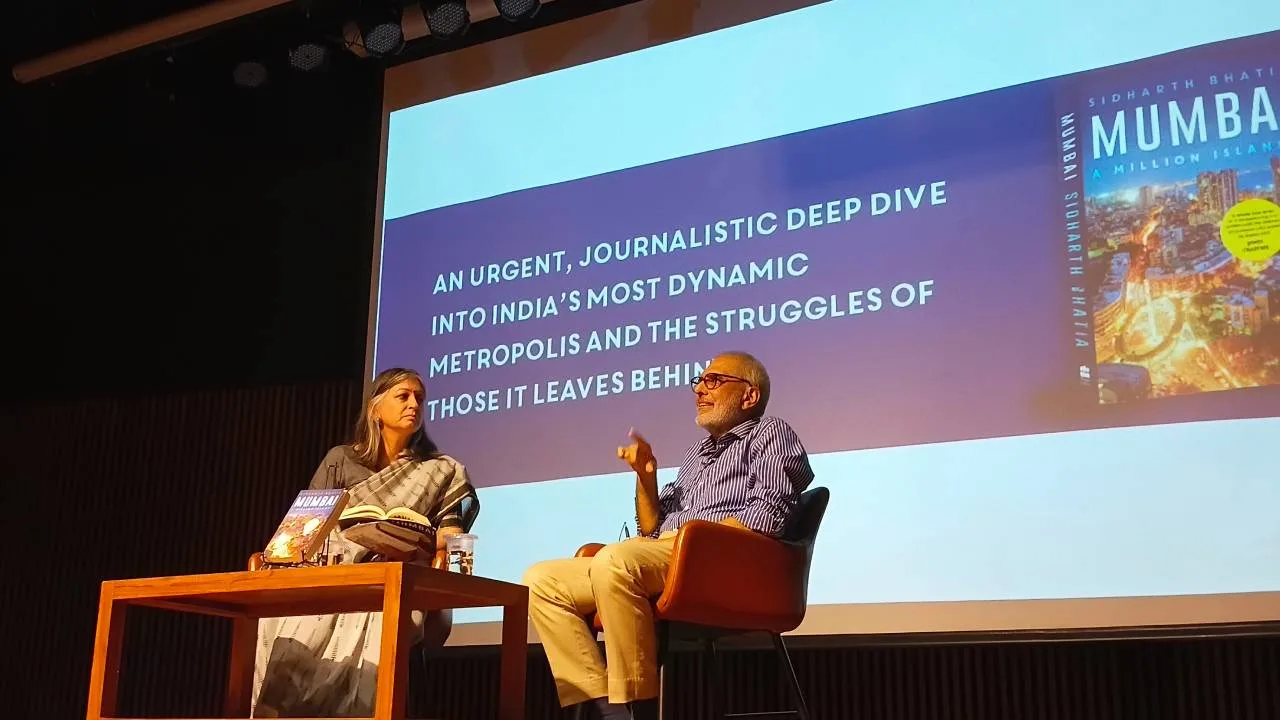
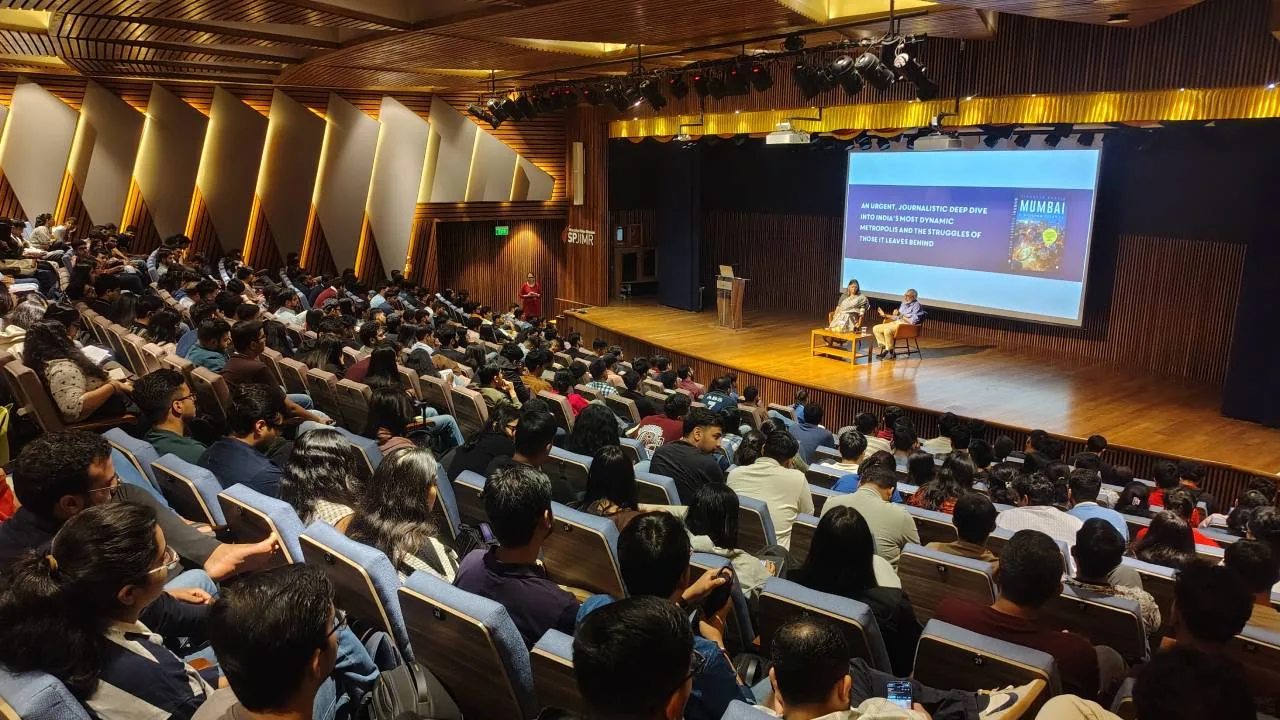
Exploring these lesser-known dimensions of the metropolis, SPJIMR hosted an insightful session with Sidharth Bhatia, veteran journalist, founder-editor of The Wire and author of Mumbai, A Million Islands. Titled ‘An urgent journalistic deep dive into India’s most dynamic metropolis and the struggles of those it leaves behind’, the session, held on Tuesday, November 17 at the MLS Auditorium, explored Mumbai through the people who inhabit it, the neighbourhoods they call home and the social structures that are often overlooked in conversations about urban development. Bhatia was in conversation with Arati Nagaraj, Director, Abhyudaya and engaged in an interactive Q&A with participants of SPJIMR’s Post Graduate Diploma in Management (PGDM) and PGDM Business Management (PGDM (BM)) programmes.
The discussion began with Bhatia sharing what motivated him to write the book. Having grown up in Bombay (now Mumbai) and returned after several years away, he noticed that many familiar neighbourhoods were changing rapidly. Old buildings and communities were disappearing, making way for new glass-and-steel skyscrapers, gated complexes and increasingly exclusive residential spaces. This transformation raised an important question: as the city modernises, what happens to the people and communities that have shaped it? He questioned whether redevelopment also destroys the social relationships that communities have built over generations.
Drawing on several years of research and conversations with people across diverse socio-economic backgrounds, Bhatia highlighted how redevelopment can alter more than just physical spaces. He spoke about the informal networks of support that often exist in densely populated neighbourhoods. For instance, in places like Dharavi, a child walking through the lanes is surrounded by familiar neighbours who collectively look out for her. However, moving into an apartment complex may provide better facilities while also weakening these everyday connections and the sense of looking out for each other. He emphasised that this was not about romanticising slum conditions, but recognising the social structures that redevelopment must take into account.
One of the most interesting aspects of the conversation was the distinction between East and West ‘Bombay’, rather than the conventional North-South divide. While the western side is often associated with upscale buildings, cultural activity, better infrastructure and transportation, the eastern side has historically been more industrial and home to lower-income communities. Ironically, Bombay’s original centre of activity and social life was in the east, around its port. The city gradually expanded westwards, particularly through reclamation and development from the 1920s onwards. His account of Marine Drive offered another glimpse into how the city’s geography and identity evolved.
Bhatia drew attention to the stark inequalities in access to even the basic amenities. One of the most striking moments of the session came when he asked students how much they paid for the water they consumed. Citing the cost of water, he explained that residents of a regular residential building might pay approximately ₹8 per 1,000 litres, while people in tanker-dependent settlements could pay as much as ₹40 per 100 litres making it ₹400 for the same quantity (1000 litres). Such disparities challenge the assumption that access to essential services is equal across the city.
Out of all the stories Bhatia shared, one of the most shocking was from his research on a terrace community comprising 28 families, whose lives had unfolded within the same building over generations. He also described households where multiple generations continued living in extremely small homes, partly because moving away could mean losing their claim to the family property. These accounts illustrated the deep emotional, social and economic ties people develop with their neighbourhoods.
The biggest takeaway from the session was the recurring message that the best way to understand Mumbai, or any city for that matter, is to walk through it. Bhatia explained that travelling through the city in a car or Uber offers only a limited perspective. Walking through neighbourhoods, observing everyday interactions and speaking to residents reveal the contrasts and complexities that often remain invisible.
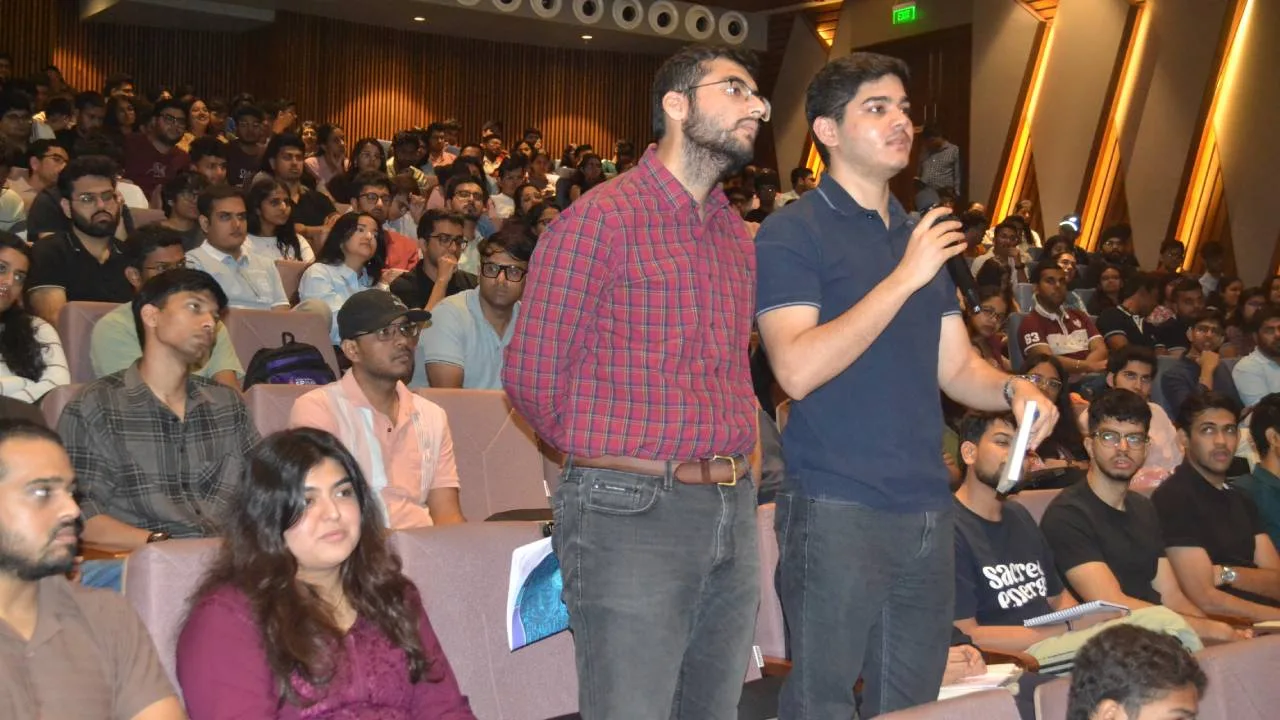
The interactive discussion with students brought several important questions to the forefront, including journalistic ethics, the role of government in slum redevelopment, citizen participation and the responsibility of businesses and NGOs. He stressed the importance of approaching communities without preconceived notions or a sense of pity. He also questioned the popular idea of the ‘spirit of Mumbai’ when it is used to celebrate people’s ability to endure poor infrastructure, flooding and inadequate civic services. Resilience, Bhatia argued, should not become an excuse for governance failures.
The session concluded with reflections on how students and citizens can contribute through greater awareness, meaningful engagement with local communities and support for initiatives that respond to their actual needs.
Ultimately, the session offered a compelling reminder that Mumbai cannot be understood through its skyline alone. Beneath its image of ambition and constant reinvention lies a city of neighbourhoods, memories and communities whose stories deserve to be heard. Everyone has the right to be a citizen of this city. As Sidharth Bhatia’s book illustrates, understanding Mumbai also means paying attention to those who risk being left behind as it moves forward.