
Doing Business in India (DBI)
The Doing Business in India (DBI) programme offers global executives and business students an immersive introduction to India's business environment, combining classroom learning with industry exposure. Participants develop practical insights into India's economic, regulatory, and cultural landscape.
Programme objective
DBI enables participants to identify and evaluate emerging opportunities in India while understanding the political, economic, technological, legal, environmental, regulatory, and cultural factors that shape market success.
Why India, why now
India is where global strategy, talent, and markets are converging
Digital economy at scale
Unified Payments Interface (UPI) has made India a live lab for real-time digital payments and financial inclusion — a case study that no classroom slide can replicate.
Rising manufacturing base
The Production Linked Incentive (PLI) scheme spans 14 sectors, from electronics to pharmaceuticals, actively reshaping global supply chains.
Live sustainability story
The renewable energy transition and circular business models (reuse, recycle, refurbish) are being tested in real time in India.
World's fastest-growing major economies
Understanding India's regulatory, cultural, and consumer landscape is now a core, not optional, global business competency.
Programme structure
India: macro view and business landscape
PESTLE framework · Social landscape and demographic advantage · Regulatory aspects
India as a market
Decoding the Indian consumer · Creating shared value · Corporate experience in rural markets
India as a manufacturing hub
Government relations, approvals, and public policy · India's role in global manufacturing
Digital India
Technological innovation · UPI, Aadhaar and DPI frameworks · Technology and financial inclusion
Startups and future frontiers
India's tech start-up ecosystem · Growth and impact of e-commerce
- Introduction to India and to DBI
- Understanding markets and market formats
- Socio-economic case study workshop
- Business opportunities and government policy
- Sustainable business: reuse, recycle, refurbish
- HR/OB in the Indian context · Supply chain · Team building
- India's external sector and key trading partners
- Industry outlook: media and entertainment
- Regulatory aspects of doing business in India
- CSR and corporate governance, Indian perspectives
- Marketing management for the Indian environment
- Science of Spirituality (SOS) session
- Startup ecosystem and tech-oriented design thinking
- Family-managed business in India
- Digital India: UPI, Aadhaar and DPI frameworks
- Renewable energy transition · NGOs
- Business analytics / big data, Indian perspective
- E-commerce growth · Emerging-market multinationals (GCCs)
Pedagogy
Pedagogy built for adult, cross-cultural learners
The SPJIMR experience

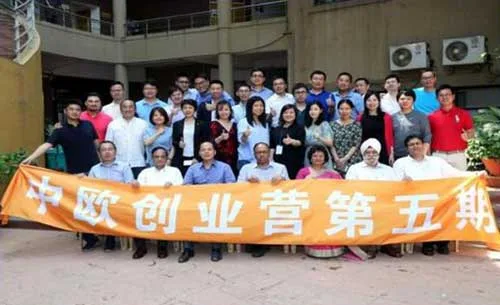
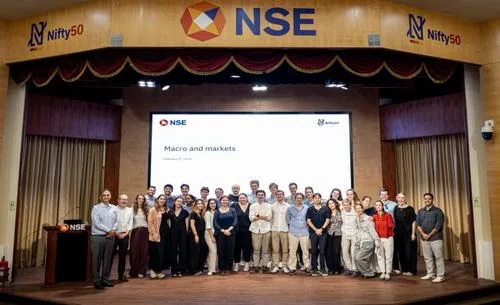



Trusted by institutions worldwide
Academic and corporate partners SPJIMR has already worked with (indicative).



























Why partner with SPJIMR
For academic partners
- Ready-made, credit-eligible global immersion; no curriculum built from scratch
- Faculty and thought-leadership exchange with a triple-accredited (EQUIS, AACSB, and AMBA) school
- A structured pedagogy for accreditation and study-abroad reviews
- Flexible short (5-day) or long (3-week) formats to fit your academic calendar
- Joint case-writing and research collaboration opportunities
For corporate partners
- First-hand India market-entry intelligence — policy, consumer, and regulatory realities
- Direct access to a high-calibre talent and alumni pipeline for hiring and secondments
- Curated corporate visits that position your business as a thought leader to global cohorts
- CSR/ESG engagement through NGO and rural-market modules
- A low-risk way to test India strategy before committing capital
Proposed engagement models
Custom short module
A focused 5–7 day immersion — ideal as a low-commitment pilot cohort.
Immersive long module
A 2–3 week deep-dive for MBA or executive cohorts wanting full depth.
Faculty and knowledge exchange
Visiting faculty, guest lectures, and joint curriculum design between our teams.
Joint research and case development
Co-authored case studies and applied research on India-specific business themes.
A simple path from conversation to cohort
Discovery call
Understand your cohort, calendar and goals
Needs mapping
Jointly shape objectives & format fit
Pilot design
Co-design a first short or long module
Delivery & feedback
Run the pilot, gather structured feedback
Scale to a calendar
Move to an annual or recurring partnership
Let's explore what an India immersion could look like for your cohort