






In Indian boardrooms, the very definition of leadership is undergoing a fundamental transformation.
For decades, leadership was measured primarily through growth rates, market capitalisation and expansion speed. Today, those metrics still matter, but they are no longer sufficient. Increasingly, investors, regulators, employees and consumers are asking a different question: How is growth being achieved?

In this environment, values are no longer symbolic statements in annual reports. They are becoming operational levers. They are influencing risk management, talent retention, capital access and brand resilience. Values-based leadership, once considered aspirational, is now emerging as a competitive advantage in corporate India.
What values-based leadership really means
Values-based leadership is often misunderstood as moral positioning or public-facing corporate responsibility. In practice, it is far more structural. It involves integrating ethical principles into the core strategies of an organisation, ensuring that decisions reflect guiding values rather than short-term performance alone.
It implies consistency between purpose and performance. It demands that leaders think beyond quarterly earnings to institutional longevity. Crucially, it is not about avoiding commercial ambition. It is about embedding ethical judgment within commercial strategy.
The legendary business leader Ratan Tata’s once remarked, “I don’t believe in taking the right decisions. I take decisions and then make them right.” His statement reflects a powerful leadership mindset grounded in responsibility, moral courage and the conviction to choose long-term commitment over short-term perfection. The Tata Group’s long-standing reputation for governance and institutional trust clearly illustrates this.
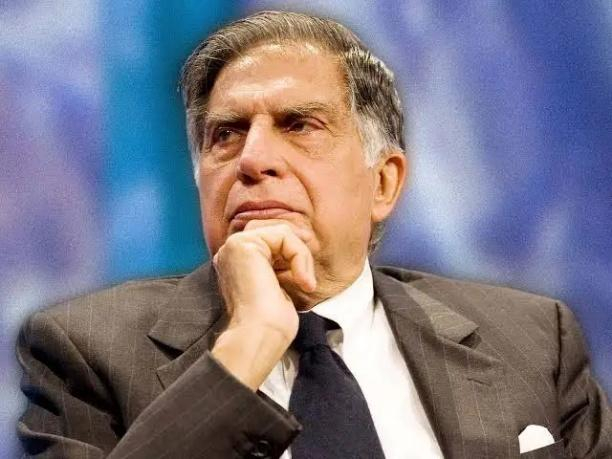
Image credit: Medium
In volatile business environments, principles reduce ambiguity. They create decision filters. When regulatory landscapes tighten, when public scrutiny intensifies, or when crises emerge, leaders operating within a clearly defined values framework are often able to respond more decisively because organisational boundaries and priorities are already established.
In volatile markets, principles reduce ambiguity. They provide decision filters. When regulatory landscapes tighten, when public scrutiny intensifies, or when crises emerge, values serve as stabilisers. Leaders who operate within a values framework are often able to act decisively because their boundaries are already defined.
Why it matters more in India today
India’s corporate landscape is evolving rapidly. Several structural forces are converging to make values-based leadership strategically relevant.
Governance scrutiny is intensifying
Corporate governance standards have strengthened significantly over the past two decades. Independent boards, disclosure requirements and regulatory oversight have increased expectations of transparency and accountability.
Leaders are no longer judged solely by financial performance but also by the robustness of their governance systems. Values, when institutionalised through board processes and accountability mechanisms, reduce governance risk and enhance credibility.

Image credit: TOI
For example, SEIL Energy India was awarded the Golden Peacock Award for Excellence in Corporate Governance in 2025, recognising its commitment to transparency, accountability and responsible business practices.
Capital flows reward credibility
Institutional investors, both domestic and global, increasingly evaluate governance quality and ESG alignment before allocating capital. Access to long-term funding is often influenced by how convincingly a firm demonstrates ethical discipline and sustainability thinking.
Organisations perceived as values-consistent attract patient capital. Those seen as opportunistic may face valuation discounts.
Consumers reward trust
In a digital economy, information asymmetry has narrowed. Consumers can rapidly evaluate brand behaviour, labour practices and environmental commitments.
Trust has become economically measurable. Brands that align actions with declared values build loyalty that outlasts pricing advantages.
Talent chooses purpose
India’s emerging workforce (particularly younger professionals) often prioritises meaning, culture and ethical clarity alongside compensation. High-performing graduates are increasingly selective about organisational ethos.
Companies led by leaders who demonstrate integrity and consistency are better positioned to attract and retain top talent. Culture, once intangible, now influences competitive positioning.
The risk of performative values
However, the rise of values-based discourse also carries risk. Purpose statements are easy to draft; embedding them in systems is considerably harder.
When values remain performative, detached from incentive structures or operational decisions, credibility erodes quickly. Stakeholders are adept at identifying inconsistencies between rhetoric and behaviour.
Values become a competitive advantage only when translated into:
Clear governance frameworks
Transparent decision criteria
Aligned performance metrics
Accountability at leadership levels
Without this integration, values function merely as branding tools.
From personal ethics to institutional design
One of the most important shifts in contemporary leadership thinking is recognising that personal integrity, while essential, is insufficient on its own.
Institutions outlast individuals. Therefore, values must move from personal conviction to structural design.
This means embedding principles into:
Board oversight processes
Succession planning
Risk assessment models
Organisational
culture systems
Incentive and
reward structures
Leaders must develop the capacity to balance commercial ambition with societal responsibility. This balancing act requires judgement, the ability to evaluate complex trade-offs where legal compliance, reputational risk and long-term strategy intersect.
Judgement cannot be improvised under pressure. It must be cultivated.
Where leadership education becomes critical
If values-based leadership is to function as a competitive advantage rather than corporate rhetoric, it must be developed deliberately. This is where management education plays a defining role.
The PGDM programme at S.P. Jain Institute of Management & Research (SPJIMR) has long positioned leadership development at the centre of its design, alongside managerial competence. As Prof. Varun Nagaraj, Dean, SPJIMR, highlights, the institute seeks to “influence practice and promote value-based growth” by shaping leaders who view ethical reflection as integral to decision-making rather than optional.
The programme’s architecture integrates exposure to diverse socio-economic contexts, encouraging students to confront real-world complexity. Structured reflection components push participants to examine not only what decisions they make, but why. PGDM learning outcomes explicitly position leadership formation at its core, focusing on socially sensitive and ethical decision-making.
This becomes especially significant in the Indian context, where leaders often operate within:
- family businesses transitioning towards professional management
- high-growth start-ups scaling rapidly
- conglomerates navigating regulatory complexity
- and globally integrated firms balancing local realities with international expectations
In such environments, leaders must make decisions that balance ambition with accountability. A values-informed framework supports:
- Responsible scaling
- Transparent governance
- Sustainable growth strategies
- Stakeholder trust
The competitive advantage arises not from moral positioning, but from reduced volatility. Research from McKinsey & Company supports this, noting that organisations with a strong sense of purpose are five times more likely to deliver breakthrough innovations and tend to exhibit:
- Lower governance risk
- Stronger internal cohesion
- Greater long-term strategic clarity
- Higher resilience during crises
Values as strategic foresight
Corporate India stands at an inflection point. Rapid growth, global integration and technological transformation are redefining the business landscape. At the same time, public expectations around transparency and responsibility are rising. In this environment, leadership defined solely by financial metrics is incomplete.
Values-based leadership provides strategic foresight. It aligns short-term action with long-term institutional sustainability. It builds trust capital, mitigates reputational shocks and fosters cultures where ethical clarity reduces internal friction.
As Indian corporations scale and institutionalise, competitive advantage will increasingly belong to those who can balance growth with conscience, performance with responsibility, ambition with accountability.
Learn more about the PGDM programme here.
Register your interest for this programme
Please fill in the following details