


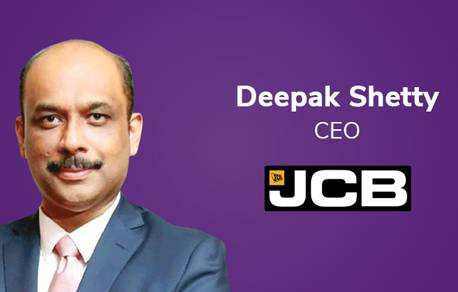
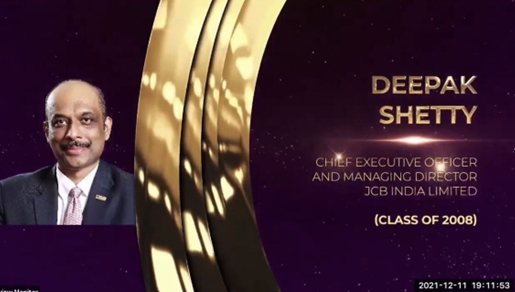
More than two decades after graduating from PGEMP, Deepak Shetty looks back at a journey that took him from being a Graduate Engineer Trainee at Larsen & Toubro to becoming the CEO & MD of JCB India.
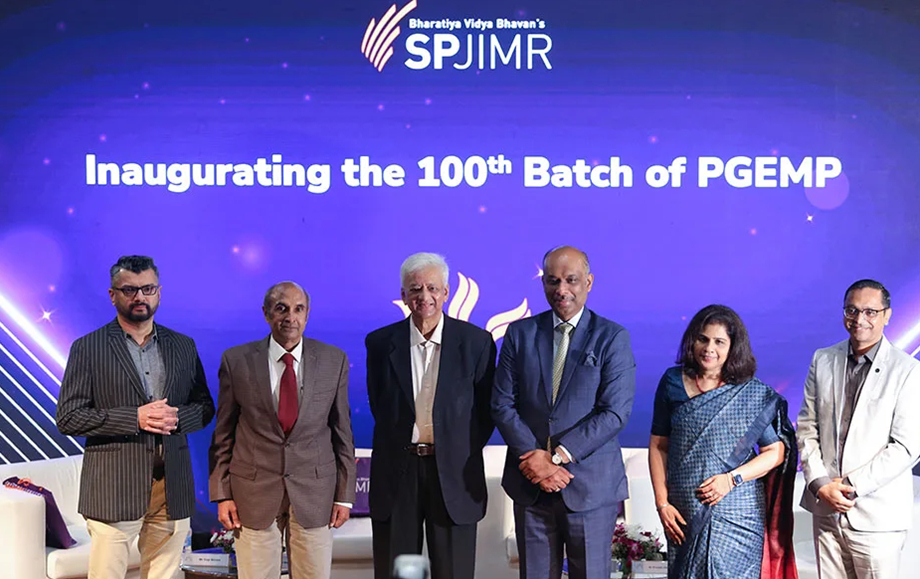
Returning to the SPJIMR Mumbai campus during the inauguration of PGEMP’s 100th batch, he reflected on the leadership lessons, career transitions, and lifelong learning that have shaped his professional journey.
Along the way, one realisation became increasingly clear to him – leadership demands far more than technical expertise.
For many working professionals, there comes a point in their careers when functional excellence is no longer enough. As responsibilities expand, so does the need to understand business, lead teams, influence stakeholders, and make strategic decisions.
His PGEMP journey wasn’t about earning another qualification. It was about preparing himself for the leadership roles he aspired to take on.
When technical expertise is not enough
Deepak began his career at Larsen & Toubro as a Graduate Engineer Trainee. Over the years, he gained experience across operations, design engineering, and international sales, including an overseas assignment in Houston.
By every measure, his career was progressing well. Yet, he realised that transitioning into management required a broader understanding of business.
“I was missing out on the classical understanding of various facets of management. I was very clear in my mind that my journey as an engineer was now going to transition into more of a managerial role.”
This is a challenge many professionals encounter. The next stage of growth often demands a different set of capabilities – financial acumen, strategic thinking, people management, and cross-functional leadership.
Executive management programme vs. full-time MBA
At the time, when he was evaluating multiple options for management education. While full-time programmes offered immersive learning experiences, they also meant stepping away from work.
PGEMP offered him something different – the opportunity to continue building his career while simultaneously investing in his growth as a leader.
“The beauty of this programme was that it gave me an opportunity to continue to work, and I was really enjoying what I was doing at L&T, and along with that I got the knowledge I was seeking. It was the best of both worlds.”
Importantly, he challenges the common perception that flexibility comes at the cost of rigour.
“It was not a part-time course. The rigour, the focus, and the demands were no less than a full-time course.”
For him, PGEMP wasn’t about collecting another degree. It was about acquiring the knowledge, skills, and mindset required for leadership.
Balancing work and study
Pursuing executive education while working full-time is demanding. During his 21 months at PGEMP, he was working in the international sales division of L&T’s heavy engineering business and made 21 international trips.
“I used to submit assignments at airports.”
Despite the demanding schedule, he remained deeply committed to both his professional responsibilities and academic journey.
His efforts were recognised when he graduated among the Dean’s Top Five – an achievement he remembers fondly even today.
For working professionals wondering whether it is possible to balance work and study, his story offers a practical reminder that while it requires commitment and discipline, it is achievable when the learning aligns with one’s long-term career aspirations.
Leadership lessons that stayed with him
When asked what he learned during PGEMP, Deepak admits that summarising the experience isn’t easy.
Three aspects stand out most vividly:
Building a deeper understanding of finance and business management.
Learning alongside accomplished professionals from diverse industries.
Developing leadership and managerial capabilities at the right stage of his career.
The programme offered more than classroom learning. It created opportunities to understand how business challenges are approached across industries and functions.
Equally important was the opportunity to learn from peers navigating similar career transitions.
The inverted triangle of leadership
One of Deepak’s most compelling insights is his framework for understanding leadership growth.
“As you grow, it’s like an inverted triangle. The part where subject matter expertise matters – that reduces. Your leadership skills start becoming more important. Your people connect becomes more important.”
The higher professionals progress in their careers, the more their success depends on enabling others to succeed.
Leadership is no longer about individual contribution alone. It becomes about motivating teams, making better decisions, and creating organisational impact.
For Deepak, PGEMP accelerated this transition by providing the frameworks, perspectives, and experiences required to think beyond functional expertise.
Advice for working professionals
Speaking to current PGEMP participants during the inauguration event, Deepak shared three pieces of advice that remain relevant for professionals at any stage of their leadership journey.
Be vulnerable
“Enjoy the learning. Try to assimilate the learning also from your colleagues and see how you can apply it in your day-to-day life.”
Executive education delivers the greatest value when approached with curiosity rather than competition.
Make your capstone projects meaningful
“Don’t do it just as a tick-mark exercise. Do something which benefits your organisation, but also in turn benefits you.”
Applying classroom learning to real business challenges creates far greater impact than simply completing academic requirements. The capstone is the mechanism by which PGEMP applies learning to real business problems. The executives who treat it as an opportunity to solve meaningful business problems often take away far more than just a credential.
Stay connected
“Keep contact with both your professors and your friends. That learning process has only started.”
Learning doesn’t end at graduation. The relationships built during executive education often continue to create value throughout one’s career.
What makes SPJIMR different?
On asking what makes SPJIMR different, Deepak’s answer isn’t about rankings or credentials.
“SPJIMR has a gurukul kind of atmosphere. It is more than just learning about management.”
More than twenty years after graduating, that connection continues to remain meaningful.
When he returned to campus to address PGEMP’s 100th batch, he did so not merely as a distinguished alumnus but as someone who continues to believe in the transformative power of lifelong learning and leadership development.
Is this your moment?
Deepak was five to six years into his career when he joined PGEMP. He was technically strong, eager to learn, and ready to prepare himself for the leadership responsibilities that lay ahead.
If you find yourself at a similar inflection point – ready to broaden your perspective, strengthen your leadership capabilities, and grow without stepping away from your career – executive education could be your next step.
PGEMP is a 21-month modular programme for mid to senior level working professionals. Accredited by AMBA (Association of MBAs, UK), the programme offers multiple cohort intakes every year, enabling professionals to pursue management education while continuing to work.