




College is often seen as a time to build academic knowledge and prepare for a first job. But it can also be one of the best times to develop a different set of skills: the ability to identify opportunities, solve problems, communicate ideas, and turn those ideas into action.
These entrepreneurial skills for college students sit at the heart of entrepreneurship, and they are useful even if starting a business is not part of a student’s plans.
Whether a student hopes to launch a venture, join a start-up, contribute to a family business, or bring an innovative mindset to a larger organisation, entrepreneurial skills can provide a strong foundation for future academic and professional opportunities.
So, what are the entrepreneurial skills college students should start developing today?
Entrepreneurial thinking
Entrepreneurship starts with a mindset: being curious about how things work, noticing problems and looking for opportunities to improve them.
For college students, entrepreneurial thinking means learning to look beyond the obvious answer. Instead of simply asking, ‘What can I do?’, it encourages students to ask, ‘What problem can I solve?’
This way of thinking can help students:
- Identify opportunities around them
- Look at familiar problems from different perspectives
- Think creatively and explore new possibilities
- Generate new ideas
- Question existing approaches
- Become more comfortable with experimentation
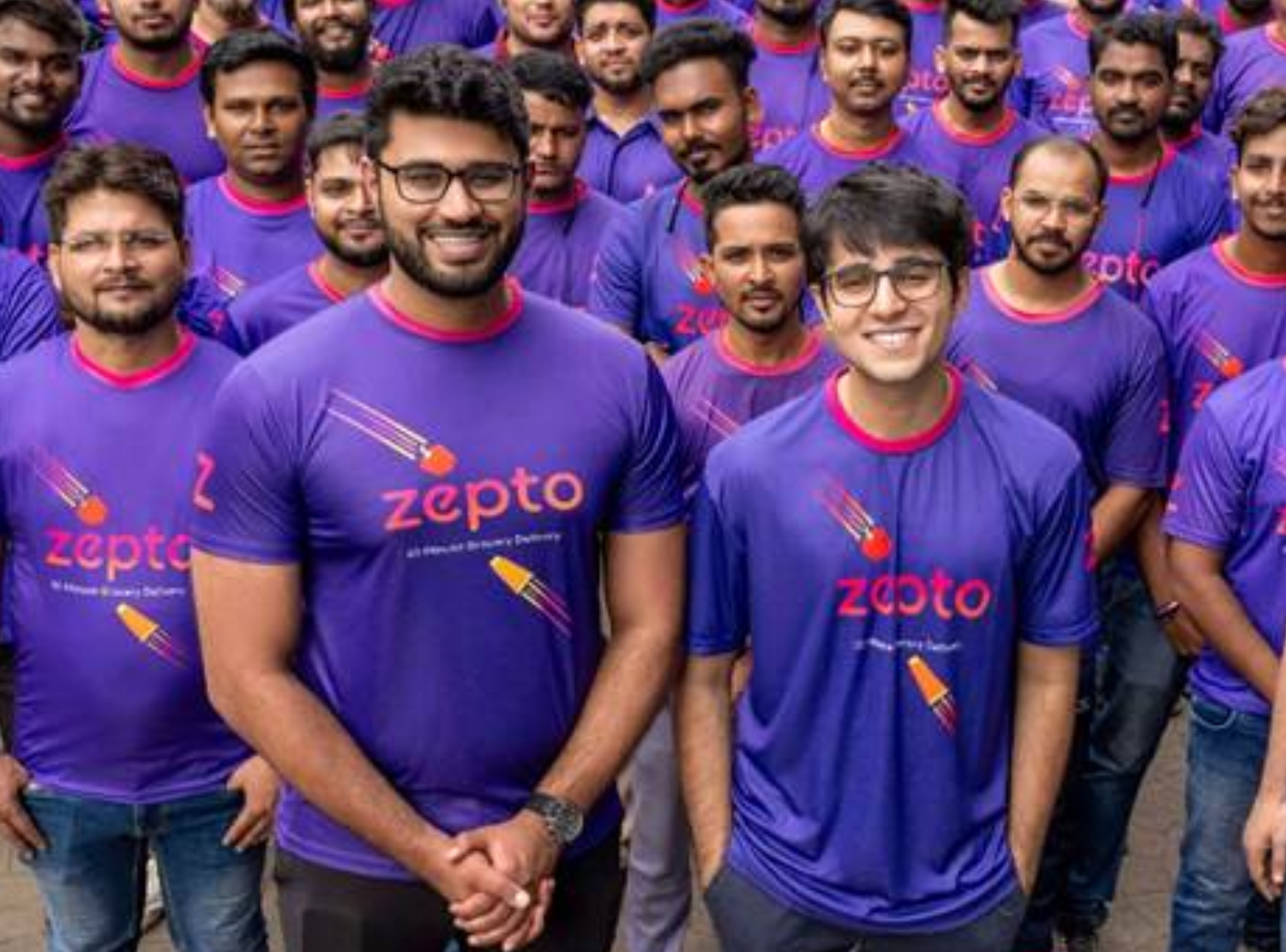
Image credit: Economic Times
Developing this mindset during college can help students approach both academic and professional challenges with greater curiosity and initiative.
Zepto offers a useful example of entrepreneurial thinking in action. Founders Aadit Palicha and Kaivalya Vohra identified an opportunity to make grocery delivery significantly faster, developing a 10-minute delivery model that they believed could change how people bought everyday essentials.
Problem-solving and decision-making
Ideas only become valuable when they address real problems.
Entrepreneurial students need to understand a problem, explore possible solutions, and make decisions about what to do next. Often, there is no perfect answer or complete set of information.
Developing problem-solving skills can involve learning to:
- Break complex problems into manageable parts
- Understand the people affected by a problem
- Compare different possible solutions
- Make decisions with the information available
- Learn from feedback and unsuccessful attempts

Image credit: Startup Talky
Canva’s journey also illustrates how entrepreneurial opportunities can emerge from everyday frustrations. Co-founder Melanie Perkins had observed how difficult existing design software was for people to learn and use. This insight eventually contributed to Canva’s focus on making design simpler and more accessible. For students, the takeaway is simple: good problem-solving often starts with understanding why something is difficult for the people who use it.
For students, projects, competitions, internships, group assignments, and other opportunities to work on real-world challenges can help develop these skills.
Communication skills
A good idea needs to be communicated clearly before others can understand or support it.
Entrepreneurship therefore requires more than coming up with ideas. Students also need to learn how to explain their thinking, listen to others, and adapt their communication to different audiences.
Important communication skills include:
- Presenting an idea clearly
- Explaining a problem and proposed solution
- Listening actively
- Asking useful questions
- Communicating with confidence
- Responding constructively to feedback
These skills can be particularly valuable when students eventually have to present an idea to a potential employer, investor, client, colleague, or business partner.
Leadership and teamwork
Entrepreneurship is rarely a solo activity. Turning an idea into something meaningful usually involves working with people who have different skills, experiences, and perspectives.
College provides plenty of opportunities to practice this.
Students can develop leadership and teamwork skills by taking responsibility for projects, working in diverse teams, managing disagreements, and learning when to lead and when to listen.
Some of the most useful habits include:
- Taking initiative rather than waiting to be asked
- Sharing responsibility
- Respecting different perspectives
- Giving and receiving feedback
- Taking ownership of outcomes
- Helping a team stay focused on a common goal
These capabilities are relevant far beyond entrepreneurship and can support students throughout their academic and professional journeys.
Turning ideas into action
One of the biggest differences between learning about entrepreneurship and actually developing an entrepreneurial mindset is the opportunity to put ideas into practice.
A student may have a promising idea, but the real learning begins when they try to answer questions such as:
Who has this problem?
Why does it matter?
Could this
solution work?
What would need
to change?
What does the feedback tell us?
The process can look something like:
Idea
Problem
Solution
Testing
Feedback
Improvement
Airbnb provides a well-known example of why testing an idea matters. Before building the global platform it is today, its founders tested whether people would actually pay to stay in someone else’s home by hosting guests in their own apartment during a design conference in San Francisco. The experiment gave them evidence that the underlying idea could work before they attempted to build it at scale. For students, the lesson is that testing an idea does not always require a finished product; sometimes the first step is simply finding a way to test the assumption behind it.
Learning through this process helps students understand that entrepreneurship is not simply about having a great idea. It is about testing assumptions, learning from experience, and continuously improving an idea.
Networking and collaboration
Entrepreneurial opportunities rarely exist in isolation. Students can learn a great deal by interacting with people outside their immediate academic environment.
Connecting with entrepreneurs, professionals, mentors, and other students can expose them to different industries, perspectives, and ways of approaching problems.
Students can begin building these networks through:
Entrepreneurship clubs and communities
Workshops and seminars
Competitions and projects
Internships
Mentoring opportunities
Conversations with entrepreneurs
and professionals
The goal is not simply to collect contacts. It is to learn from people who have different experiences and perspectives.
Building a professional profile
Entrepreneurial experience can also complement a student’s academic profile.
For students applying for internships, placements, higher education, or their first professional opportunities, being able to demonstrate initiative and practical experience can add another dimension to their profile.
Working on entrepreneurial projects can give students experiences they can talk about in applications and interviews: a problem they identified, an idea they developed, a team they worked with, or a challenge they had to overcome.
The value is not necessarily whether the idea eventually becomes a successful business. The learning and experience gained through the process can be valuable in itself.
How can college students develop entrepreneurial skills?
Students do not necessarily need to start a company to begin developing entrepreneurial capabilities.
They can start by looking for opportunities to apply what they learn. For example, they could:
Work on a real problem as part of a college project
Participate in entrepreneurship competitions
Join student communities focused on innovation
Attend workshops and seminars
Practise presenting and defending ideas
Collaborate with students from different disciplines
Seek conversations with entrepreneurs and professionals
Take an idea and test it rather than leaving it on paper
The important part is moving beyond purely theoretical learning and getting opportunities to experiment, collaborate, and solve real problems.
How SPJIMR’s EnPower Certificate Programme in Entrepreneurship helps students build these skills
For students who want structured exposure to entrepreneurship alongside their undergraduate education, the EnPower Certificate Programme in Entrepreneurship at S.P. Jain Institute of Management & Research (SPJIMR) offers a two-month hybrid learning experience.
The value of experiential learning and mindset shift is highlighted by EnPower Batch 7 participant Satwik Jallepalli, a BBA student and freelance music professional. Sharing how the programme helped him build confidence, Satwik highlights key takeaways from his journey:
- Overcoming self-doubt: The EnPower programme sets clear expectations of what the entrepreneurship journey looks like without sugarcoating it. Having that honest understanding helps participants overcome anxiety, push past self-doubt, and step out of their comfort zone.
- The power of peer learning: Seeing batchmates from diverse backgrounds all pushing themselves out of their comfort zones creates an inspiring environment to learn and grow together.
- Advice for future participants: Push yourself out of your comfort zone, put yourself in environments where you can learn, and go get what you want.
Offered by SPJIMR’s Centre for Family Business & Entrepreneurship, EnPower is designed for undergraduate students, recent graduates, and students who have completed Class 12 and enrolled in an undergraduate programme. The programme combines entrepreneurial learning with experiential projects, interactions, and collaborative learning to help students develop entrepreneurial thinking, problem-solving, communication, leadership, teamwork, and innovation skills.
Learn from faculty and practitioners
The programme gives students an opportunity to learn from SPJIMR faculty and engage with the entrepreneurial ecosystem. Its focus is on developing an entrepreneurial mindset alongside practical business knowledge and future-ready skills.
Learn by doing
EnPower places emphasis on hands-on learning. Participants work on real-world business challenges and entrepreneurial problem-solving rather than limiting their learning to classroom concepts.
At the end of the two-month hybrid programme, participants develop and present a business idea aimed at addressing a significant problem, with mentoring support for the final presentation.
Build leadership, communication and teamwork skills
Alongside entrepreneurial and innovative thinking, the programme focuses on leadership, teamwork, communication, innovation, and business problem-solving. These skills can support students not only in entrepreneurial pursuits but also in academic and professional settings.
Network beyond the classroom
Participants can also interact with like-minded peers and entrepreneurs associated with the start-up and family-business ecosystems, build their networks, and participate in seminars and workshops.
Learn alongside college
The hybrid format is designed to fit around a student’s college schedule. EnPower features online sessions on Wednesday evenings and hybrid sessions on Saturday evenings, with the option to attend Saturday sessions online or on campus.
Who can benefit from entrepreneurial learning?
EnPower supports undergraduate students, fresh graduates from any discipline, and Class 12 students who have enrolled in an undergraduate programme and are interested in entrepreneurship, the start-up ecosystem, or innovation.
Building entrepreneurial skills before you need them
Entrepreneurship is often associated with starting a company. But the skills behind entrepreneurship are much broader.
The ability to identify problems, think creatively, communicate ideas, collaborate with others, and turn ideas into action can be useful across a wide range of academic and professional paths.
College offers an opportunity to start developing these capabilities before they become essential in the workplace.
Ready to develop your entrepreneurial skills?
If you are a college student or recent graduate looking for practical exposure to entrepreneurship, SPJIMR’s EnPower Certificate Programme in Entrepreneurship offers a two-month hybrid learning experience focused on entrepreneurial thinking, problem-solving, communication, teamwork, and real-world business challenges.
Apply now Book a one-on-one counselling session
Register your interest for this programme
Please fill in the following details