





If there is one thing that has consistently shaped my journey, it is curiosity.
Long before I joined the Fellow Programme in Management (FPM) at S.P. Jain Institute of Management & Research (SPJIMR), I found myself drawn to questions that lay just beneath the surface of everyday conversations. Whether in professional settings or personal observations, I was often less interested in what was happening and more interested in why it was happening.
Looking back, that curiosity has been the thread connecting every stage of my journey, from Kolkata, where I grew up, to Bangalore, where I began building my professional career, and now to Mumbai, where I am pursuing doctoral research.
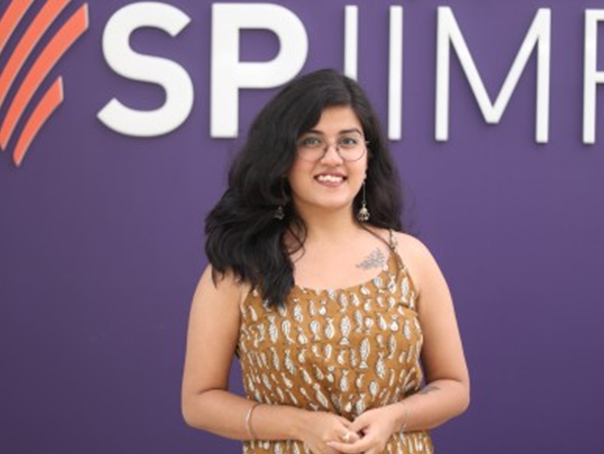
From Kolkata to Bangalore: The beginnings of a research mindset
I am a Kolkata girl through and through. The city shaped my love for the arts, conversations, and the habit of looking at the world with curiosity. After graduation, I moved to Bangalore, a city that was transformative in very different ways.
Professionally, I found myself working in a domain that constantly presented questions I could not answer through existing frameworks alone. Again and again, I encountered situations that left me wanting to dig deeper, understand underlying patterns, and challenge assumptions that everyone seemed comfortable accepting.
Somewhere during those years, I realised that I was not simply interested in solving problems. I was interested in understanding them.
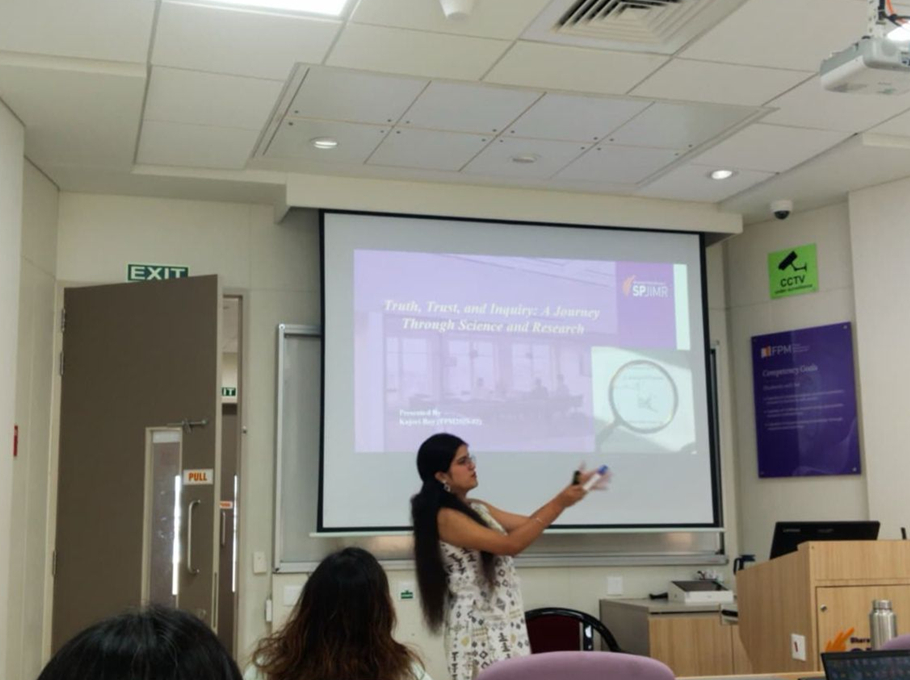
When people ask what inspired me to pursue a PhD, I often joke that it was my lifelong “but WHY though?” syndrome. But there is truth in that humour.
“There’s a very specific kind of intellectual restlessness that I’ve always had. I call it my ‘but WHY though?’ syndrome. I’d be in the middle of a professional conversation and suddenly wonder about the deeper forces at play, the assumptions we were taking for granted, the things nobody was studying closely enough.”
A doctoral programme felt like the natural place to channel that curiosity.
Why SPJIMR?
While exploring doctoral programmes, I was looking for more than academic rigour. I wanted an environment where research was taken seriously, but where people were equally invested in helping scholars grow as thinkers.
That is what drew me to SPJIMR.
“The FPM’s reputation for rigour, combined with a deeply human institutional culture, was unlike anything else I encountered.”
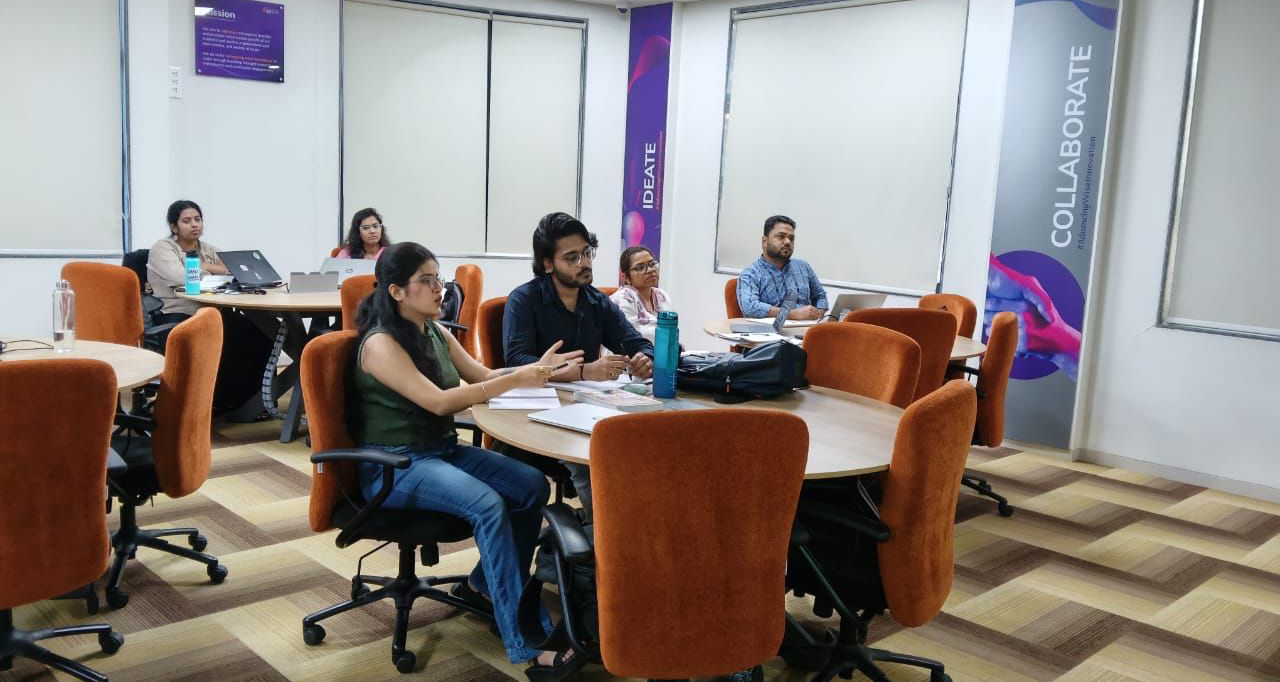
What stood out most was the balance between academic excellence and mentorship.
“The faculty here aren’t just scholars; they are mentors who actually care about your growth as a thinker and as a person.”
What particularly stood out to me was how early that mentorship begins. Many people assume doctoral guidance starts only after coursework is completed, but my experience was very different. From the beginning, I was connected with faculty members aligned with my interests and background, creating a support system that extended beyond academics.
The mentorship was not limited to research advice. It provided encouragement, perspective, and the confidence to navigate a completely new phase of life and learning.
As a doctoral scholar, I have come to appreciate how important that balance is. Research can be intellectually demanding, and having a community that encourages exploration, dialogue, and growth makes a meaningful difference.
Finding my rhythm in Mumbai
Moving to Mumbai was one of the most significant transitions of my doctoral journey. I arrived from Bangalore with what I now describe as “a slightly-too-heavy suitcase and an absolute bewilderment at Mumbai’s local train system on day two.” The city felt very different from anywhere I had lived before. It had a pace and energy that was relentless, exciting, and occasionally overwhelming.
“That first week, I was equal parts overwhelmed and completely enchanted. The city doesn’t introduce itself gently. It just arrives.”
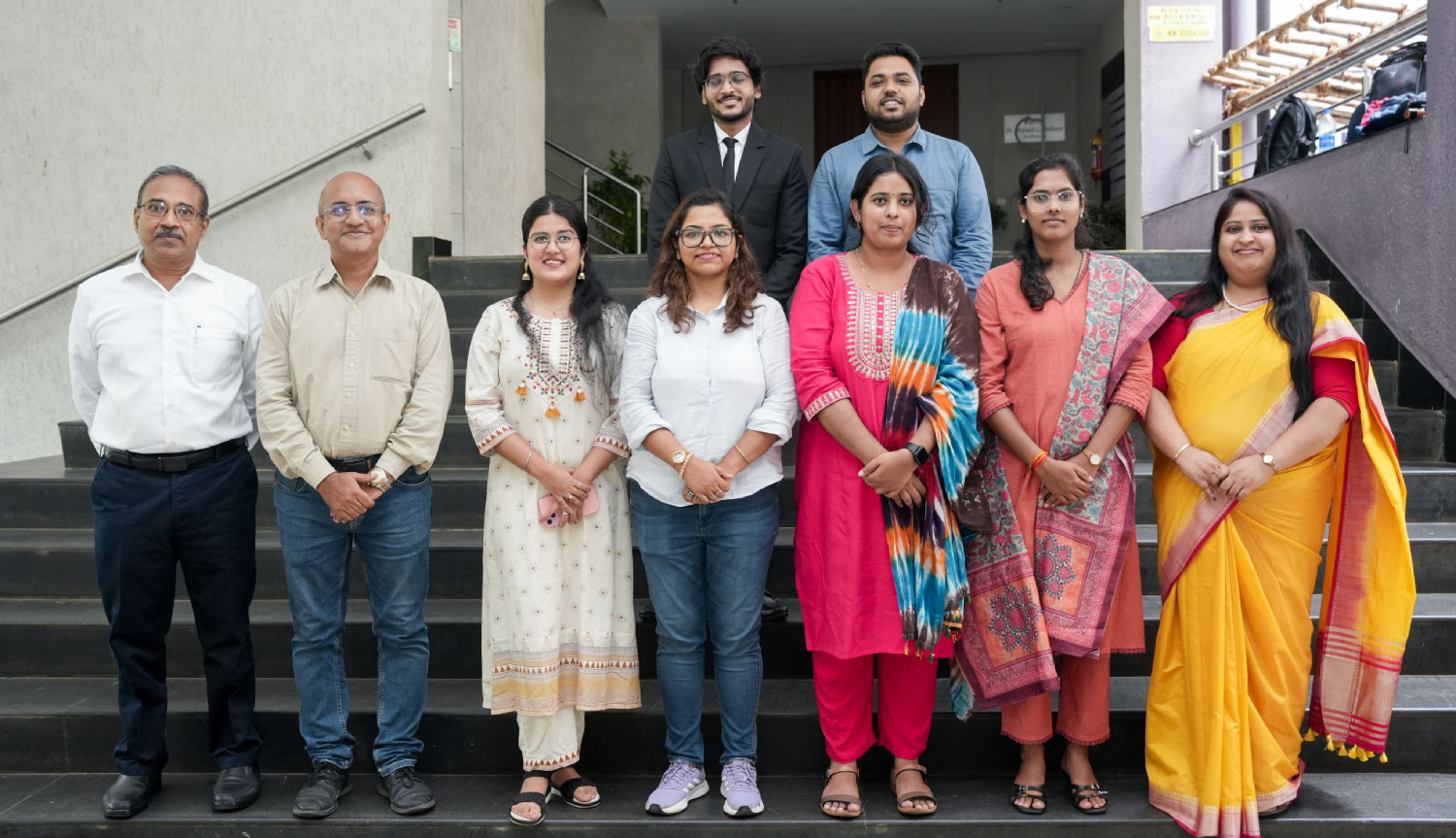
Over time, however, Mumbai stopped feeling unfamiliar and started feeling like home. Having previously experienced Kolkata’s culturally rich rhythm and Bangalore’s start-up energy, I often felt that Mumbai was a third language I had to learn. Yet it rewarded curiosity in ways I had not expected.
“Every lane has a story. Every evening near the sea has a different character. As someone who loves photography, Mumbai is basically an inexhaustible muse.”
Two years into the journey, I can confidently say that Mumbai has become an important part of my doctoral experience. The city’s diversity, openness, and constant movement have influenced not only how I live, but also how I observe, question, and engage with the world around me.
Learning to live with uncertainty
One of the biggest lessons of my doctoral journey so far has been learning to think differently. The first year of the programme challenged me in ways I did not anticipate. The coursework was demanding, the reading was extensive, and every answer seemed to generate new questions.
Yet the biggest challenge was not academic. It was learning to become comfortable with ambiguity.
“A PhD is not a problem with a clean solution at the end. You are building the map as you go.”
As someone who had always been a high achiever and generally confident about where I was headed, that experience required a genuine shift in perspective. Progress was no longer measured by having immediate answers. Instead, it became about asking better questions and remaining open to where those questions might lead.
Over time, I have come to see uncertainty differently. Rather than viewing it as something to overcome, I have learned to treat it as part of the research process itself.
The same applies to self-doubt.
“Self-doubt is actually just unasked questions in disguise. When I started treating it as information rather than an enemy, things shifted.”
Those shifts rarely happen alone. Conversations with faculty members, discussions with peers, and continuous engagement with ideas have all helped me navigate moments of uncertainty and find confidence in the process.
Finding a community of thinkers
One of the most rewarding aspects of the FPM experience has been the community.
Doctoral research is often described as a solitary pursuit, but my experience has been quite the opposite. The scholars and faculty around me have played an important role in shaping my journey.
“The FPM community is genuinely one of the most thoughtful, warm, and intellectually alive groups of people I have ever been part of.”
What makes the environment particularly valuable is the diversity of backgrounds and perspectives that people bring into discussions. Conversations often extend beyond disciplines, creating opportunities to think about familiar ideas in entirely new ways.
I still remember a seminar discussion that became a defining moment for me. During the conversation, I challenged a theoretical perspective that most people in the room seemed to accept. Instead of dismissing the idea, a faculty member encouraged me to explore it further.
“That moment. That exact moment. I thought: this is what I came for. This is the conversation I’ve been trying to have my whole life.”
For me, that experience captured the essence of doctoral education, a space where ideas are examined seriously, questions are welcomed, and intellectual curiosity is encouraged.
Over time, I have come to see doctoral education as being supported by three equally important pillars: institutional learning, faculty mentorship, and peer learning. Each one contributes something different, but together they create the foundation that allows scholars to grow, question, and persist through a long and demanding journey.
Looking back at my experience so far, all three have played a significant role in shaping my development as a researcher.
Research, creativity, and unexpected connections
Before joining the programme, I often thought of my creative interests and my academic pursuits as separate parts of my life. Over time, I have realised they are deeply connected.
Dance, photography, and music have always been important to me. They help me recharge, reflect, and make sense of the world around me. What I did not expect was how much they would influence my work as a researcher.
“A dancer learns to read the room. A photographer learns to find the frame within the chaos. Both of those instincts are surprisingly useful in research.”
Research requires observation, interpretation, and attention to nuance. In many ways, the same qualities that draw me to the arts also shape how I engage with ideas and questions.
Some of my most productive moments of thinking have happened away from my desk—during a dance practice session, while listening to music, or during a walk with my camera.
As I have progressed through the programme, I have come to appreciate that creativity and rigour are not opposing forces. They often strengthen one another.
Growing as a scholar and as a person
Perhaps the most significant change over the past year has been in how I understand research itself.
“Year one me wanted clean answers. Year two me is deeply in love with the right questions.”
That shift has influenced not only my academic work but also how I approach challenges more broadly.
I am more patient than I used to be. I have become more comfortable with uncertainty, more willing to reconsider my assumptions, and more open to perspectives different from my own.
Research has taught me that confidence does not come from knowing everything. It comes from being willing to keep learning.
As I reflected on this journey, one observation stood out to me more than any other:
“Nobody told me that becoming a scholar would make me more of who I already was. I thought I’d have to become something different. Instead, I’ve just become more.”
Looking ahead
As I continue my doctoral journey, I hope to contribute research that is both academically rigorous and practically meaningful.
“The impact I dream about is the kind that shifts a conversation, that makes someone in an organisation or a policymaking room say, ‘Wait, we’ve been thinking about this wrong.'”
More broadly, I hope to remain curious. That, more than anything else, feels like the quality worth protecting. Research questions will evolve. Interests will deepen. New challenges will emerge. But curiosity remains the foundation. If I had to describe my FPM journey so far in one sentence, it would be this:
“A relentlessly joyful, occasionally chaotic, deeply meaningful adventure in learning to ask better questions of the world, and of myself.”
The journey is still unfolding, but that is precisely what makes it exciting.
Register your interest for this programme
Please fill in the following details