





Alka Agarwal’s journey at SPJIMR showcases how rigorous academic training, peer collaboration, and real-world research can transform a professional into a scholar producing impact. Her story will resonate with anyone considering a research career or wanting to deepen their understanding of management through evidence-based inquiry.
The early journey: From information systems to management research
Dr. Agarwal entered SPJIMR’s Fellow Programme in Management (FPM) after completing a Master’s in Information Systems from the University of Texas, USA, with prior experience in IT and marketing consulting. She joined the 2019 batch under the Information Management specialisation.
She came to SPJIMR with a clear objective: to find structure, discipline and academic grounding strong enough to forge a path as a serious researcher.
In her own words, “I was looking for a programme that would give me the structure, discipline, and academic grounding needed to become a strong researcher.”
She has since successfully defended her doctoral thesis and is currently working as an Assistant Professor in Strategy and Technology.
Building foundations: Coursework, methodology and a new way of thinking
According to her, core courses like ‘Principles of Management’ and ‘Research Methodology’ helped her understand not just how research is done but why it matters. She highlights how core courses shaped her thinking:
“The coursework, especially subjects like Principles of Management and Research Methodology, has helped me build a solid foundation.”
The programme pushed her to question assumptions, think deeply, and embrace academic rigour. For her, these courses did more than teach technical skills. “These courses give you a clear understanding of how research is done, why it matters, and what kind of thinking is expected from a researcher.”
She was also influenced by the programme’s international exposure, including interactions with visiting global faculty, which expanded her research perspective beyond local contexts.
This heavily resonates with the official FPM curriculum design: the first two years combine methodological training and cross-functional management exposure. The FPM at SPJIMR is designed to build researchers who can address real-life business and societal challenges.
Community and mentorship: The importance of peers and faculty
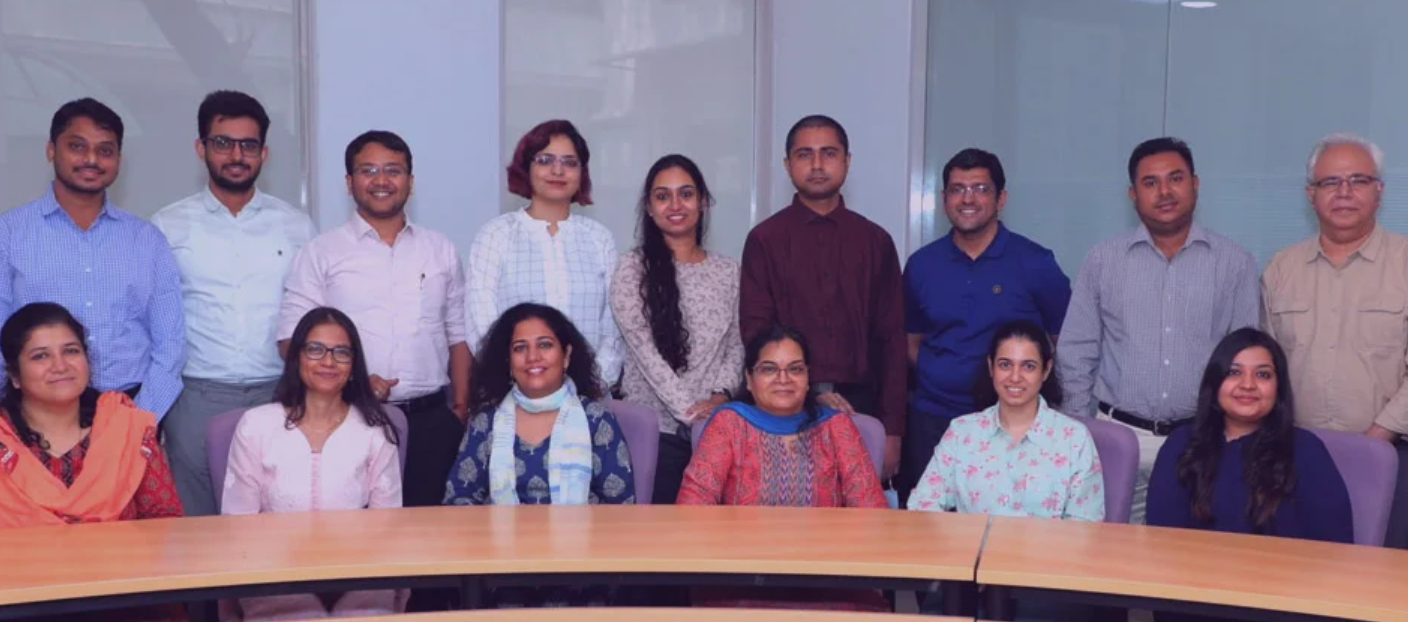
One of the standout aspects, Dr. Agarwal says, is the rich and diverse peer group, scholars with varied academic backgrounds and professional experiences. This diversity makes classroom discussions fuller and pushes each member to expand their lens. This aligns with SPJIMR’s vision for FPM: to combine academic depth with varied perspectives for socially relevant research.
Equally important is the faculty support and that was one of the standout aspects for her: “The faculty are extremely knowledgeable, approachable, and always open to helping you think deeper.” She also underscores how collaborative the environment is: “Their
open-door policy creates an environment where you feel supported and encouraged to ask questions.”
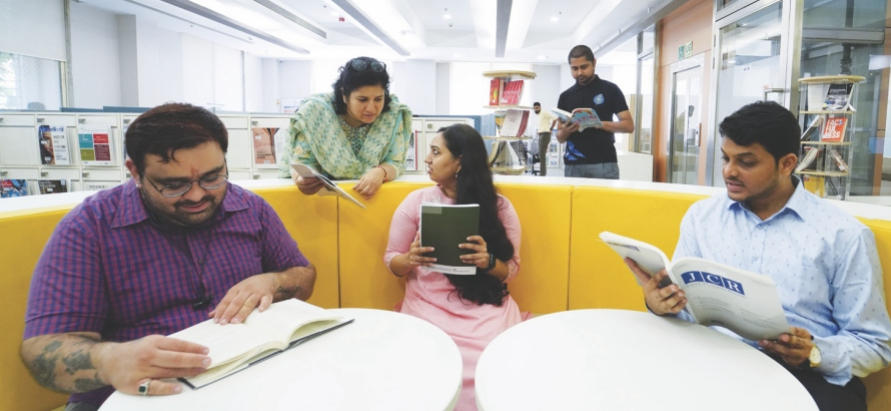
She also recalls the role of research forums which encouraged continuous inquiry, discussion, and refinement of ideas, a practice that continues to shape her academic work even today.
That sense of guidance has helped her navigate intellectual challenges with confidence. SPJIMR has helped her hone her working style, rooted in Human behaviour, identity, culture, and socio-technical change.
Growing as a researcher: From proposals to publications
Under the guidance and theoretical grounding provided by FPM, Alka has moved beyond coursework to impactful research using qualitative and interpretive inquiry. Her recent publications cover socially relevant themes, for example, examining how digital payment platforms affect subsistence entrepreneurs, or how on-demand work apps create opportunities for marginalised women.
These works illustrate the ability of a well-structured research programme to produce meaningful, real-world academic output, something Alka believes she couldn’t have achieved without FPM.
She also highlights that her work during the programme led to publications in reputed international journals and the development of case studies, reinforcing the programme’s ability to produce globally relevant research output.
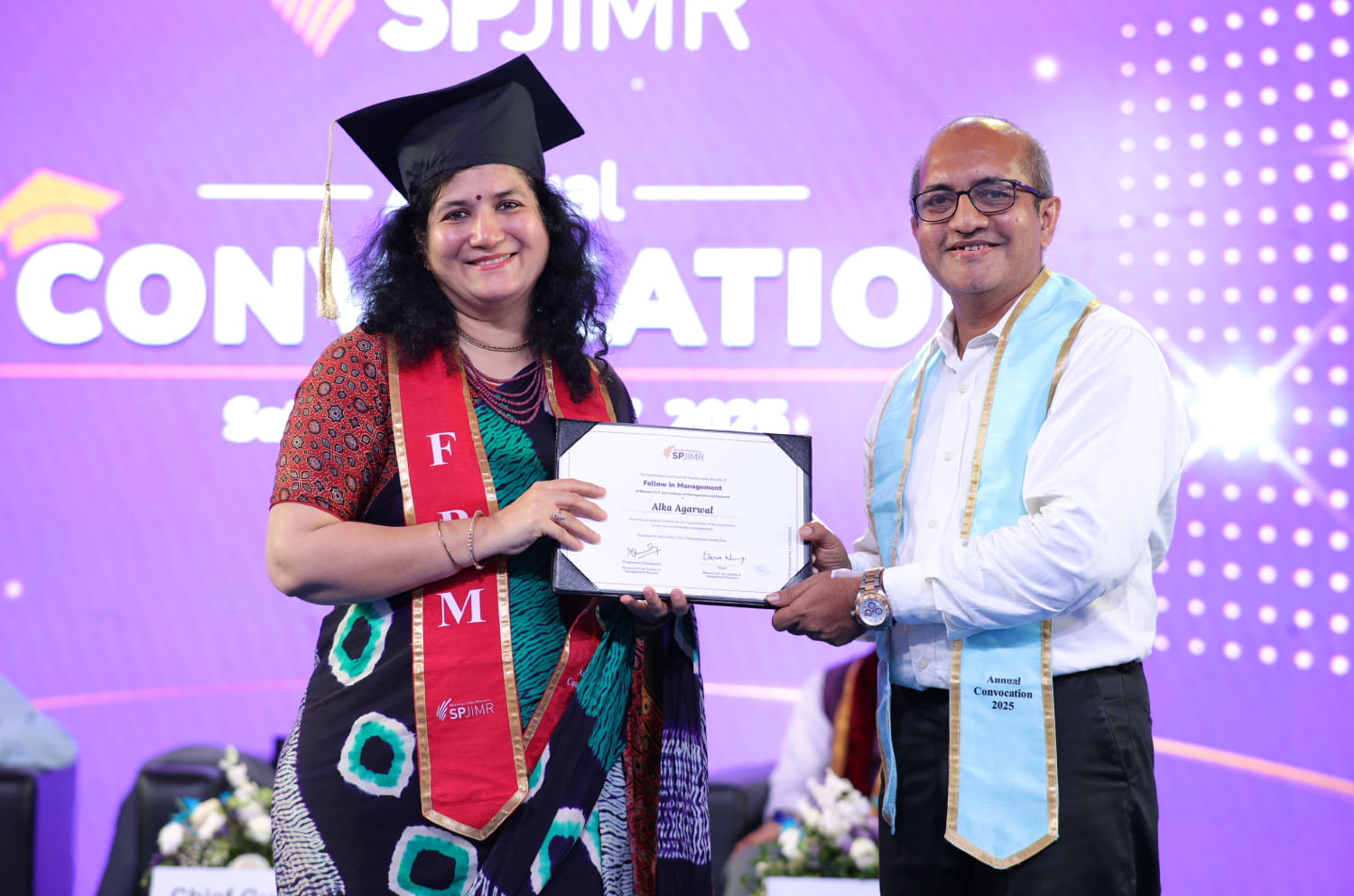
She is candid about how challenging early presentations were, but also emphasises the value of that pressure: “Presentations, midterm reviews, and proposal discussions initially felt intimidating because you’re presenting in front of people who are deeply experienced. But over time, I realised that this is what helps you grow. The feedback is incredibly valuable; it strengthens your ideas, improves your clarity, and helps you become more confident.”
What is most valuable about the FPM experience
As Dr. Alka’s journey shows, the FPM experience is built on elements that go far beyond coursework. It is a structured environment designed to shape scholars who think critically, question deeply, and contribute meaningfully to management knowledge. At SPJIMR, this transformation is supported by:

A strong academic foundation in management theory and research methods.

Access to a supportive, intellectually diverse peer community.

Mentorship that emphasises clarity, depth, and relevance over shortcuts.

Opportunities to challenge assumptions, explore complex social and business issues, and contribute knowledge rather than just consume it.

Exposure beyond one’s specialisation, encouraging scholars to take courses across domains to refine their research questions and uncover new directions.
What this means for aspirants: When FPM might be the right path
If you have a background in technology, business, or analytics, or even from a non-management field, and you’re drawn to research that combines rigour and relevance, then FPM offers:
- A doctoral-equivalent, AIU-recognised programme with academic credibility.
- A structured curriculum that balances foundational theory, methods training, and dissertation work.
- An environment with supportive faculty and a diverse peer group to broaden perspectives.
Lessons from Alka’s journey
Alka’s experience offers several takeaways for prospective researchers and professionals alike:

Research is more than methodology; it is about questioning deeply, observing context, and arriving at findings that matter.

A supportive community and guidance can transform uncertainty into clarity and confidence.

Backgrounds in technology or industry need not limit academic ambition; with the right training, you can bridge the gap between practice and research.

Impactful research often lies at the intersection of disciplines (social contexts, technology, business) and that’s where modern management thinking must thrive.

Building a strong publication record and gaining teaching experience are critical for those aspiring to academic careers, as these are key expectations from recruiting institutions.
Stepping into research with purpose
Dr. Alka Agarwal’s FPM story at SPJIMR shows that the journey from learning to research impact is demanding but deeply rewarding. For those driven by curiosity, rigour and a desire to contribute knowledge, the path is real, and the potential is significant.
Her journey also highlights that rigorous training, combined with the right academic environment, can lead to tangible outcomes, such as publications, teaching roles, and long-term research impact.
If you’re considering a research-oriented future in management, her journey offers a compelling example of how training, community, and support can shape a scholar ready to make a difference.
Frequently Asked Questions about SPJIMR FPM
Register your interest for this programme
Please fill in the following details