Register your interest in this programme
Please fill in the following details




Snehasis Mund, GMP Batch 21 | EBS Universität für Wirtschaft und Recht, Germany
Growing up in Burla, a small town in Odisha, ambition often felt shaped as much by access as by ability. The hometown of Ravinder Singh, the author of I Too Had a Love Story and Hirakud Dam. As a child, I played chess at the national level but eventually gave it up because advanced coaching was difficult to access in my hometown.
My earliest sense of direction came from home. My mother, a school teacher, is my hero. I don’t think I’ve told her this enough, but she played the biggest role in helping me, while my father’s reflective and spiritual outlook shaped my values. My years at Kendriya Vidyalaya further strengthened these foundations.
Years later, I found myself navigating a different kind of uncertainty. As my business venture struggled and the future became increasingly unclear, the Global Management Programme (GMP) at S. P. Jain Institute of Management & Research entered my life, not simply as an academic opportunity, but as a chance to rebuild direction and perspective.
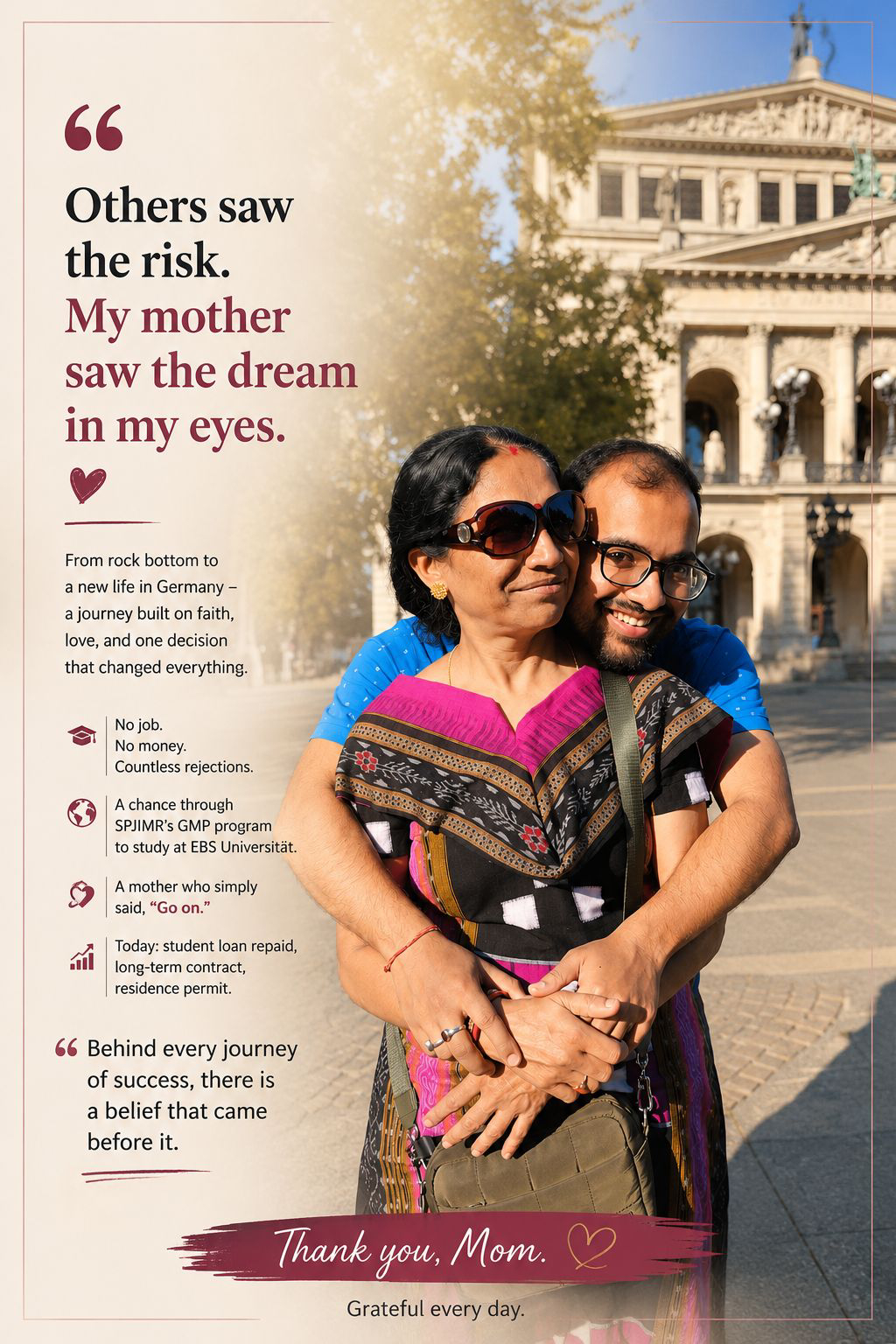
Image credit: Snehasis Mund LinkedIn
When I decided to pursue an MBA, life was honestly messy. I had left a stable job at L&T Technology Services and gone back to Burla to build something of my own. Westhill Teas is an online business selling herbal teas and dry fruits. I had more motivation than an actual business plan. The business did not survive, and neither did the savings.
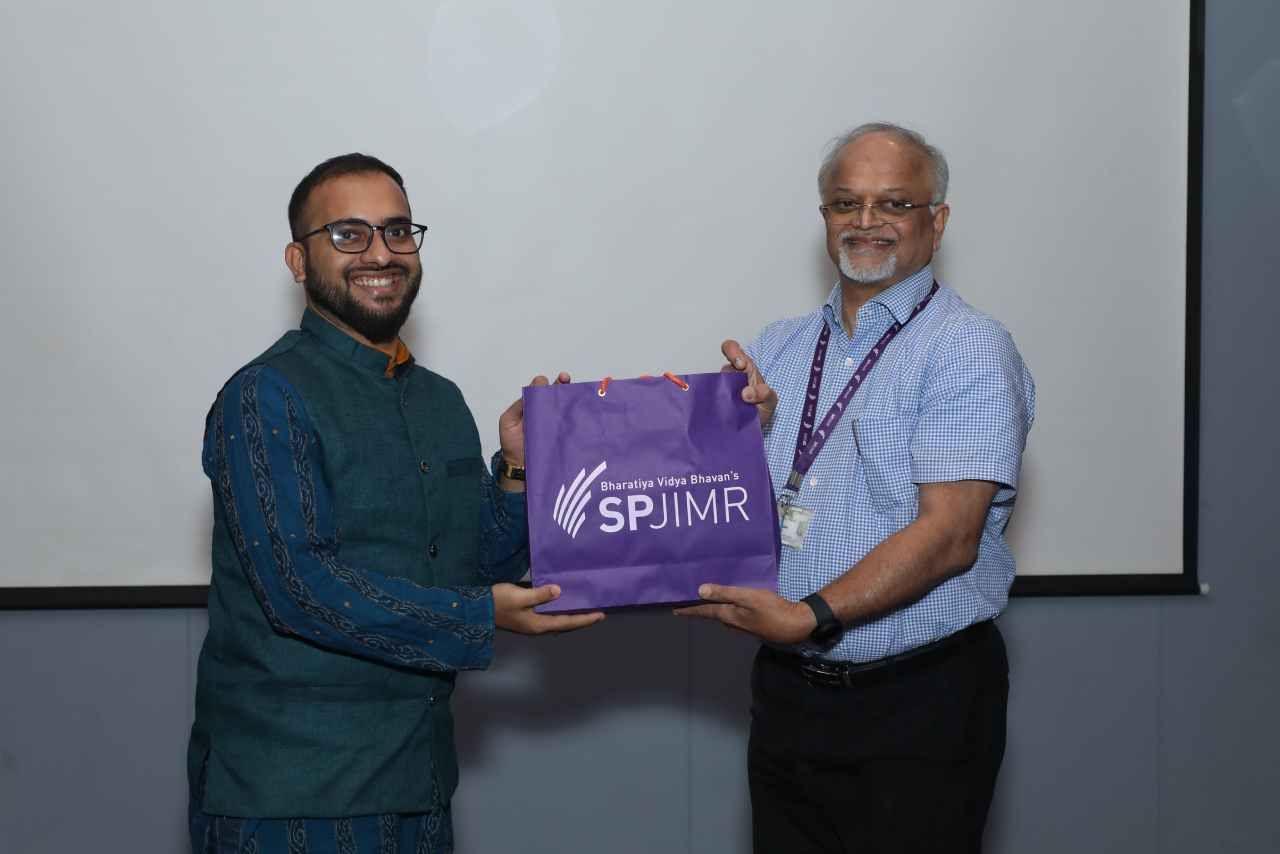
That was when I came across the GMP at SPJIMR. I prepared for the GMAT within a few months, secured admission, and moved to Mumbai. At that point, GMP did not feel like a big career move; it simply felt like a second chance.
Part of me had always wanted to see what life outside India would feel like, which is why Germany appealed to me. But figuring out how to finance everything through an education loan made the decision much harder. I still remember sitting at the bank for hours over multiple days trying to negotiate a better interest rate before the loan finally got approved.
One thing future GMP participants should know is that once they start working in Germany, we can claim tax deductions on tuition fees and education loan interest, which helps a lot financially later on.
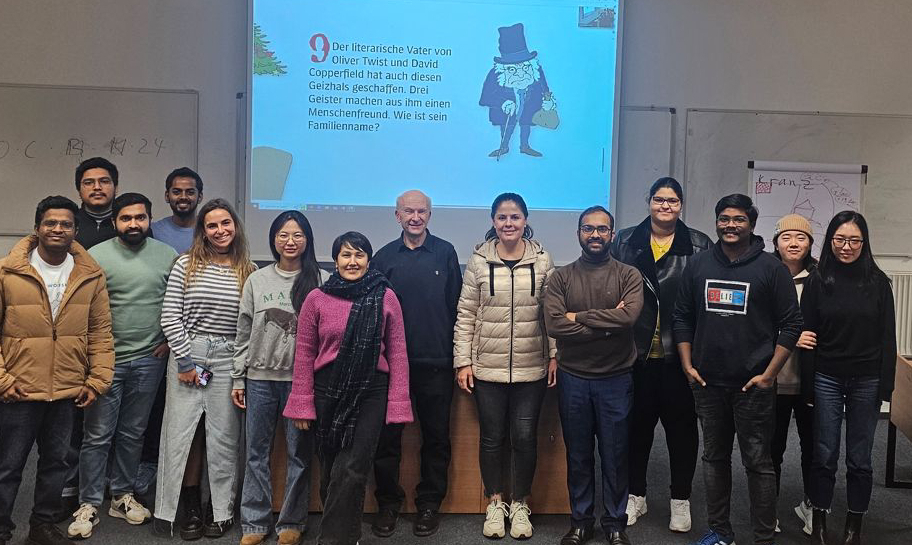
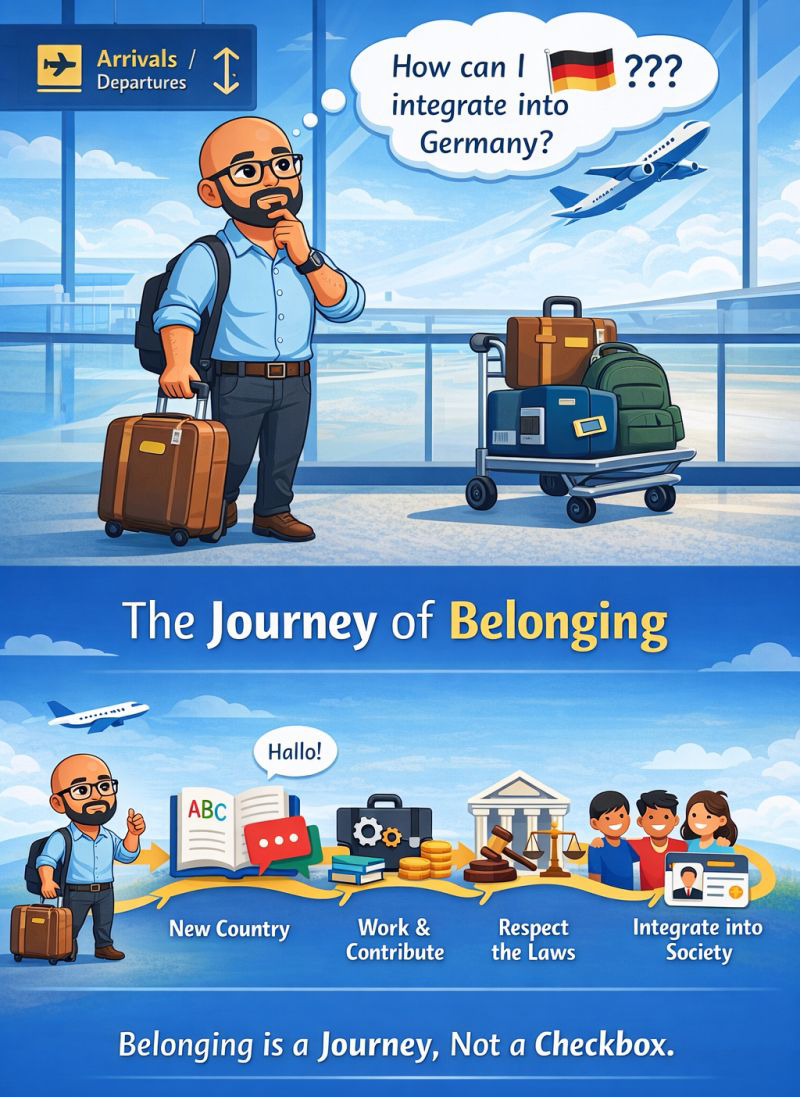
For me, the transition to Germany was harder than I expected. Making new friends, adapting to a different culture, and realising that my German was still not good enough for professional spaces felt overwhelming at times.
Most opportunities, networking events, and job fairs were in German. I would walk into a room and within minutes realise that the conversation around me was not mine to join. Facing constant rejections for working‑student roles was emotionally draining.
Two things became very clear quite quickly: Some international students eventually plan to return home, while others are trying to build a long-term life abroad. I belonged to the second category. Some students can focus only on academics, while others urgently need part-time jobs to survive. I spent months applying for working-student roles and facing rejection after rejection.
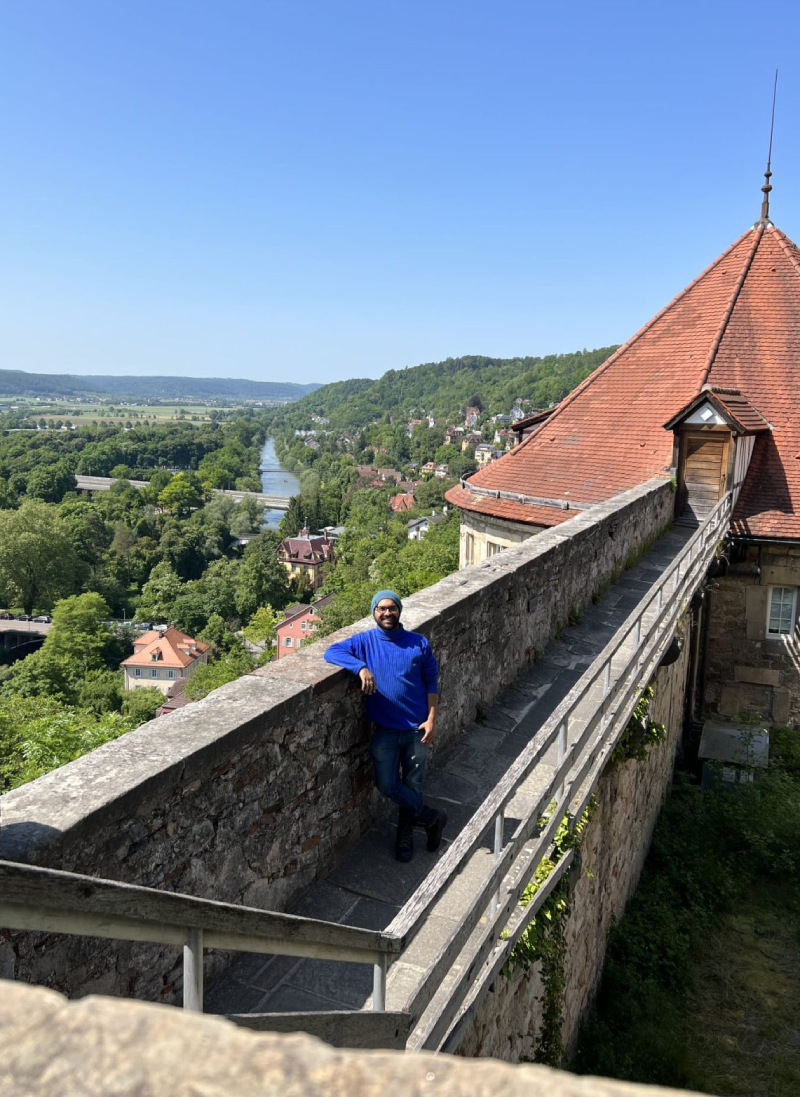
Living and studying in Germany changed me in ways I did not expect. For the first time, I was surrounded by people from completely different cultures and backgrounds — from Spain, Italy, and France to Brazil, Colombia, China, Japan, and South Africa.
Somewhere along the way, I stopped feeling like I was representing only myself. I felt a quiet responsibility to represent where I came from as well.
The experience made me more open, more observant, and far more aware of how much there still is to learn from the world around us. It broadened my worldview and made me realise how much more there is to learn, explore, and understand.
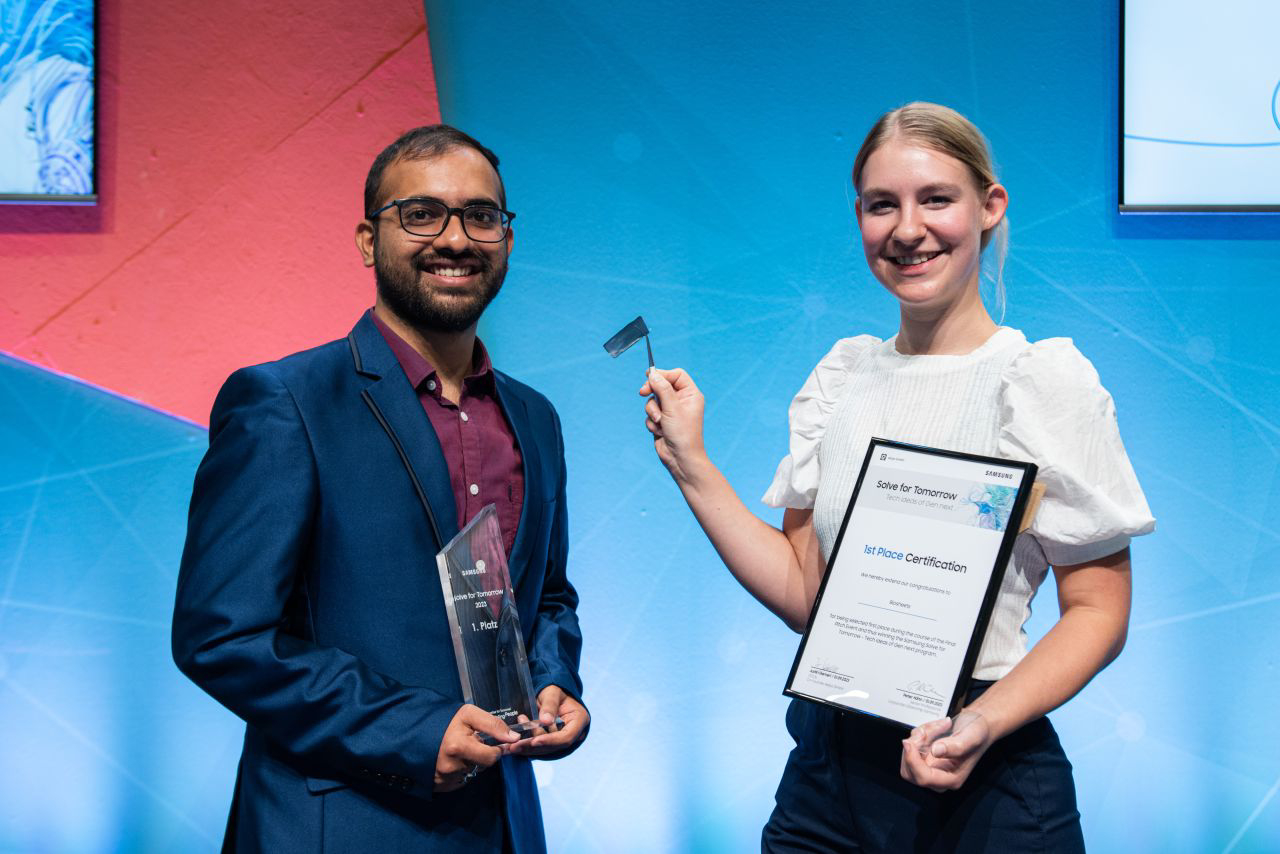
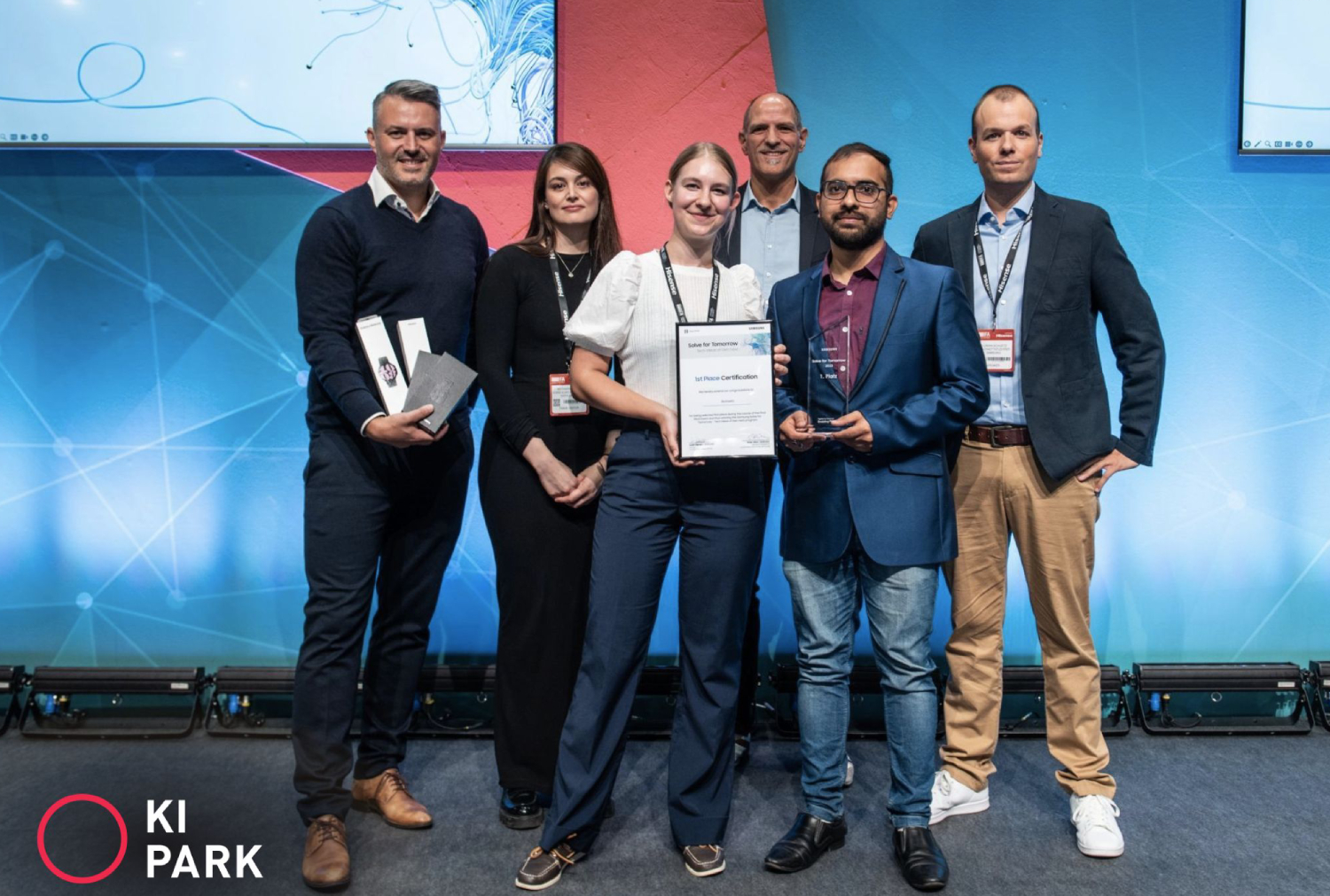
During my master’s at EBS Universität für Wirtschaft und Recht, I worked as a student assistant at the Max Planck Institute for Polymer Research, where I supported a group of researchers working on a startup idea.
This led us on the path to win the Samsung Solve for Tomorrow Challenge, travelling cities like Berlin and Munich and witnessing Germany’s startup ecosystem closely. Currently, I work as a Business Analyst at Halex in Aldenhoven, where I focus on analyzing operational and financial data, supporting decision-making, and driving process improvements within a manufacturing setup.
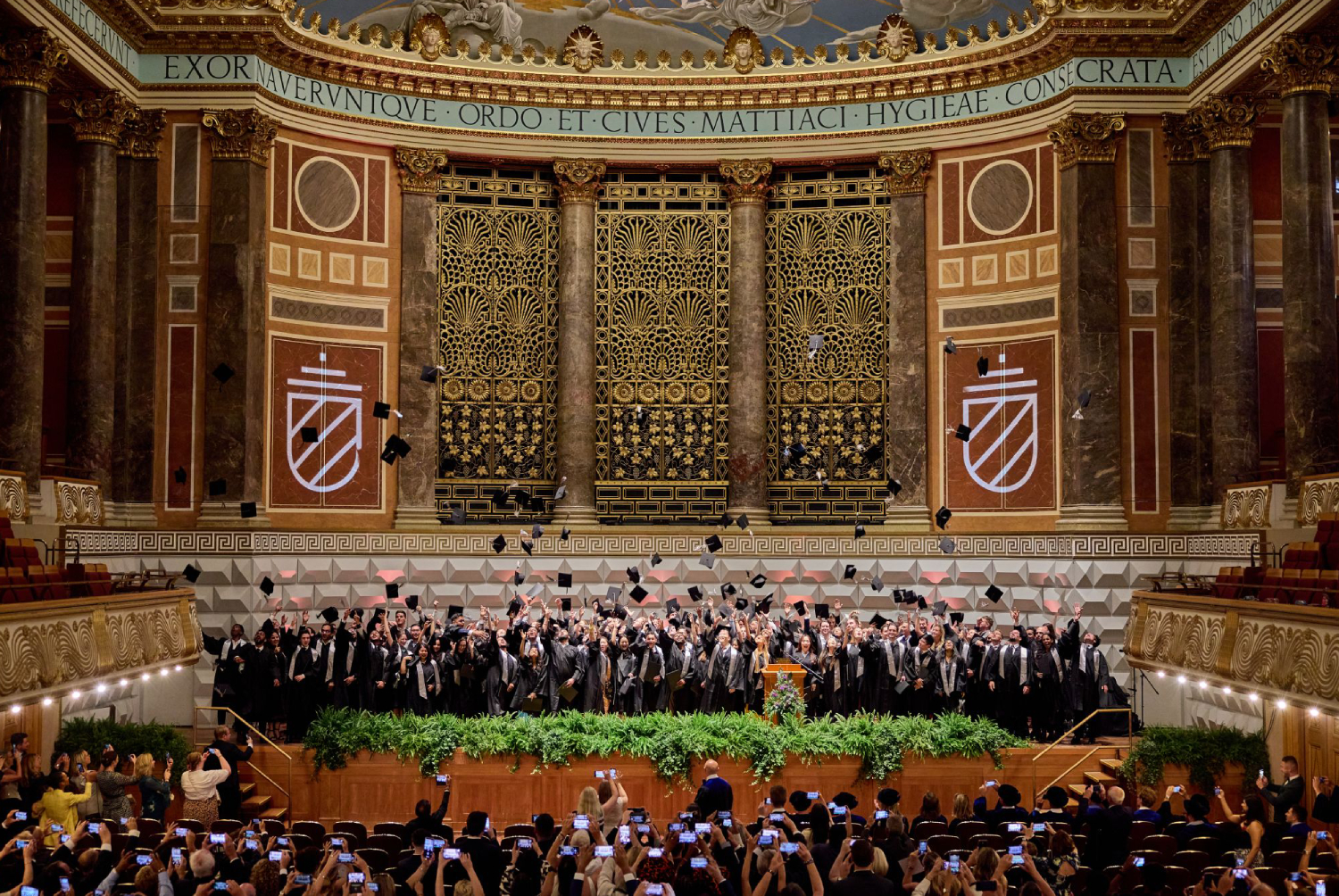
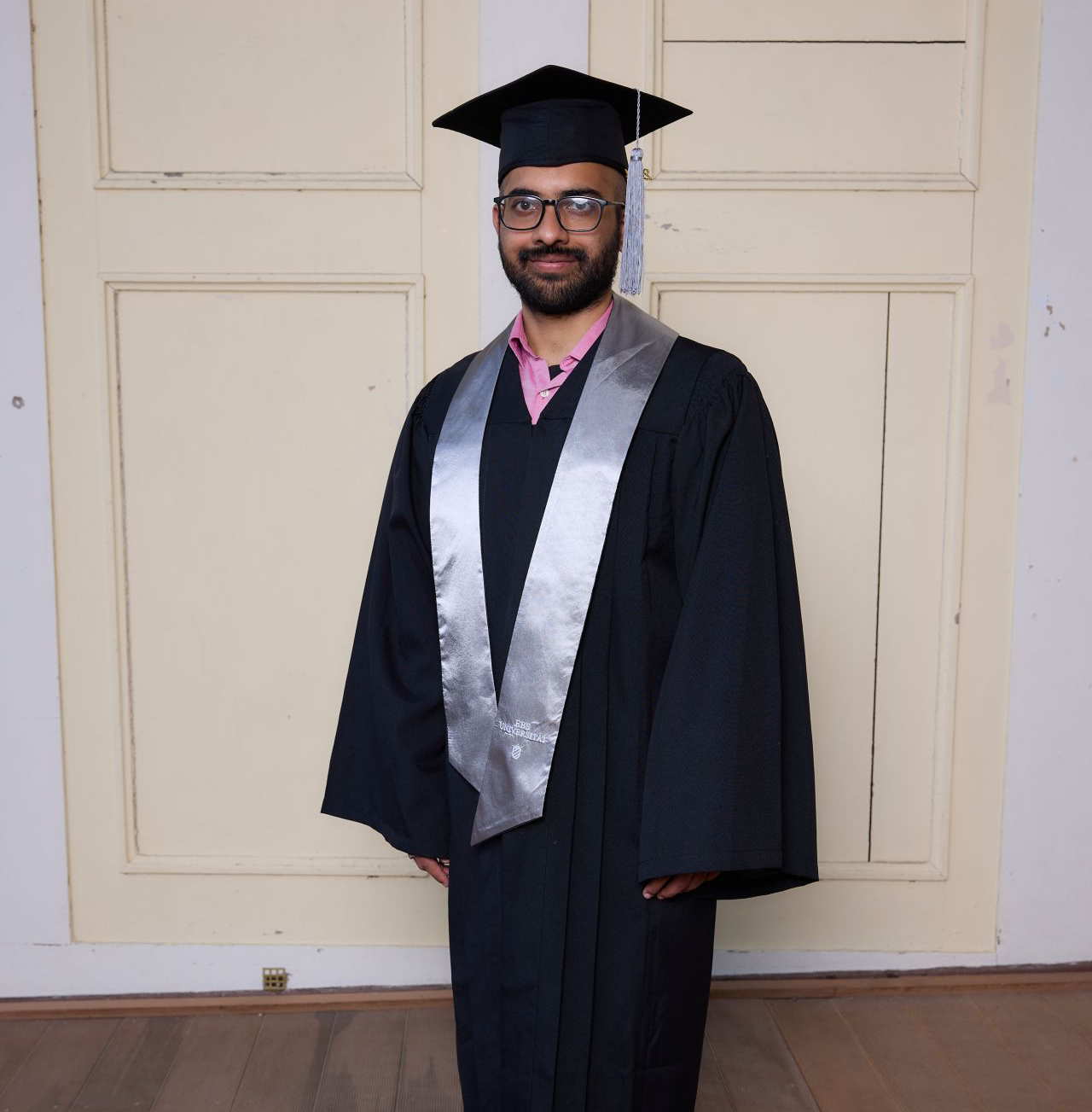
Graduating with the Dean’s Award and becoming a member of Beta Gamma Sigma were also moments that meant a lot to me, especially considering where the journey had started.
I chose GMP because of SPJIMR’s academic rigour. My experience only made me glad I did. The programme professors were very strict. They helped make classroom discussions tough. The learning environment was always pushing us.
Between classes, assignments, presentations, and group work, the days felt packed from morning to night. Nobody had planned for it to feel like that, but that is exactly when things got interesting.
And somehow, after all of that, people still had the energy to end up at lakeside parties. I honestly still do not know how we managed it.
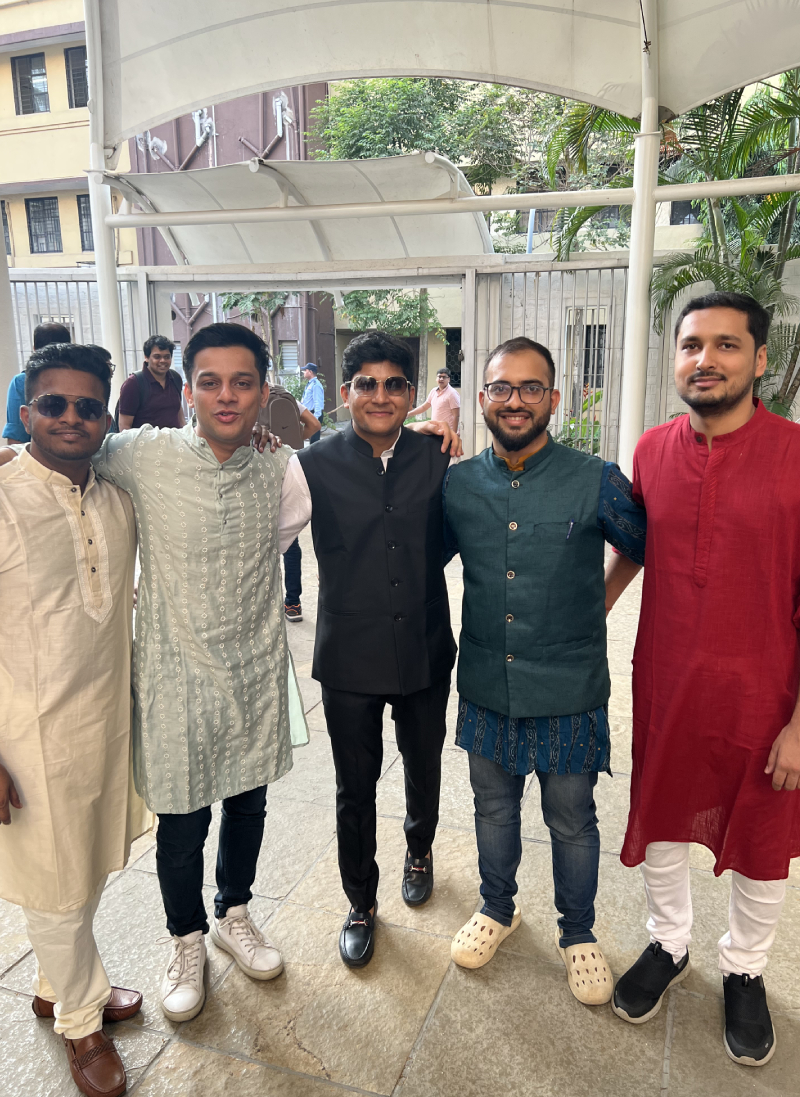
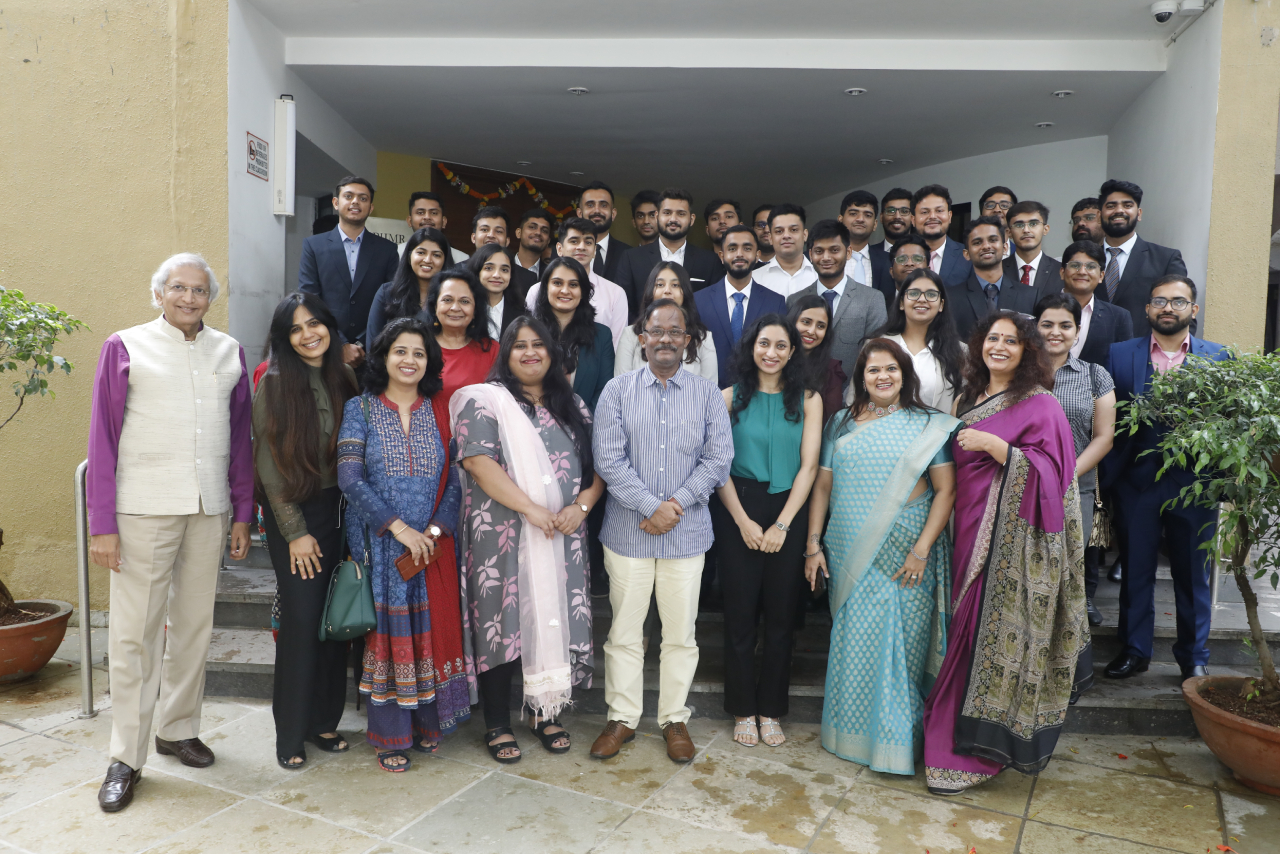
The GMP community is truly special. Seniors helped me refine my CV to German standards and guided me through the challenges of settling abroad.
Knowing that others were going through similar struggles created a sense of belonging and support that I deeply value. More than the advice itself, it helped knowing that other people had gone through similar struggles before me. That made the transition feel a little less lonely. If anyone is genuinely struggling or wants to understand life in Germany better, here is my WhatsApp number: +49‑15510714275.
Please fill in the following details