






Managers are trained to solve problems. Far fewer are trained to question whether they are solving the right one. Traditional management education has largely focused on problem-solving. Case discussions and analytical tools and frameworks are designed to arrive at solutions, often within clearly defined boundaries. However, real-world challenges rarely present themselves in such structured ways.
In practice, problems are ambiguous, evolving, and shaped by multiple, often competing, factors. The ability to arrive at an answer is important, but it is the ability to define the problem itself that increasingly determines the quality of decisions.
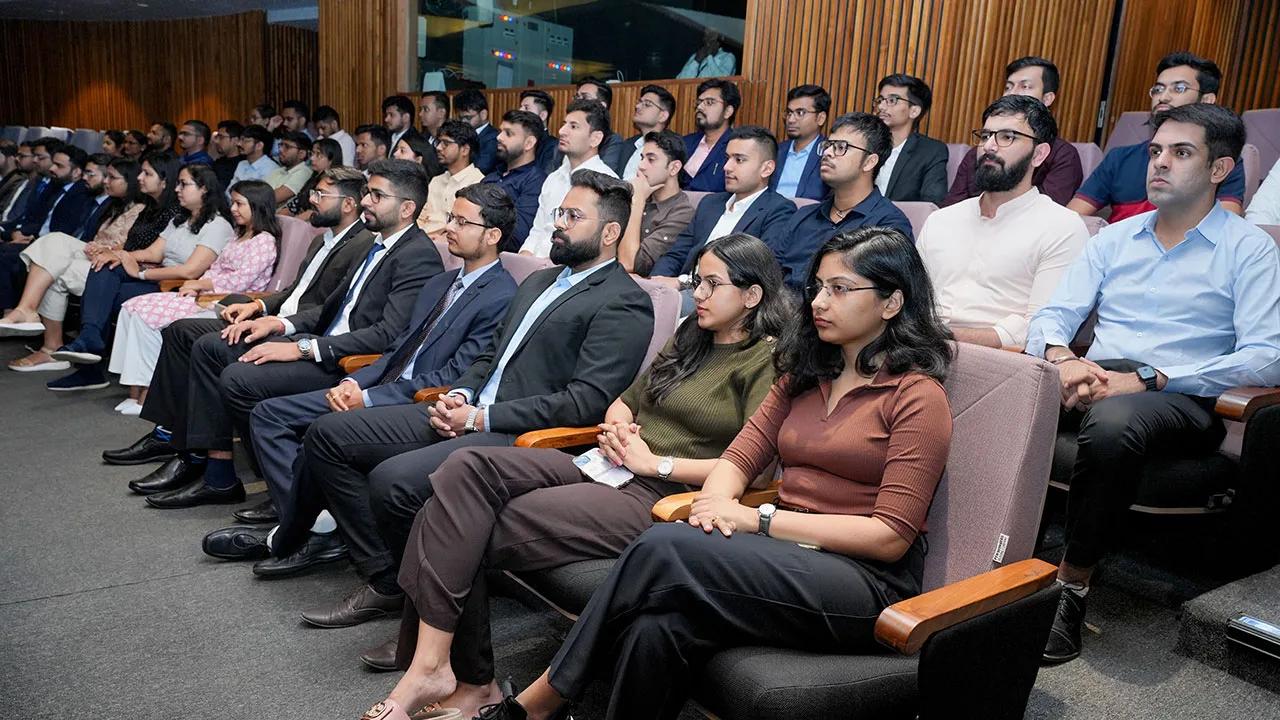
Why problem-solving is no longer sufficient
As organisations operate in more complex environments, the nature of managerial challenges has changed. Problems today are rarely complete or stable. They evolve as new information emerges and as stakeholders respond.
Consider a common strategic dilemma.
A company experiences slowing growth. The immediate response may be to increase sales through aggressive expansion. However, a deeper examination may reveal that the issue is not insufficient demand but declining customer trust or weakening product relevance.
If the problem is framed as ‘low sales’, the solution may focus on distribution or pricing. If it is framed as ‘declining customer value,’ the response will be fundamentally different. Solving the wrong problem efficiently can lead to suboptimal and sometimes damaging outcomes.
This shift becomes even more critical in the context of AI. As algorithms increasingly automate problem-solving, the differentiating capability for managers is not arriving at answers faster, but defining the right problems for machines to solve. AI can optimise within a frame, but it cannot always question whether the frame itself is valid. That responsibility remains human.
What is problem-framing?
Problem framing is the process of defining the boundaries, context, and underlying nature of an issue before attempting to solve it.
It requires managers to ask more fundamental questions:
- What is really happening in this situation?
- What assumptions are we making?
- What are we optimising for?
- What perspectives are we missing?
The way a problem is framed determines the range of possible solutions. A narrow frame restricts thinking, while a broader, more thoughtful frame opens up alternative approaches.
Research in business analysis highlights that poorly defined problems are a leading cause of project failure. According to insights from the International Institute of Business Analysis (IIBA), organisations often invest significant resources in solving problems that were incorrectly framed to begin with, leading to inefficiencies and missed outcomes. This reinforces the importance of investing time upfront in defining the problem itself.
From answers to questions: A shift in managerial thinking
The move away from solving problems to framing them is a larger paradigm shift in leadership thought.
Leaders have historically thought about problems in terms of getting to the right answer as quickly, precisely, and accurately as possible. While these metrics will continue to be important, they are no longer enough.
Effective leaders today set themselves apart by asking better questions than anyone else. They are willing to look at an issue in many different ways and are open to the idea that there may not be just one reasonable answer to the issue. With this in mind, asking the best questions is as critical as having the best answers.
The role of context: Why framing is situational
No issue exists in a vacuum. Each leadership decision always exists in a larger context created by organisational priorities, stakeholder expectations, shifts in the market environment, and changes in regulations.
To provide an illustration: A city invests in expanding roads to reduce traffic. The assumed outcome is simple: as we build more roads, traffic will flow better. The reality of many years of experience has shown that as the roads continue to expand, they allow for even more vehicles to enter the streets; therefore, traffic continues.
If the problem is framed narrowly (i.e., insufficient capacity on current roads), the solutions tend to focus mostly, if not all, on expanding road infrastructure. However, if the problem is framed much more broadly (i.e., urban transportation), then alternative solutions such as public transportation options, providing incentives for behavioural changes, and implementing policies can begin to arise.
The same situation can lead to very different decisions depending on how the problem is framed.
Systems thinking as a foundation for problem-framing
Effective problem-framing requires an understanding of systems.
Most managerial challenges involve interconnected elements, feedback loops, and unintended consequences. Decisions taken in one area often have ripple effects elsewhere.
Without a systems perspective, managers risk oversimplifying problems and overlooking critical interdependencies. This can result in solutions that address symptoms rather than underlying causes.
Systems thinking encourages managers to examine relationships, not just individual variables, and to consider how different parts of a system influence each other over time.
In today’s fact-paced growth & newer AI systems, without thoughtful problem-framing, there is a risk of reinforcing biases or optimising for incomplete objectives. Managers must therefore combine systems thinking with an understanding of how AI models interpret problems, ensuring that technology augments, rather than distorts, decision-making.
Strategic trade-offs: Framing defines priorities
Every way of framing a problem implies a set of priorities and trade-offs.
For instance, a business may frame its objective as rapid market expansion or as sustainable, long-term growth. Each framing leads to different decisions regarding investment, risk, and resource allocation.
Similarly, organisations may need to balance efficiency with resilience or short-term performance with long-term value creation.
Problem-framing is therefore not a neutral exercise. It is inherently strategic, shaping both the direction and consequences of decisions.
How management education must evolve
If the nature of managerial work is changing, management education must evolve accordingly.
Traditional pedagogical approaches often rely on well-structured cases with clearly defined problems. While these are useful for building analytical skills, they may not fully prepare participants for the ambiguity of real-world decision-making.
There is a growing need to create learning environments where participants engage with incomplete information, explore multiple perspectives, and debate alternative interpretations.
Such an approach shifts the focus from arriving at a single correct answer to understanding the complexity of the problem itself.
The PGPM approach at SPJIMR
At S.P. Jain Institute of Management & Research (SPJIMR), the Post Graduate Programme in Management (PGPM) emphasises this shift in thinking.
The programme is designed to encourage participants to engage deeply with managerial challenges rather than approach them as predefined problems to be solved. The curriculum integrates technology deeply into managerial learning. Participants not only discuss strategy but also engage with how AI tools influence decision-making, process design, and organisational transformation. This ensures that problem-framing is not just conceptual, but grounded in the realities of a technology-driven business environment.
Classroom discussions are often exploratory and participative. Participants bring their own professional experiences into the conversation, which enriches the analysis and introduces multiple viewpoints.
Faculty members facilitate these discussions by providing conceptual frameworks while encouraging critical thinking and reflection.
Alumni from PGPM speak about how the programme helped them meet their career goals while also sharing their unique takeaways.
PGPM comprises 18 months of in-class learning & is ideal for participants who are looking for a management programme for experienced professionals. PGPM is designed to leverage its participants’ professional experience and domain expertise with the needed skills to evolve as the business leaders of tomorrow.
SPJIMR is among a select group of global business schools to hold the Triple Crown accreditation (AACSB, AMBA, EQUIS), awarded in 2024. The programme is ranked #74 globally in the Financial Times (FT) Global MBA Ranking 2026, making SPJIMR the highest new entrant that year.
Learning through experience and dialogue
One of the most valuable aspects of this approach is the diversity of perspectives within the classroom.
Participants come from varied industries and professional backgrounds. When they engage with a problem, they often interpret it differently based on their experiences.
This diversity creates a dynamic learning environment where ideas are examined, challenged, and refined through dialogue.
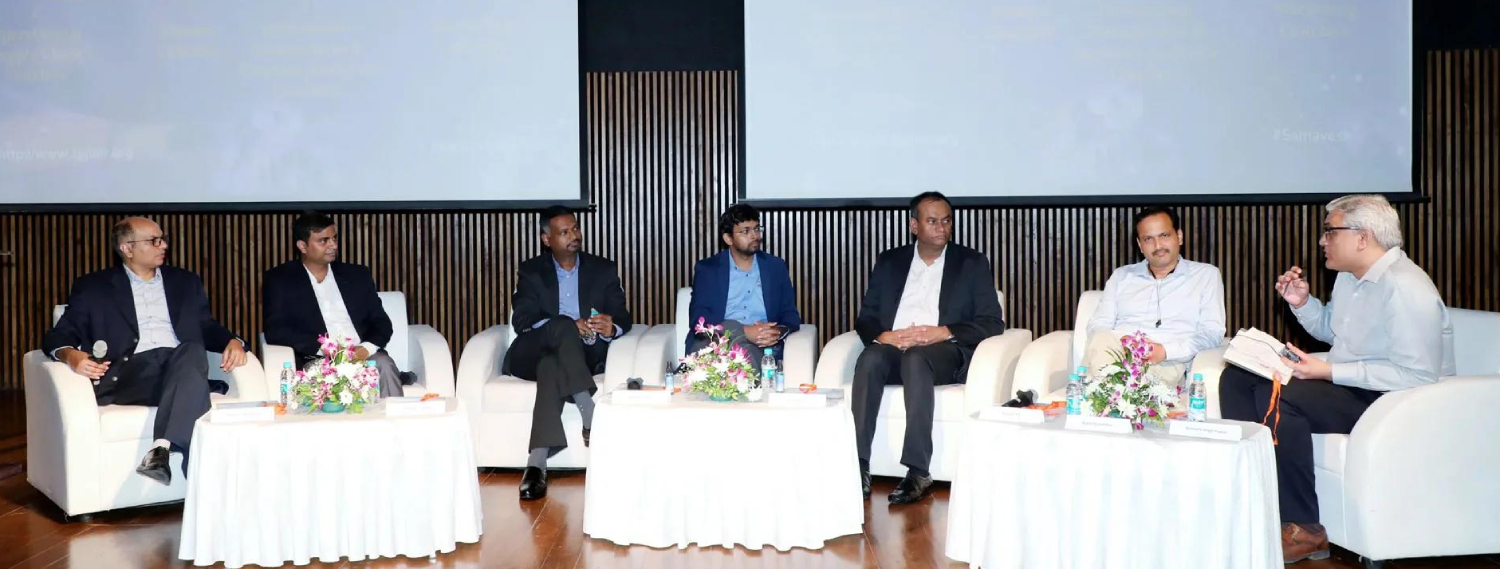
In many cases, understanding why different participants arrive at different conclusions becomes more valuable than identifying a single ‘correct’ answer.
Preparing managers for real-world complexity
As organisations continue to operate in uncertain and rapidly changing environments, the ability to frame problems effectively becomes a critical managerial capability.
Leaders must be able to navigate ambiguity, interpret incomplete information, and make decisions that balance competing priorities.
These skills extend beyond analytical proficiency. They require judgment, perspective, and the ability to engage with complexity.
Redefining what it means to learn management
Management education is often associated with acquiring tools and techniques to solve problems. While these remain important, they represent only part of what effective management requires.
The more fundamental capability lies in understanding what truly needs to be solved.
As the nature of organisational challenges continues to evolve, the ability to frame problems thoughtfully and strategically will become increasingly important.
In this sense, the future of management education lies not only in teaching solutions but also in developing the capacity to define problems with clarity and insight.
Register your interest for this programme
Please fill in the following details