





Career trajectories today are increasingly shaped by global integration. Organisations operate across continents; supply chains span multiple jurisdictions, and leadership teams collaborate across time zones. Even roles based in one country often influence markets elsewhere.
As a result, ambitious professionals no longer prepare for a single domestic career path. They prepare for multi-market careers, roles that require navigating cultural, regulatory, and economic differences across borders.
The Global Management Programme (GMP) at S.P. Jain Institute of Management & Research (SPJIMR) recognises this shift. It equips participants with the strategic, analytical and cultural capabilities required to operate effectively in cross-border environments.
What is a multi-market career?
A multi-market career extends beyond occasional international travel or short-term overseas exposure. It involves sustained engagement across geographies, whether through relocation, regional leadership roles, or managing international clients and teams.
Such careers may include:
- Leading expansion into new markets
- Managing global supply chains
- Coordinating cross-border mergers and partnerships
- Working within multinational corporations
- Building businesses that serve diverse regulatory environments

Success in these roles depends not only on functional expertise but also on the ability to interpret market signals across different institutional contexts.
Why multi-market careers are rising
Several structural forces are accelerating the demand for globally prepared managers.
Global integration of business
Capital flows, technology platforms, and supply networks increasingly transcend national boundaries. Organisations must align strategy across markets that differ in consumer behaviour, compliance regimes, and competitive intensity.
Digital collaboration
Remote work and digital infrastructure enable real-time coordination across geographies. Leaders must manage teams distributed across cultures and time zones while maintaining cohesion and accountability.
Talent mobility
Companies deploy high-potential professionals internationally to build leadership pipelines. At the same time, young professionals actively seek international exposure to accelerate growth and broaden perspective.
Regulatory and geopolitical complexity
Trade policies, sustainability mandates, and regional regulations create layered risk environments. Leaders operating across borders must interpret these variables while maintaining strategic clarity.
Competencies required for cross-border leadership
Multi-market careers demand a combination of analytical depth and contextual intelligence. Core competencies include:

Cultural intelligence and sensitivity

Strategic adaptability in diverse market conditions

Stakeholder management across institutional frameworks

Communication clarity across linguistic and cultural differences

Awareness of regulatory and governance environments

Resilience in ambiguous and rapidly evolving contexts
These capabilities cannot be improvised under pressure. They must be cultivated through structured exposure and guided reflection.
How SPJIMR’s GMP prepares participants for global roles
The Global Management Programme at SPJIMR integrates academic rigour with international exposure to prepare participants for cross-border careers.
International immersion and overseas study
Participants begin the programme with a six-month foundational semester at SPJIMR in Mumbai, after which they transition to leading international partner universities across Europe, the UK, the USA and Canada to complete their MBA or Master’s degree.
Studying and living abroad allows participants to engage directly with global markets, business practices and competitive landscapes. This experience provides first-hand exposure to different economic environments, regulatory frameworks and cultural contexts, enabling participants to develop practical cross-border management capabilities.
Samriddhi Sharma, GMP 14 alumna & winner of the Promising Young Alumnus Award 2019, shares
“I can truly relate to this quote from John Dewey when I think about the GMP programme. He said ‘Education is not preparation for life; education is life itself.’ This programme has been a transformational journey for me both professionally and personally. The combination of academic excellence and international exposure provided me with the apt launch pad into the global business arena. Today, I feel proud to be part of this International network and would like to thank the team behind this programme for their exceptional contributions.”
Integrated curriculum
The curriculum connects strategy, finance, operations and economics within a global framework. Participants examine how macroeconomic shifts, trade flows and geopolitical developments influence corporate decision-making.
Peer diversity
Learning alongside a cohort with varied academic and professional backgrounds strengthens perspective. Discussions reflect multiple viewpoints shaped by different industries and experiences.
Structured reflection
Faculty guide participants to translate international exposure into managerial insight. Reflection sessions encourage critical analysis of assumptions, cultural biases and strategic frameworks.
This integrated approach moves beyond surface-level exposure and develops operational readiness.
Foreign language learning: Becoming “Glocal”
An important component of the Global Management Programme is the opportunity to learn a foreign language before transitioning to international partner universities. Participants can develop working proficiency in languages such as French or German depending on their destination country.
This capability reflects the programme’s philosophy of developing “glocal” leaders, meaning professionals who operate with a global outlook while understanding local contexts. By combining international academic exposure with language capability, participants are better prepared to integrate into foreign markets and build meaningful professional networks.
Shivam Jamloki, alumnus of GMP at SPJIMR, shares why he chose this unique pathway to gain both global and local business perspectives:
“GMP is a focused pathway to international management. We are trained in a global perspective. I chose GMP because I wanted to step out of my comfort zone and learn about the business environment from two different aspects – global and local. Here in GMP we get to learn from faculty, peers and industry experts from multiple countries which means we are exposed to different problem-solving approaches.”
From global exposure to global readiness
Exposure alone does not ensure effectiveness. Global readiness requires the ability to synthesise insight, evaluate trade-offs and act decisively in unfamiliar environments.
Through its design, GMP enables participants to:
Interpret market
differences analytically
Adapt strategy to local conditions without losing global coherence
Communicate across
cultural boundaries
Evaluate risk
across jurisdictions
The emphasis is not merely on understanding international markets but on functioning confidently within them.
Career pathways shaped by multi-market capability
Graduates equipped with cross-border competence are positioned for roles such as:
- International business development
- Regional strategy and operations management
- Global consulting assignments
- Supply chain leadership across markets
- Expansion roles in emerging and developed economies
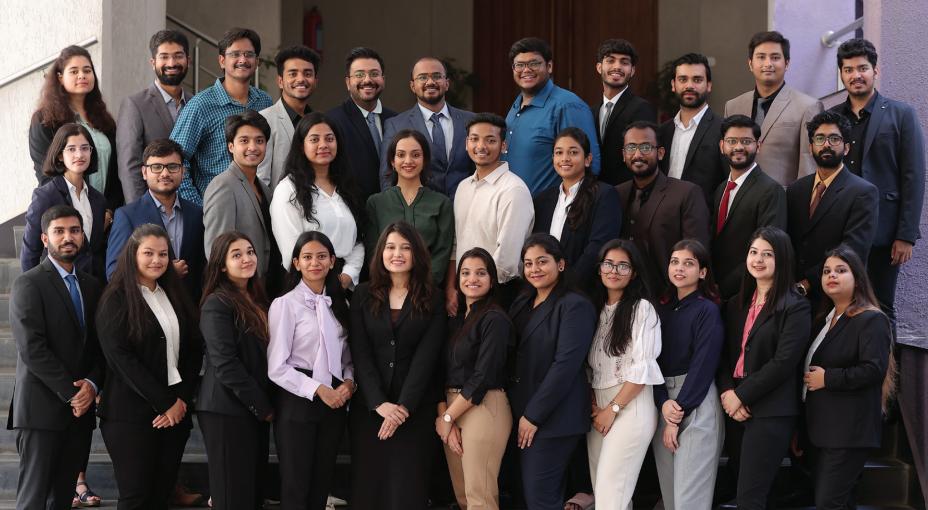
As organisations continue to integrate globally, the demand for geographically fluent managers will strengthen.
Preparing for a borderless professional future
A multi-market career does not begin with relocation; it begins with preparation. Professionals who aspire to build careers across Europe, the UK, the USA or Canada must develop not only global exposure but also structured managerial capability.
SPJIMR’s Global Management Programme (GMP) is designed for participants who aspire to pursue a master’s degree abroad and launch global careers. The programme partners with top-ranked, accredited international institutions across the globe.
GMP admits two cohorts each year, in January and June. Participants begin with a six-month semester at SPJIMR in Mumbai, the financial capital of India, where they build strong foundations in general management and develop cross-functional competence.
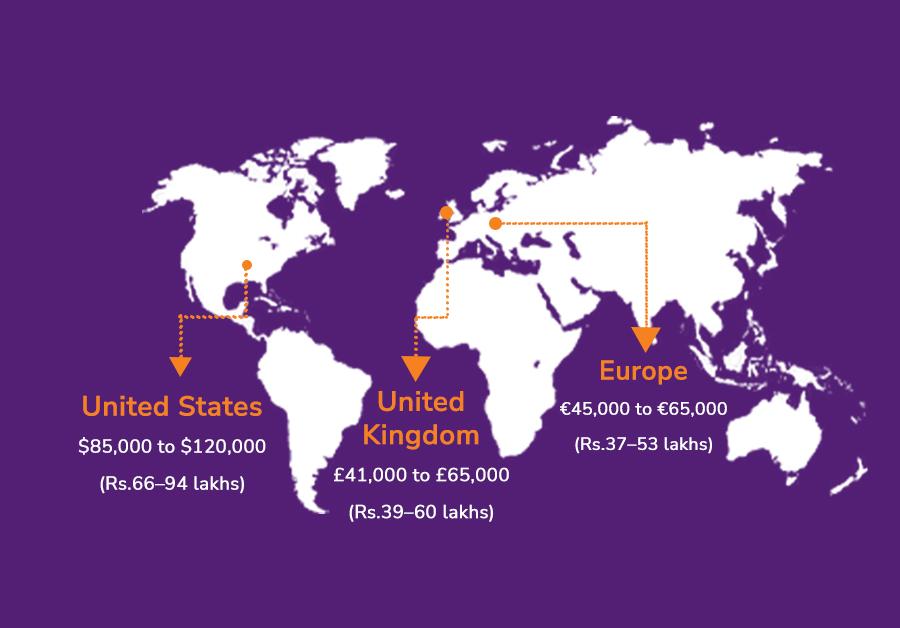
This structure ensures continuity between foundational learning and international specialisation. Participants transition from SPJIMR’s academically rigorous and diverse learning environment to global commercial hubs such as New Jersey, Boston, Amsterdam, Frankfurt and Paris. These locations provide strong industry connections, meaningful corporate engagement and access to placement opportunities that accelerate global career progression.
Pratik Renuse, GMP Alumnus shares,
“The decision to choose GMP was the best decision I ever made and this decision made the real me! At IÉSEG, France, I met students from more than 30 different countries. I was living in a house with 8 different nationalities, this experience was a real global experience and today I have close friends from every continent on this planet with whom I share many beautiful memories! The journey was hard but the learning, experience and result was totally worth it.”
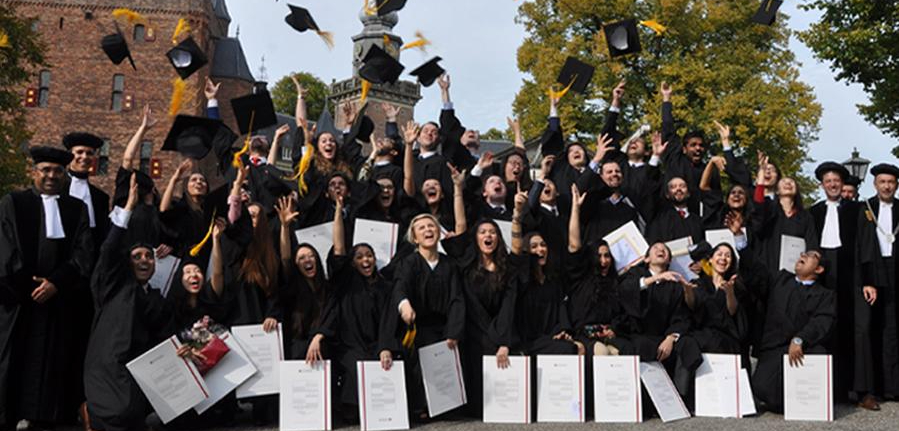
The programme’s competency goals reflect the realities of operating across borders. GMP aims to develop:
- Responsible leaders
- Managers capable of operating in global environments
- Professionals competent across functional and cross-functional domains
- Reasoned decision-makers who demonstrate innovative capabilities
With over 600 alumni in leadership positions worldwide, GMP demonstrates how structured preparation enables global mobility. In an interconnected economy, cross-border readiness is not incidental. It is cultivated.
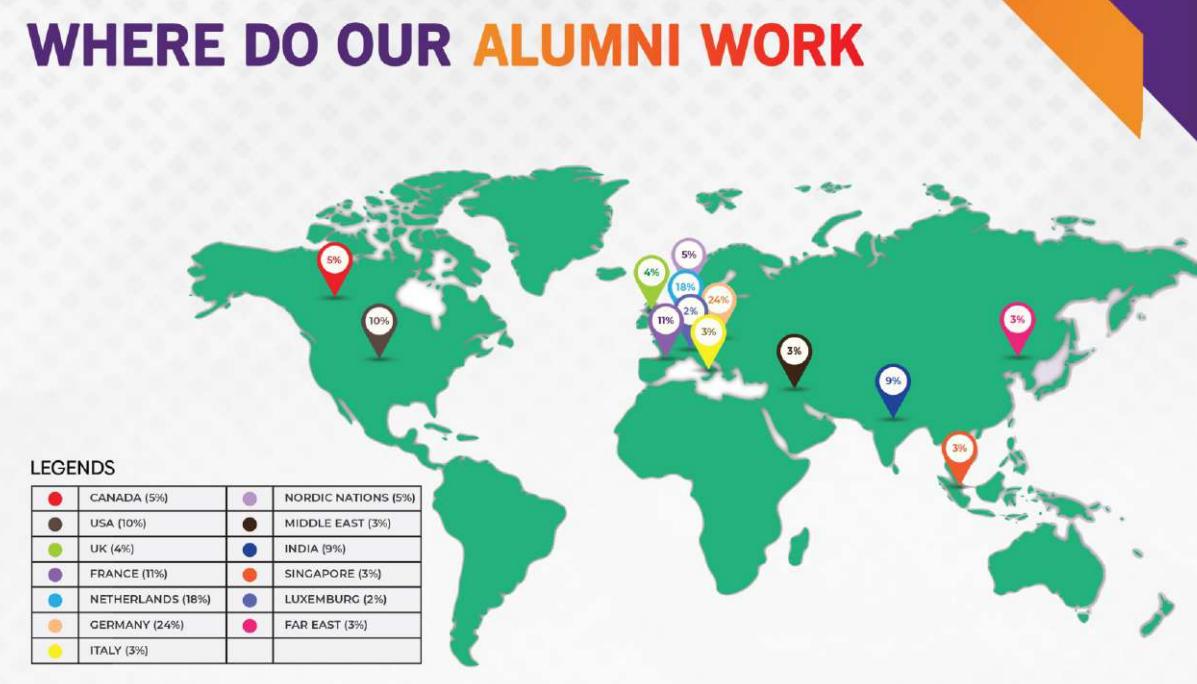
Through its design, partnerships, and experiential emphasis, SPJIMR’s GMP prepares participants not merely to pursue international education but to build enduring multi-market careers.
Learn more about the programme here.
Register your interest in this programme
Please fill in the following details