





Today’s social challenges are interconnected and complex. These problems can’t be solved with one-size-fits-all solutions. The shift from solving simple questions to navigating systemic, intertwined ones calls for new ways of thinking. This is where systems and design thinking in the social sector are invaluable – approaches that help social change-makers make decisions to create solutions that are societal, scalable, and long-lasting.
Rethinking the social sector’s challenges
To create lasting change, we must transition from looking for quick solutions to long-term thinking. We must rethink how we design and deliver solutions in the social sector through innovative approaches. The persistent social sector issues like income inequality, economic exclusion and unequal access to quality education all require persistent efforts and fresh perspectives, as they require a human-centred approach in the social sector.
Traditional interventions in the social sector rely on siloed, linear and short-term approaches. The various stakeholders, like governments, are responsible for schemes; NGOs deliver services, and private players fund initiatives that function on a top-down approach. These various approaches may provide quick wins but fail to create a scalable impact due to limited community support, fragmentation of social issues and rigid programme structures from ideation to implementation.

What are systems and design thinking, and why do they matter?
In a world defined by complexity and fragmentation, the outdated traditional approaches to solving social problems are coming short. That’s where systems thinking and design thinking come in – two frameworks that are shaping how change makers approach the social sector.
Systems thinking is a framework for comprehending how various parts of a system interact, influence, and strengthen each other.
Key principles:

Holistic analysis
Understanding how all the fields, like economics, social issues, environmental issues and politics, are interrelated provides a holistic picture of analysis.

Feedback loop
Constantly identifying changes in one part of the system.

Strategic thinking
It helps avoid quick fixes and reduce unintended consequences in the social sector.
Design thinking is a process that involves co-creation, empathy and an iterative process that is human-centred. Simply, it’s about solving problems with people and not just for them.
Key principles:

Understanding demand
Understanding the people you are designing for.

Define problems
Framing the right kind of problem before looking for answers.

Regular testing
Build low-risk versions and improve on successive feedback.
Design thinking brings the aspect of users into every stage of the process. It helps in making innovative and practical solutions for complex environments.
While systems thinking provides a macro perspective for the bigger picture scenario, design thinking provides the micro tools; together, both empower social sector changemakers and organisations.
Why systems thinking and design thinking are crucial in social impact
Traditional models often struggle to keep pace with rapidly evolving challenges like pollution and public health, migration, and climate change. Today’s problem requires adaptability to respond to dynamism, inclusivity to voice the most impacted and scalability to extend lasting change.
Systems and design thinking provide a structured and refined path for social impact:
- They help in refining new ideas quickly.
- Leverage small changes for longer impact
- Build culture-ready models for scalable growth.
The future of social innovation, systems and design thinking
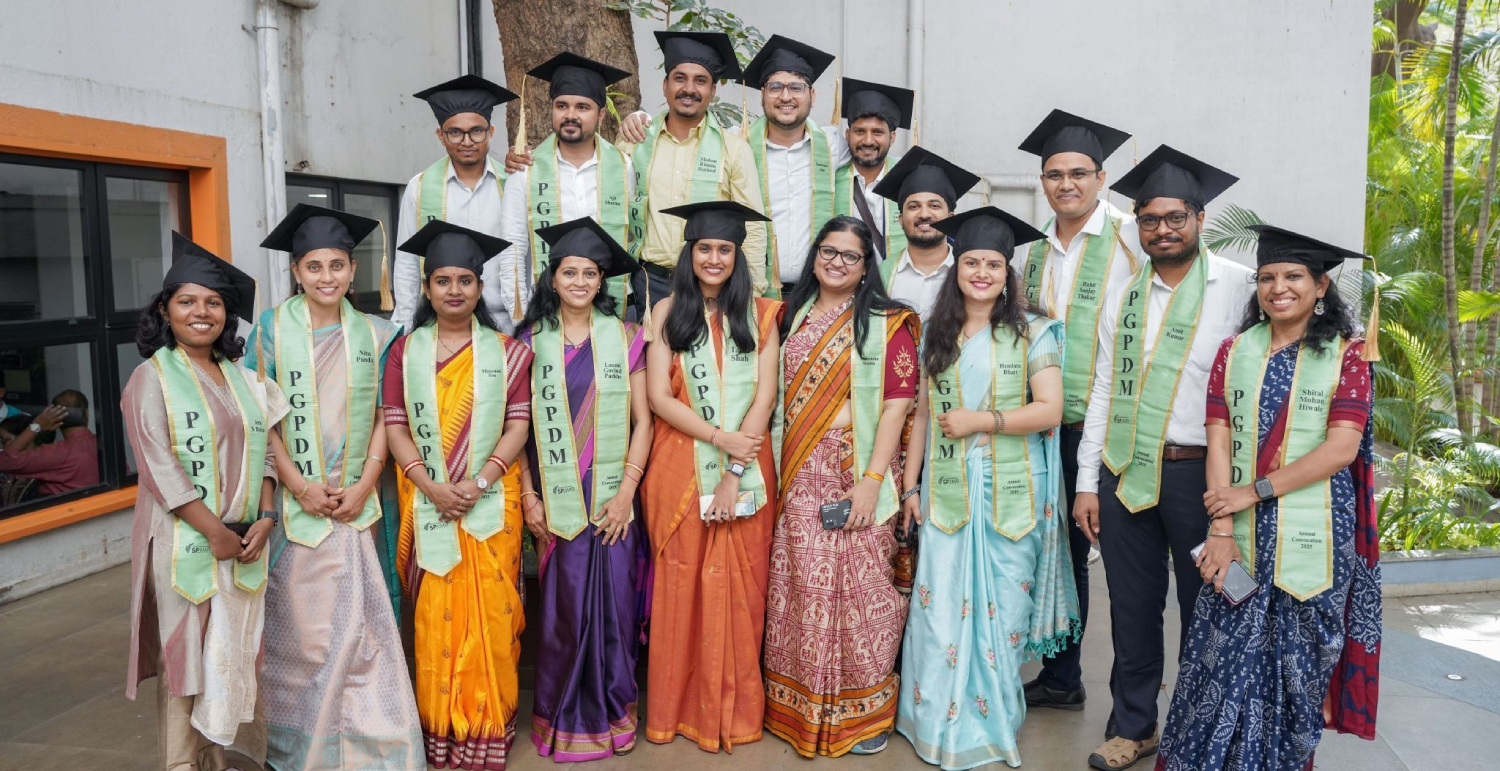
In today’s world, traditional business education focuses on profitability, market share and value. With the changing landscape, a shift in delivering on various aspects like sustainability, ethical solutions in the social sector. Pursuing a management programme such as the Post Graduate Programme in Development Management (PGPDM) from SPJIMR, which is an industry leader in Development management, can be a transformative step for the future in the social sector.

Prof. Bindu Kulkarni brings over 25 years of overall experience, including a seven-year tenure in the industry prior to joining academia. She teaches strategy and design thinking at SPJIMR. Her pedagogy involves design and systems thinking through experiential learning and live projects with simulated experiments. With a keen interest in innovation, her research delves into innovative teaching methodologies, learner-centric approaches, educational outcomes and the transformative power of design thinking.
The PGPDM programme offers a unique focus on systems thinking and community-rooted development. Such a programme helps future leaders to be collaborative, grounded, and capable of navigating challenges with a clear, systematic, and strategic vision. It equips participants with tools to engage with diverse stakeholders and drive change in the transformation of various social systems. If you are passionate about creating meaningful social impact and leading change at the grassroots of the social sector, apply now for a transformative change.