





In a world where the gap between the wealthy and the disadvantaged continues to widen, Sustainable Development Goal (SDG) 10, which focuses on reducing inequalities, becomes more relevant than ever. As future leaders, managers, and changemakers, it’s critical that we not only understand the depth of these issues but also actively contribute towards addressing them. Leading B-schools have the power to play a transformative role in tackling inequality, shaping a generation of managers who are equipped with the skills and awareness needed to make a difference.
What is SDG 10?
SDG 10, one of the United Nations’ 17 Sustainable Development Goals, is centred on reducing inequality within and among countries. It emphasises the need for inclusive policies that provide equal opportunities for all, regardless of gender, race, age, or socio-economic background, and physical and intellectual disabilities. From income disparities to discrimination in various forms, SDG 10 aims to dismantle the barriers that prevent individuals from reaching their full potential.
The remarkable journey of the Blind Welfare Council, Abbas Kharodawala and Yusufi Kapadiya
In the small town of Dahod, Gujarat, where malnutrition, illiteracy, and blind faith are common challenges, a quiet revolution is transforming lives. The Blind Welfare Council (BWC), founded in 2000 by Yusufi Kapadiya, is at the heart of this change. Yusufi, himself blind, launched BWC with a clear vision: to uplift people with disabilities in rural and tribal communities, providing them with the tools to lead independent, empowered lives.
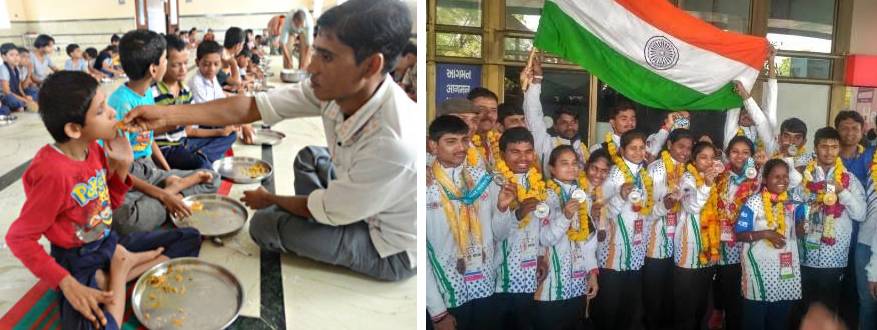
BWC’s mission is far-reaching. With centres in Dahod, Panchmahal, and Mahisagar, the organisation offers life-changing services, including education, vocational training, rehabilitation, and sports programmes for individuals with visual, hearing, physical, and intellectual disabilities. What makes BWC unique is that six of its 11 trustees, including Yusufi, are blind—a powerful testament to their belief that limitations are only in the mind, not in reality.
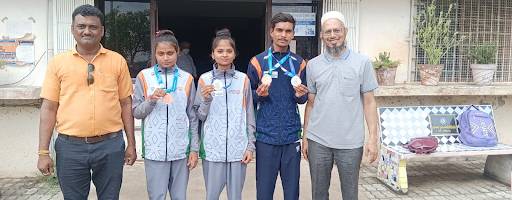
One of the most inspiring stories within BWC is that of Abbas Kharodawala. Once a successful sales and marketing professional at Hawkins, Abbas’s life took a dramatic turn when his father was diagnosed with muscular dystrophy. After his father’s passing, Abbas returned to Dahod and started working part-time at BWC. What began as a temporary role quickly became his life’s calling. Moved by the organisation’s work, Abbas immersed himself in special needs education, focusing on physical and intellectual disabilities like autism.
Realising the need to enhance his impact, Abbas pursued the Post Graduate Programme in Development Management (PGPDM) at S.P. Jain Institute of Management and Research (SPJIMR), supported by BWC. The programme equipped him with vital skills in fundraising, resource mobilisation, and people management—skills that he would bring back to transform BWC’s operations.
Under Abbas’s leadership, BWC expanded its vocational training programmes, offering courses in computer operation and handicraft production, where participants learn to make products like candles, doormats, and paper dishes. These products are sold in the market, with profits shared among the workers, helping them achieve self-sufficiency.
What role do B-schools have in the context of SDG 10?
At first glance, you might wonder how business schools, which are traditionally focused on management and leadership training, fit into the conversation on inequality. The answer lies in the shifting focus of business education. Today’s B-schools are no longer just breeding grounds for future CEOs and corporate leaders—they are incubators for social change. And as global inequality remains a pressing issue, the role of B-schools in shaping future leaders who prioritise inclusion and social impact is more important than ever.
B-schools should educate aspiring managers about the importance of creating equitable opportunities. It’s not just about philanthropy or CSR initiatives—though they play a role—it’s about embedding these values into the core of business strategy.
Register your interest in this programme
Please fill in the following details
How has SPJIMR been contributing to increasing awareness and sensitivity for SDG 10?
SPJIMR has incorporated SDG 10 into its curricula, extracurricular activities, and overall institutional values by creating an environment where future leaders understand their role, and are reducing inequality.
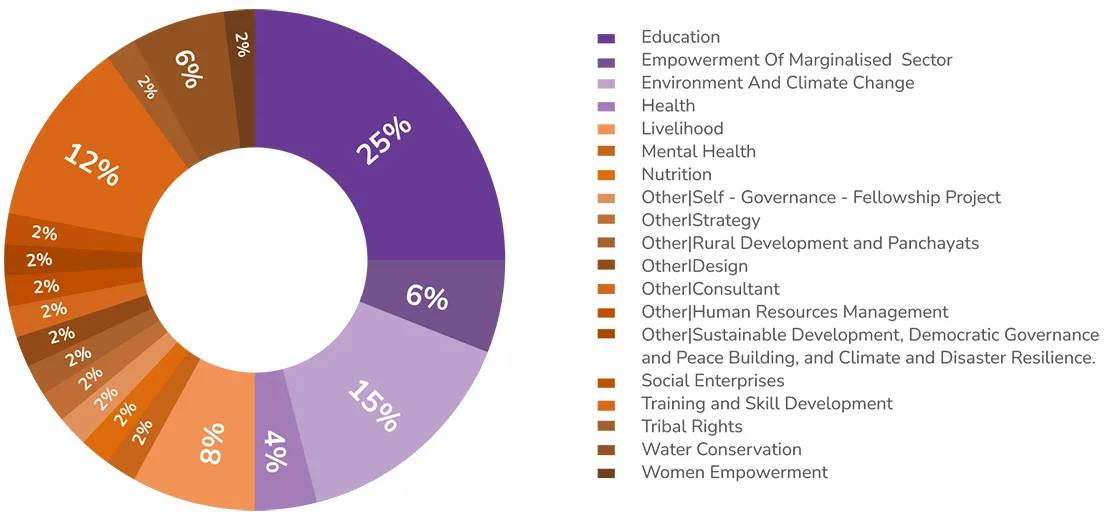
Spanning 22 cohorts over the past 14 years, the PGPDM programme has made a significant impact on 350 organisations across 27 Indian states. PGPDM graduates are now contributing as founders, leaders, trustees, and directors of NGOs, as well as working as social entrepreneurs, CSR managers, programme officers, and consultants in a wide range of social sector organisations.
This Development Management Programme is India’s only programme to receive international accreditation from both AMBA.
Let’s understand how they made this happen…
Inclusive curricula and case studies
Leading B-schools like SPJIMR have the power to influence how students view inequality by integrating SDG 10 into their curricula. Case studies highlighting social enterprises, inclusive business models, and strategies for reducing inequality are woven into subjects like economics, finance, and development management. With this, the B-schools not only provide theoretical knowledge but also show students how businesses grow while contributing to social equity.
PGPDM programme architecture and electives
Development management and impact-focused programmes
With programmes such as development management, B-schools equip students with the skills to manage initiatives that tackle inequality, poverty, and underdevelopment.
By encouraging more students to take up such specialisations, they produce graduates who are not only passionate about social impact but also equipped to lead large-scale changes.
Experiential learning and hands-on projects
Theoretical knowledge alone won’t suffice when it comes to understanding inequality. SPJIMR realised this gap and offered its students the opportunity to engage directly with the marginalised communities through a capstone project also called Development Management Project (DMP) and field visits.
By working with NGOs, social enterprises, or grassroots initiatives, students get firsthand experience of the challenges these communities face. This kind of experiential learning ensures that future managers develop empathy and a deeper understanding of the real-world impact of inequality.
Championing diversity and inclusion within the school
It’s essential for B-schools to practise what they preach. That’s why SPJIMR ensured that their own campuses were models of diversity and inclusion.
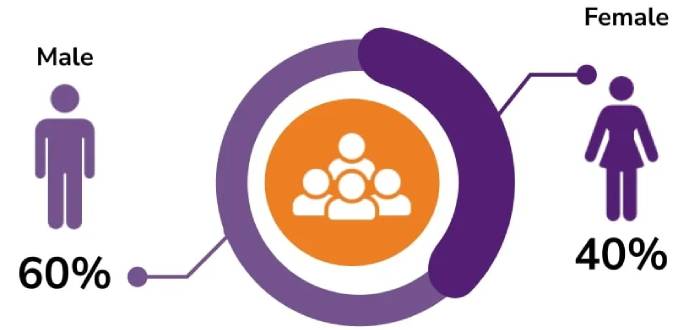
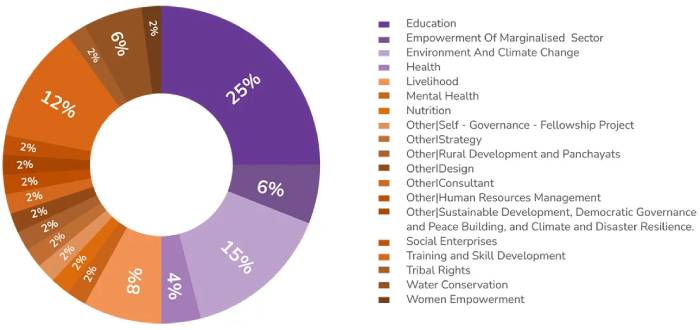
From the admission process to faculty hiring and student engagement, fostering a diverse environment created a space where different perspectives thrive. Students who learn in diverse settings are more likely to champion inclusive practices in their future workplaces.
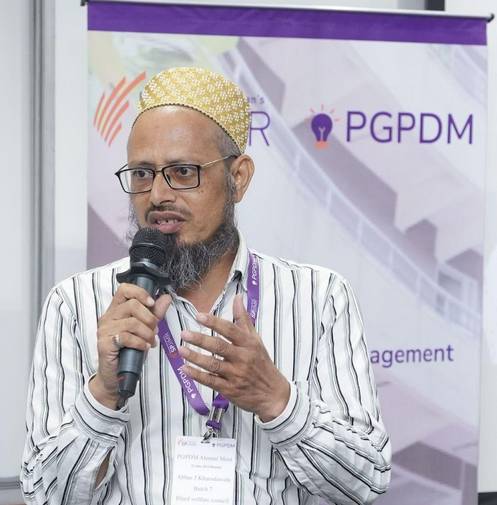
“I recognised the importance of going beyond instinct and experience, so I felt the need to pursue formal training in special needs education, focusing on areas such as Learning Disabilities, Intellectual Disabilities, and Autism, to better fulfil my role. I did my research and I decided to enrol in the Post Graduate Programme in Development Management (PGPDM) at SPJIMR, with the support of BWC, to gain deeper insights into managing and expanding social impact initiatives.
My time at SPJIMR was invaluable in helping me develop essential skills in fundraising, resource mobilisation, and people management—skills that have significantly enhanced my ability to lead and grow BWC’s initiatives. Today, I lead training sessions for BWC staff, encourage innovation through brainstorming exercises, and drive the organisation’s mission forward with renewed energy.“
~ Abbas Kharodawala
Research and thought leadership on inequality
B-schools are also centres of research and innovation. By encouraging research on inequality and publishing thought leadership on SDG 10, SPJIMR influenced both academic circles and business communities. It believes that research that focuses on the root causes of inequality, the effectiveness of inclusive policies, and the role of businesses in reducing disparities can pave the way for new, innovative solutions to global inequality.
Alumni testimonial
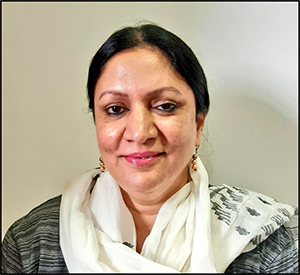
“The PGPDM programme at SPJIMR has been a game-changer for me and my organisation. It equipped me with the skills needed to drive positive change in the social sector. The focus on fundraising, data analysis, and innovation has enabled us to enhance our programmes and achieve tangible outcomes. I’m truly grateful for the learning experience and the lasting impact it has had on our initiatives at St. Jude.“
~ Shirley Menon, Chief Programme Officer at St. Jude India ChildCare Centres
Discover how Shirley’s PGPDM journey at SPJIMR drove meaningful impact.
Shaping the future with the help
of B-schools!
Leading B-schools like S.P. Jain Institute of Management and Research (SPJIMR) are uniquely positioned to shape future managers who can play a crucial role in reducing inequality, both locally and globally. By integrating SDG 10 into their teachings and encouraging a focus on inclusive growth, these institutions are not only raising awareness but also preparing students to become agents of change.
Check out the SPJIMR PGPDM curriculum!
For management aspirants, particularly those focused on development management, this is an exciting and challenging time. You have the tools and knowledge to contribute to a world that is more equitable, just, and inclusive. The question is—are you ready to take on the responsibility?