



Research by Entrepreneur.com highlights that those who kept their day jobs while starting a business were 33 per cent more likely to succeed than their risk-taking counterparts.
The idea of launching a business is both thrilling and daunting for many professionals. On one hand, there is the pull of independence, innovation, and building something meaningful. However, there are also pragmatic considerations, such as financial obligations, professional advancement, and the danger of leaving too soon.
This tension has caused a marked shift in how people approach entrepreneurship. Many more professionals are now creating start-ups in parallel with their jobs, not as some kind of necessary compromise, but as a deliberate and disciplined strategy. When executed well, this model enables the testing of ideas, capability building, and risk reduction before any irreversible career decisions are made.
Why the ‘quit first to start your business’ narrative no longer works
The popular narrative around entrepreneurship often celebrates dramatic exits from stable jobs. For most professionals, this is not the most sustainable route, even while it may work for a tiny percentage.
Take Mailchimp. The product was created by its founders while they were managing a web design firm. From the beginning, Mailchimp was not intended to be a high-growth start-up. It started off as a side project that was financed by consistent professional income and shaped by actual client needs. The product didn’t become their main focus until it began to demonstrate steady traction.

Image credit: Mailchimp
This method eased financial strain while fostering natural learning. The creators could carefully improve the product, driven by actual user behaviour rather than investor expectations, as opposed to aiming for quick scale.
The lesson is simple: staying employed can create the space to think clearly, experiment thoughtfully, and build something resilient.
The parallel-path approach: Career stability with entrepreneurial intent
The parallel-path, or popular, hybrid path model is a more successful approach to entrepreneurship. This strategy allows your start-up to grow steadily in the background while your work offers financial security and industry exposure.
Jim Price from the entrepreneurial studies faculty at Michigan Ross says the time to turn your business into your main source of income is after you’ve gotten “a realistic estimate of how much money you need each month for salary, benefits, and overhead, and dividing that by your expected profit per unit. This tells you how many units you need to sell each month to break even.”
This does not imply dividing attention carelessly. It calls for self-control, boundaries, and purposeful clarity. Successful professionals who use this strategy view their start-up as a planned project rather than a pastime. The benefit is substantial. You maintain your professional credibility, keep improving your abilities, and have more time to determine whether the project is truly worthy of your full-time attention.
Identifying the right idea while still employed
Some of the strongest start-up ideas emerge from professional experience. Opportunities that are frequently missed by outsiders might be revealed by daily exposure to inefficiencies, unmet demands, and consumer grievances.
This is how Basecamp came into existence. Its founders were running a design consultancy and needed a better way to manage projects internally. They developed a technology to address their own operational issue rather than presenting the market with a speculative solution. Before the product ever became a stand-alone enterprise, it was tested and improved through actual customer work.
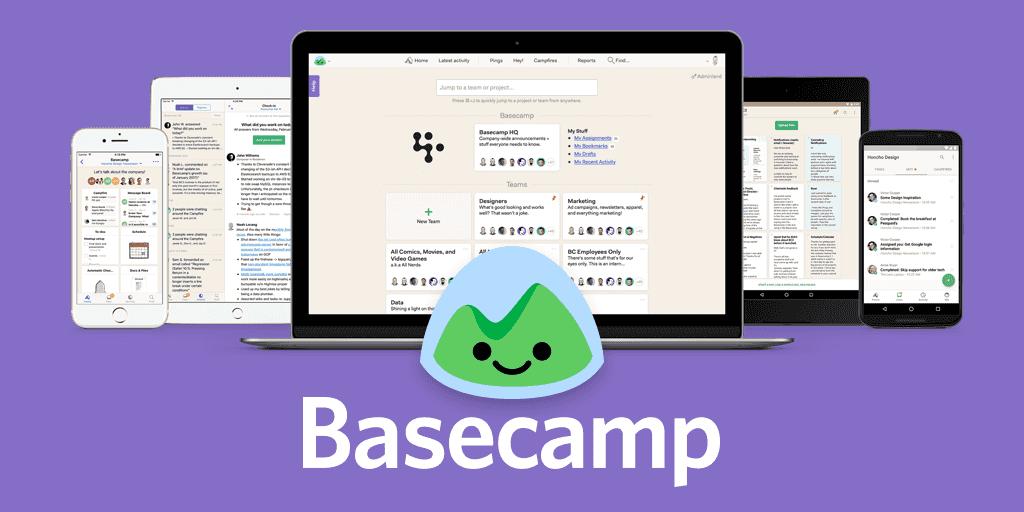
Image credit: TechCrunch
For working professionals, this reinforces an important idea. Your job is not a distraction from entrepreneurship. It can be one of its most valuable inputs.
However, not every interesting problem is a viable business idea. While employed, professionals should focus on ideas that:

Solve a real and recurring problem

Can be tested on a small scale

Do not create conflicts of interest with their employer
Ethical boundaries matter. Clear separation between employment responsibilities and entrepreneurial exploration protects both professional reputation and long-term credibility.
Building proof before building a company
One of the biggest advantages of staying employed is the ability to build proof before committing fully.
This phase is about validation, not perfection. Early steps might include:
Talking to potential users
Running small pilots or prototypes
Testing willingness to pay
Observing behaviour rather than relying on opinions
These experiments help founders understand whether a problem is worth solving and whether their solution resonates. Many ideas fail quietly at this stage, which is a success in itself. It saves time, money, and emotional energy.
Skills professionals must build beyond their day job
Functional excellence in a job does not automatically translate into entrepreneurial capability. Starting a business demands a different way of thinking.
Professionals must learn to be at ease with uncertainty, quick learning, and making decisions without all the facts. Prioritisation, customer discovery, and financial fundamentals become essential abilities.
Equally important is the shift from perfection to progress. Iteration, not perfect execution, is how startups grow. It is crucial to learn how to test, adjust, and go gradually.

Managing time, energy, and burnout
Balancing a job and a start-up is demanding. Without structure, burnout becomes a real risk.
Successful professionals set clear expectations for themselves. They define specific time blocks, realistic milestones, and non-negotiable rest. Progress is measured over months, not days.
Knowing when to pause or pivot is as important as knowing when to push forward. Entrepreneurship is a long journey, and sustainability matters.
How professionals are building start-ups alongside their jobs
What this looks like in practice can be seen through professionals who are already building their ventures while continuing their careers.
Starting with customer validation
Siddharth Chopra, SPJIMR SYB Batch 36 alumnus, notes that the programme helped him refine his ideas thoughtfully while continuing his career. Coming from the film industry, he entered the food space with a strong personal interest but quickly realised that passion alone is not enough. He highlights the importance of understanding customer needs before building. Through the SYB programme, he shifted his focus towards identifying real customer demand and testing assumptions early. His journey reflects how professionals can shape and refine ideas thoughtfully while continuing their careers.
Testing ideas through evidence
SPJIMR SYB Batch 34 alumnus, Peeyush Tandon’s experience is explicitly linked to managing risk alongside a job. He highlights how structured learning allows professionals to reduce uncertainty and build stronger foundations before committing fully to their venture. He emphasises validating ideas through research, user feedback, and real-world testing rather than rushing into execution. His experience highlights how structured learning through the SYB programme enables professionals to reduce uncertainty and build stronger foundations before committing fully.
Deciding when it is time to go full-time
The decision to leave a job should be intentional, not emotional. Signals that may indicate readiness include:

Consistent customer demand

Clear revenue potential or traction

Financial preparedness for a transition period

Personal readiness for uncertainty
When these elements align, the move to full-time entrepreneurship feels less like a leap and more like a natural next step.
Why structured support matters
While self-learning is valuable, it often lacks direction. Professionals benefit from structured environments that help them validate ideas, learn from peers, and avoid common mistakes.
Mentorship, peer feedback, and guided frameworks accelerate learning. They also help founders see blind spots that are difficult to identify alone.
Where the SYB programme fits in this journey
The Start Your Business (SYB) programme by S. P. Jain Institute of Management & Research (SPJIMR) is designed for professionals who want to explore entrepreneurship without stepping away from their current roles. It recognises a simple but often overlooked reality: building a start-up does not have to begin with a resignation letter.
As a four-month hybrid programme, SYB fits naturally into the lives of working professionals. It allows participants to develop ideas methodically, understand core business fundamentals, and apply learning directly to real ventures while continuing their careers. This structure supports parallel growth, where learning, experimentation, and validation happen alongside professional responsibilities rather than in isolation.

By combining structured guidance with practical application, SYB enables participants to move from intent to action at a pace that aligns with both personal and professional realities. Entrepreneurship, in this context, becomes less about betting everything at once and more about preparing well, testing responsibly, and making informed decisions.
For professionals considering this path, the message is clear. You do not have to quit to begin. With clarity, structure, and the willingness to start thoughtfully, it is possible to build before you bet.
Register your interest for this programme
Please fill in the following details