



Beyond the big idea: Why skills matter more than instinct
Entrepreneurship is often portrayed as instinct-driven, an outcome of bold ideas, charisma, and a willingness to take risks. But speak to founders who have built businesses, and a different picture emerges. One that is quieter, more deliberate, and far more skill-driven.
Most early-stage ventures don’t fail because the idea wasn’t exciting enough. They struggle because entrepreneurship demands a broad and demanding skill set, many of which first-time founders don’t realise they need until they’re already deep into the journey.
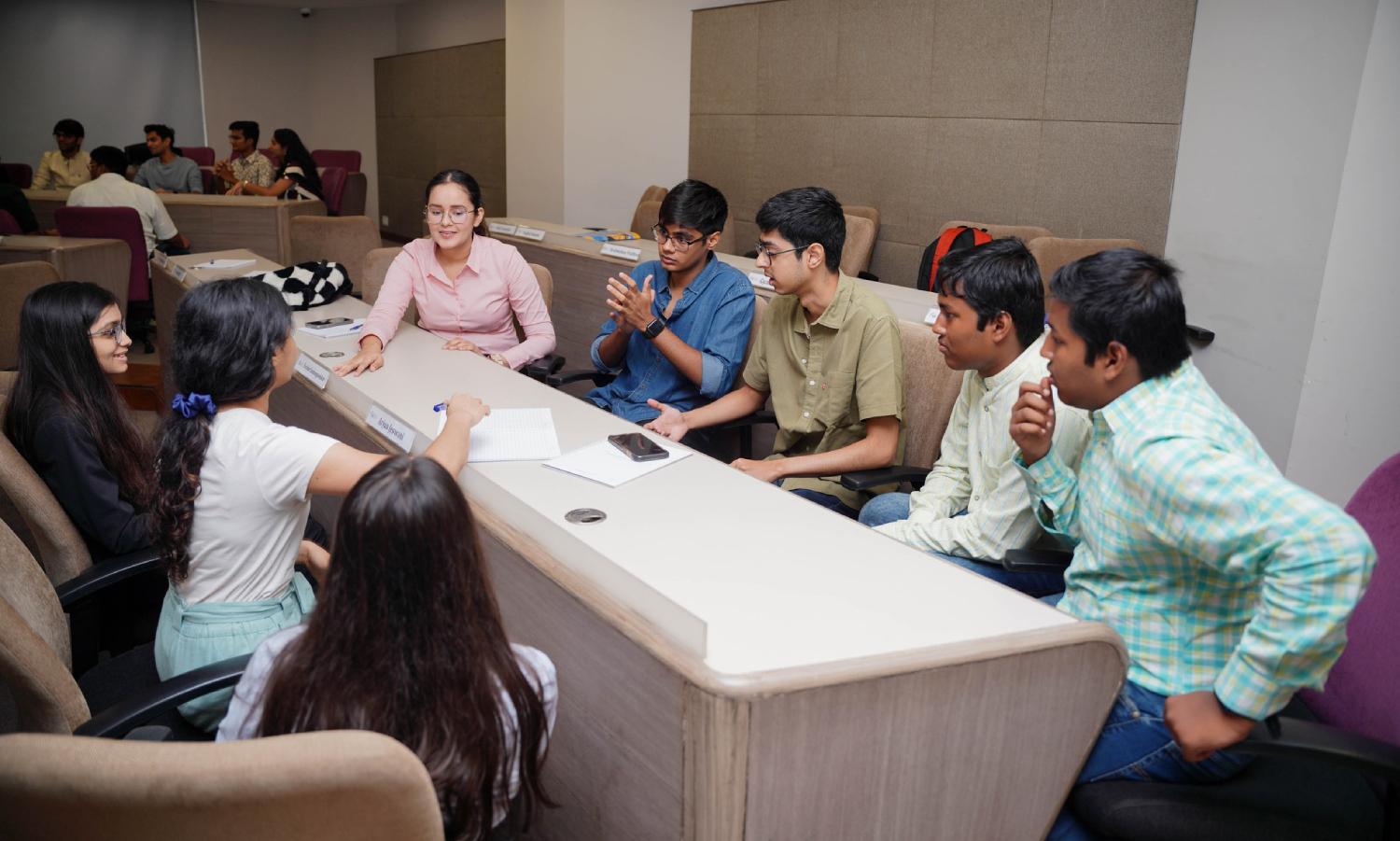
The good news is that these skills are not innate traits. They can be learnt, acquired, practised, and strengthened with the right structure and exposure. This belief is central to the learning philosophy of programmes like the Start Your Business (SYB) programme at S.P. Jain Institute of Management & Research (SPJIMR), which focuses on developing entrepreneurs rather than just launching start-ups.
Here are 10 skills that consistently set struggling founders apart from resilient ones.
Opportunity identification and problem framing
Customer-centric thinking
Financial literacy and business fundamentals
Decision-making under uncertainty
Execution and bias for action
Communication and storytelling
Leadership and team building
Structured thinking and adaptability
Learning agility and exposure to diverse perspectives
Long-term thinking and ethical judgment
Opportunity identification and problem framing
Every strong business starts with a clearly understood problem. Yet many new entrepreneurs begin from the opposite end, by building solutions first and searching for problems later. Opportunity identification requires founders to slow down, observe carefully, and question their own assumptions. It is not about what seems exciting but what is genuinely needed.
As SYB alumna Vivin Moses (batch 34) explains:
“We think that our product is the need of the market. But does the customer really need it? That question changed how I looked at my business.”
This skill forces entrepreneurs to move beyond intuition and into validation, often reworking ideas before significant time or money is spent.
Customer-centric thinking
Customer-centric thinking goes beyond surveys or feedback forms. It is about designing a business from the customer’s reality, not the founder’s convenience.
Alumna Ms. Moses also reflects on how this mindset shift reshaped her journey:
“I always thought the product I was building was right. But SYB made me go back, rethink, and do customer discovery again. Today, I’m in a place where I genuinely believe this is the need of the market.”
Many successful founders credit early customer obsession as their turning point. Companies that embed this thinking early are far more likely to build products people adopt.
Financial literacy and business fundamentals
You don’t need to be a finance expert to be an entrepreneur, but you do need to understand how money flows through your business. Pricing, margins, cash flow, and sustainability decisions are fundamentals that cannot be outsourced entirely. Founders who lack financial literacy often grow fast but collapse faster.
Ms. Moses captures this reality simply:
“As an entrepreneur, you have to know about sales, finance, marketing, everything. You cannot leave everything to others.”
Understanding the numbers gives founders control. Without it, even promising businesses remain fragile.
Decision-making under uncertainty
Entrepreneurship rarely comes with complete information. Decisions are made with partial data, shifting assumptions, and real consequences. Waiting for perfect clarity often means waiting too long.
This skill is not about eliminating risk. It is about developing judgement, knowing when to move forward, when to pause, and when to change direction.
A well-known example is Howard Schultz in the early days of Starbucks. When Schultz proposed transforming Starbucks from a coffee bean retailer into a café experience inspired by Italian espresso bars, there was no market data proving that American consumers would pay for premium coffee or linger in cafés. In fact, the original founders were unconvinced.

Image credit: Schultz family foundation
Despite limited evidence, Schultz acted on observed behaviour, cultural insight, and conviction about changing consumer habits. He acquired the company and pursued the café model anyway. The decision, made without certainty and against prevailing assumptions, ultimately defined Starbucks’ global identity.
The example highlights a core entrepreneurial truth: founders often must commit to decisions before validation is obvious, relying on informed judgement rather than complete assurance.
Execution and bias for action
Good ideas are plentiful, but good execution is rare. Many entrepreneurs get stuck perfecting plans instead of testing them. A bias for action means moving forward even when conditions are imperfect and learning from real-world feedback instead of hypotheticals. Several SYB alumni describe how their mindset changed during the programme, from waiting to hire experts to taking ownership themselves.
An interesting example of execution over perfection is Zerodha, India’s largest retail stock brokerage. In its early days, Zerodha did not wait to build a fully polished platform or launch with aggressive marketing. Instead, it focused on solving one clear problem, high broking fees, by launching a simple, no-frills product and improving it continuously based on user feedback.
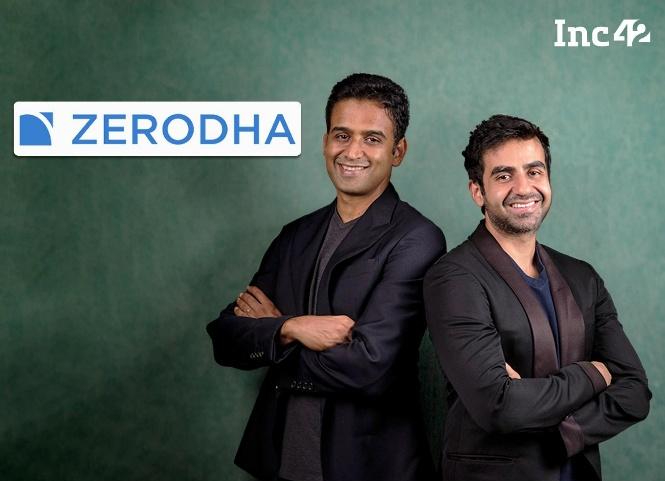
Image credit: Inc 42
Rather than delaying launch to compete feature-by-feature with incumbents, the founders prioritised getting a functional product into the market quickly and refining it in real time. That bias for action allowed Zerodha to learn faster, build trust with customers, and scale sustainably, without external funding.
The lesson for entrepreneurs is straightforward: execution creates learning. Planning alone does not.
Communication and storytelling
Entrepreneurs communicate constantly with customers, partners, employees, and investors. Yet many underestimate how critical clarity is.
Good storytelling is not about exaggeration. It is about explaining your idea in a way others can understand, believe in, and support.
Founders who communicate clearly can attract talent, align teams, and secure opportunities faster than those who cannot.
A strong example of communication and storytelling is that of Melanie Perkins, Co-founder of Canva. Early on, Perkins struggled to raise funding because investors didn’t immediately grasp why design needed to be simplified.

Image credit: Entrepreneur
She refined her story repeatedly, shifting the narrative from ‘a design tool’ to ‘making design accessible to everyone.’ That clarity helped investors, users, and teams quickly understand the value Canva was creating. The product didn’t fundamentally change at first; the story did. Adoption followed
For entrepreneurs, the takeaway is simple: when people understand your idea easily, they are far more likely to support it.
Leadership and team building
As businesses grow, founders must evolve from problem-solvers to leaders. This shift is often uncomfortable. Leadership is not about hierarchy. It is about enabling others, setting direction, building trust, and creating accountability.
SYB exposes founders to this reality early, before poor habits set in. Alumni often speak about how understanding different functions helped them lead more effectively.
Structured thinking and adaptability
Popular culture celebrates entrepreneurs who ‘wing it’. Reality is far less romantic.
SYB alumnus Avinash Shahri (batch 34) addresses this head-on:
“Entrepreneurship is not just winging it. There is a lot of structured work behind it. Frameworks give you a lens through which you can look at your business with clarity.”
Structure does not limit creativity but enables better decisions. Especially when markets shift or assumptions break, structured thinking helps founders adapt without panic.
Learning agility and exposure to diverse perspectives
Entrepreneurs often overestimate what they know and underestimate what they don’t.
Prajay Soni (batch 24) reflects on this shift in perspective:
“You always think you know stuff, but you never know what you don’t know. Learning with professors and classmates from different backgrounds gave me insights I wouldn’t have had otherwise.”
Exposure to peers, mentors, and real-world stories broadens thinking and sharpens judgement. It allows founders to evaluate opportunities more realistically.
Long-term thinking and ethical judgment
Not every opportunity is worth pursuing. Sustainable entrepreneurship requires discernment. Alumnus Mr. Soni captures this well: “This course gave me a lens to properly analyse opportunities and decide whether they’re worth pursuing or not.”
That lens includes long-term impact, ethical considerations, and sustainability, not just short-term gains. Founders who develop this skill build businesses that last, not just businesses that launch.
What this means for new entrepreneurs
Entrepreneurship is not a single talent. It is a collection of skills, some practical, some emotional, some strategic, that compound over time.
While passion may spark the journey, it is skill that sustains it. Programmes like SPJIMR’s SYB recognise that founders don’t just need motivation. They need frameworks, exposure, mentorship, and honest reflection.
For aspiring entrepreneurs, the question is not whether you already have these skills. It is whether you are willing to build them.
The SPJIMR SYB advantage: Turn your vision into a venture
SPJIMR’s SYB programme is a 4-month hybrid course designed to foster an entrepreneurial mindset through experiential learning.

Comprehensive curriculum
Covers everything from digital marketing and sales to funding, valuation, and go-to-market strategies.

Expert mentorship
Participants receive up to four dedicated mentoring sessions to refine their business plans.

Investor access
The programme culminates in a Pitch Day, where you present your business plan to a panel of investors and experts.

Elite networking
Graduates earn SPJIMR Executive Alumni Status, joining a community from a B-school ranked #3 in India by the Financial Times.

Incubation support
Opportunity for post-programme support through the Sardar Patel Technology Business Incubator (SP-TBI).
Ready to build a business that lasts? Apply now for the SPJIMR SYB Programme and gain the frameworks, mentorship, and exposure you need to succeed.
Register your interest for this programme
Please fill in the following details