



Starting a business often begins with excitement, a breakthrough idea, a passion you’ve carried for years, or a gap you’ve spotted in the market. But taking that idea from concept to real customers is where most first-time founders struggle.
The truth is: a great idea is only 10% of entrepreneurship. The remaining 90% is clarity, validation, discipline, and execution.
And that’s where structured support, mentoring, and a strong entrepreneurial foundation can make all the difference, especially for early-stage founders navigating the journey alone.
Why do many start-ups fail before they even launch
Most businesses don’t fail because the founders lack passion. They fail because they miss one or more critical early steps. Here are the most common reasons and what history has shown us:
1. Solving a problem no one truly has
Many founders fall in love with their idea instead of the customer problem.
Example: Quibi
Despite $1.75B in funding, it shut down because users didn’t want short-form Hollywood content; they already had TikTok, YouTube, and Netflix. The ‘problem’ Quibi solved did not matter to customers.

Image credit: BBC
2. Zero real customer validation
Skipping user interviews, prototypes, and early testing is a guaranteed way to build something people don’t accept.
Example: Google Glass
It moved straight to market without validating how users felt about privacy, design, or practicality. The result? Rejection from mainstream consumers.

Image credit: InspireIP
3. Overbuilding before knowing what people will pay for
Spending months (or years) perfecting a product without testing willingness to pay leads to wasted resources.
Example: Juicero
A $700 Wi-Fi–enabled juicer was beautifully engineered, but users discovered they could squeeze the juice packs with their hands. The product solved a non-problem.

Image credit: Issue Wire
4. Weak financial planning or unrealistic unit economics
Founders underestimate costs, overbuild inventory, or invest too early in marketing.
Example: Pets.com
Scaled aggressively without a sustainable cost model. Logistics were too expensive per order, and the company burned through capital quickly.

Image credit: Startup Stumbles
5. Ignoring legal, compliance, or operational basics
Founders often avoid legal structure, compliance, or operational systems until it’s too late.
Example: Theranos
Collapsed due to regulatory failures, compliance issues, and operational opacity.

Image credit: Fordham
6. Lack of founder resilience or unwillingness to pivot
Sometimes, the idea is not the problem; the rigidity is.
Example: Blockbuster
They rejected pivoting to streaming despite early market signals. Inflexibility cost them the entire business.

Image credit: InspireIP
A practical, step-by-step path for turning an idea into a flourishing busines
Building a successful venture is not about a single breakthrough idea; it is about moving from concept to execution through a structured, disciplined process. Most early-stage founders who succeed follow a similar progression:
Step 1: Define the problem with precision
Every strong business begins with a clearly articulated problem. Identify who faces the challenge, what exactly they struggle with, and why the issue is significant in today’s market context. Clarity at this stage prevents wasted effort later.
Step 2: Validate your idea with real customers
Founders often fall in love with their ideas, but the market may not agree. Speak to potential users, observe behaviour, test early assumptions, and build simple prototypes or pilots. Structured entrepreneurship programmes frequently provide frameworks, tools, and expert feedback for this phase because it is where most start-ups fail.
Step 3: Develop a viable and coherent business model
A promising idea needs a sustainable engine behind it. Define your value proposition, target customer segments, revenue streams, costs, distribution channels, and key activities. The goal is to ensure that the business can operate realistically, not just theoretically.
Step 4: Build a foundational understanding of financials
Entrepreneurs do not need to be finance experts, but they must understand the basics: breakeven analysis, unit economics, pricing logic, gross margins, cash flow cycles, and the capital required to reach early milestones. These numbers shape every strategic decision.
Step 5: Design an effective go-to-market strategy
Determine who your early adopters are, how you will reach them, and what message will resonate. Assess digital and offline channels, partnerships, pricing tactics, and brand positioning. A well-designed GTM plan bridges the gap between product and paying customers.
Step 6: Put your legal and operational foundations in place
Choose an appropriate business structure, understand compliance requirements, set up basic accounting processes, and create a simple but reliable operating workflow. Good operational hygiene early on prevents complications later.
Step 7: Launch small, learn continuously, and adapt
Begin with a minimum viable product or a small-scale launch. Monitor customer feedback, track performance metrics, and adjust as needed. Successful founders treat the launch not as the final step but as the beginning of an iterative learning cycle.
How SPJIMR’s Start Your Business (SYB) programme supports first-time entrepreneurs
For aspiring founders who want to move from idea to implementation with confidence, the SYB programme from S.P. Jain Institute of Management & Research (SPJIMR) offers the structure they often lack:
- 4-month hybrid programme designed for early-stage entrepreneurs.
- Mentorship from experienced faculty and industry practitioners.
- A structured approach to idea validation, business modelling, and financial planning.
- Hands-on guidance to refine their venture idea and prepare for launch.
- Peer learning from a diverse group of aspiring founders.
- Real-world insights, case studies, and frameworks that build entrepreneurial discipline.
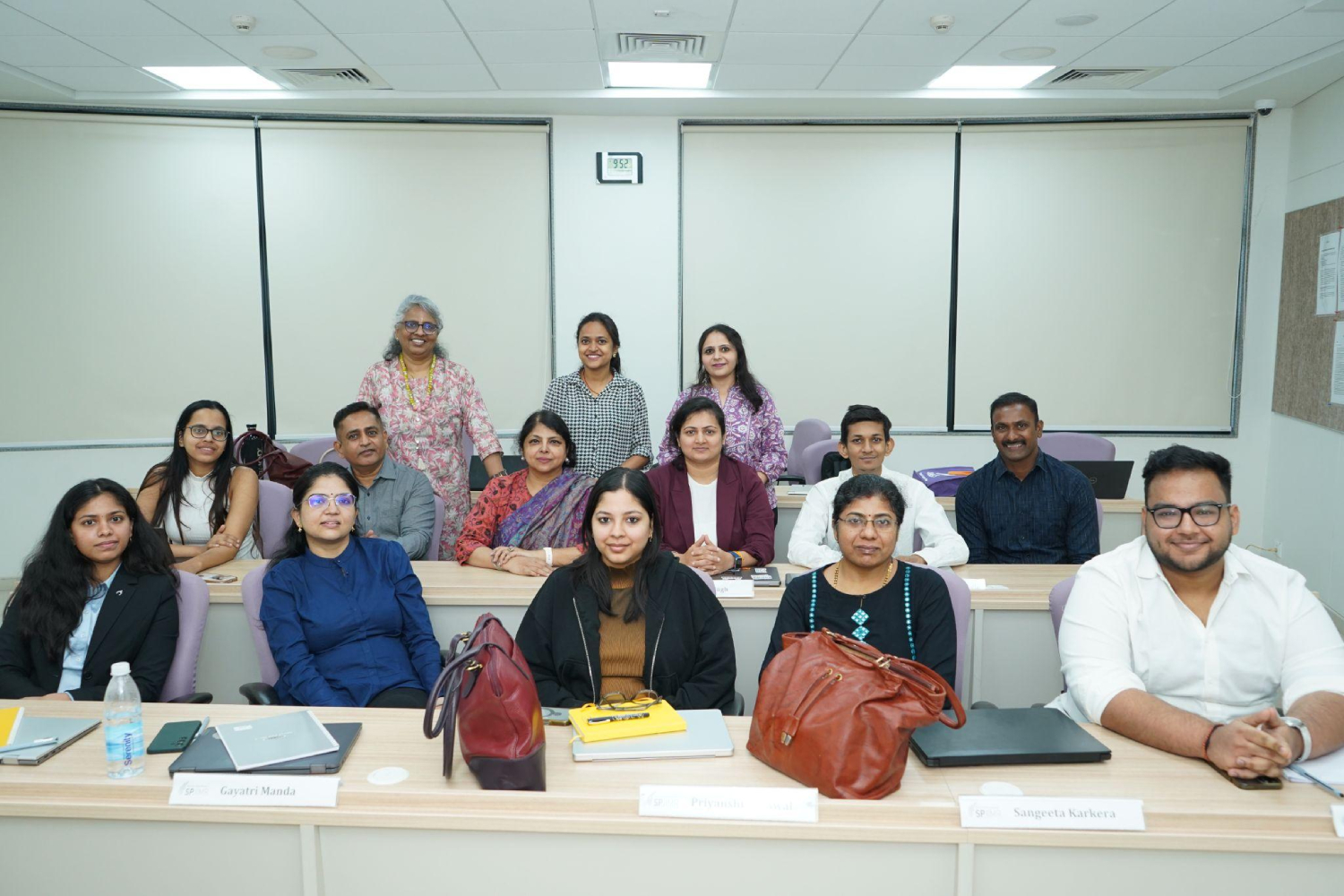
SYB helps founders do what most early entrepreneurs struggle with: validate intelligently, plan realistically, and launch confidently.
Alumni stories: Siddharth Chopra, SYB batch 36
Siddharth worked as an Assistant Director in films. He loved food and dreamt of starting a cloud kitchen but had never studied business or entrepreneurship. He wasn’t sure if he even had the ‘business mindset’. Attending SYB changed that.
His biggest Aha Moment: He was convinced he should start a specific cuisine because he was passionate about it. But a faculty member told him something that shifted everything: “Don’t open what you want. Open what the customer wants.” That insight changed his entire approach. He began researching demand instead of relying on personal passion, an essential entrepreneurial shift.
His experience with mentorship: His mentor gave honest, practical feedback. If something wouldn’t work, she said it, and if something did, she encouraged it. According to Siddharth, that guidance gave him clarity and confidence.
What he would tell his ‘pre-SYB’ self: He was once unsure whether he had the mindset to run a business. Now, he encourages others:

Do the course

Study the fundamentals

Research deeply

Work in the field before jumping in

Understand what the public really needs
“Just because you have passion doesn’t mean the world will buy your product. Do your research. Understand the public. SPJIMR’s SYB helps you do exactly that.”
The entrepreneurial mindset SYB will help you build
Every founder must cultivate:

Empathy for customers

Financial discipline

Openness to learn and pivot

Resilience under uncertainty

Consistency in execution
These qualities matter just as much as the idea itself.
Your next step as a founder
Taking a business from concept to launch is not luck; it’s a series of structured steps, informed decisions, and the right guidance. While passion can spark a venture, it is clarity, validation, financial understanding, and execution that turn it into a real business.
SPJIMR’s Start Your Business (SYB) Programme exists to support early founders through this journey, helping them move from uncertainty to action and from an idea to a real, launch-ready business.
Learn more about the programme here.
Register your interest for this programme
Please fill in the following details