





Key takeaways
- At S. P. Jain Institute of Management & Research (SPJIMR), internships are embedded within the programme learning design rather than treated as standalone placement outcomes.
- The focus is on roles that carry real responsibility with real-world learnings to make participants industry-ready.
- SPJIMR’s internship outcomes are strengthened by the consistent quality of talent, structured career support, the institute’s Mumbai location and alumni network.
- The PGDM and PGDM (Business Management) Class of 2027 reported an average internship stipend of ₹1.66 lakh per month and a record 425 offers.
Internship placement outcomes are often explained by reputation and long-standing relationships with recruiters. While these factors matter, they rarely tell the full story. Real and lasting success comes from aligning what participants are prepared to do with what the roles require. At S. P. Jain Institute of Management & Research (SPJIMR), internships are designed as a bridge within the learning journey, so learning continues even after they leave the classroom.
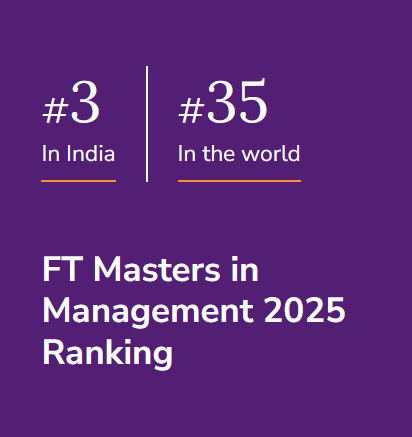
This approach is supported by SPJIMR’s reputation in global management education. The institute has been recognised amongst the top 3 B-schools in India in the Financial Times Masters in Management rankings. Notably, the institute secured the top spot among Indian business schools in the Careers Service category, with an impressive global rank of #3 for its two-year Post Graduate in Management (PGDM) programme. These recognitions reflect the strength of SPJIMR’s focus on experiential learning and career trajectory design rather than outcomes viewed in isolation.
Internships within the programme design
Within the PGDM programme, internships are positioned as an integral part of the learning structure. They are not treated as a departure from academic engagement but as a phase where classroom thinking is carried into the workplace setting. This continuity allows concepts, frameworks, and modes of reasoning developed during the programme to be tested against real constraints and evolving priorities.
This integration is facilitated by clearly stated learning goals for every internship, faculty-led review processes, and organised post-internship reflection incorporated into the programme timeline.
Alignment as an organising principle
Consistent outcomes come from how well the different parts of the programme work together. At SPJIMR, classroom and non-classroom learning, internship roles, and full-time expectations are intentionally connected. This reduces the disruption participants often feel when moving between academic settings and organisations, allowing learning to carry forward rather than reset at each transition.
Learning through responsibility
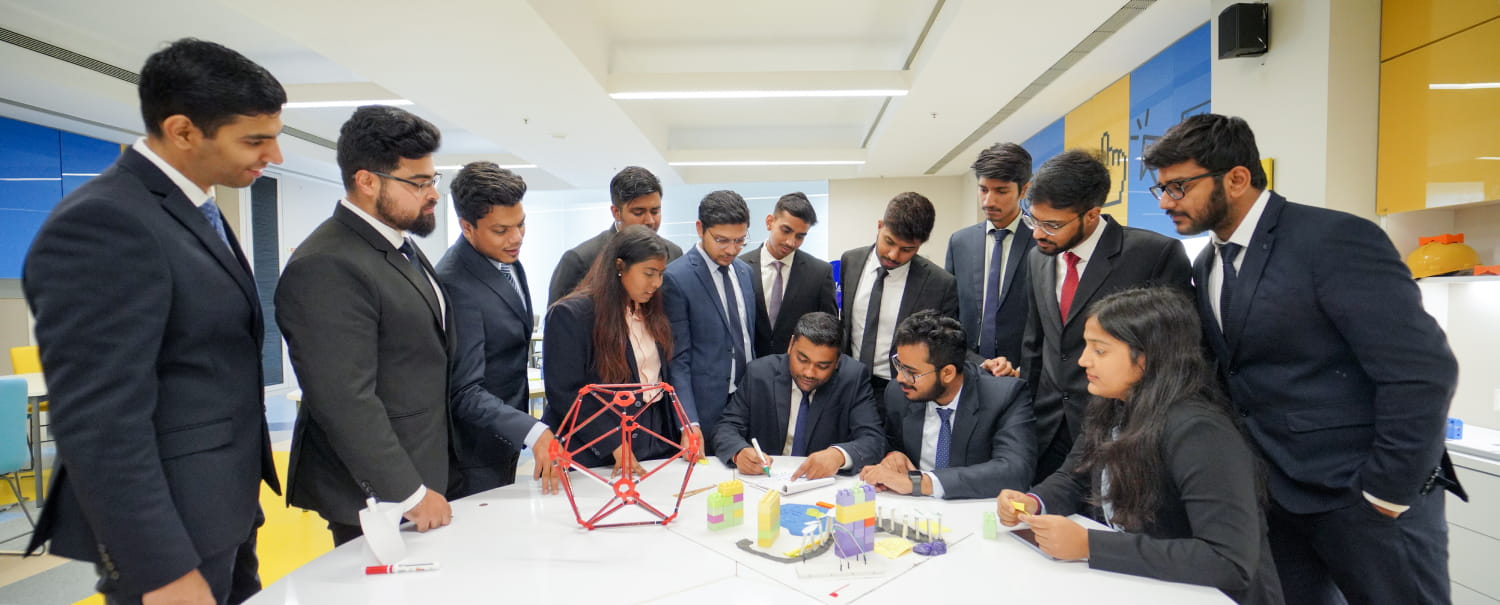
An important feature of the internship experience is the level of responsibility participants are expected to engage with. Rather than being limited to observational tasks, interns are exposed to situations that require ownership, communication, and decision-making under uncertainty. Learning emerges through engagement with feedback, trade-offs, and the consequences of decisions, extending beyond formal instruction.
The growing presence of roles in investment banking, private equity, and product management suggests that internships are increasingly focused on problem-solving and decision-making rather than limited to routine tasks.

Student assessment focuses not only on the volume of work completed but also on how problems are defined, stakeholders are engaged, feedback is incorporated, and decisions are made in uncertain situations.
Alongside professional capability, SPJIMR emphasises the development of socially sensitive leaders with a wisdom-oriented mindset. Internship learning, therefore, includes ethical judgement, stakeholder awareness, and long-term thinking, not only technical execution. These perspectives shape how participants interpret responsibility and make decisions in complex and uncertain environments.
Compensation as a reflection of role expectations
Internship stipends, while frequently discussed externally, are best understood as reflections of role expectations. The two are not opposites but parallel reflections of readiness.
In turn, stipends tend to reflect the value participants can create through these roles. In this context, stipends do not define the experience; they simply mirror the responsibilities attached to it. Seen this way, learning and compensation are not competing priorities but parallel outcomes of the same role design.
Internship outcomes, in context
When a learning model is aligned with responsibility, the outcomes begin to show measurable consistency. The recent internship cycle provides a useful illustration. For the PGDM and PGDM (Business Management) class of 2027 at SPJIMR, this alignment was reflected in the scale of industry participation. The 361-member group received 425 internship offers from 81 different organisations, with 22 first-time recruiters.
Internship cycle highlights – Class of 2027
₹1.66 lakh
Average monthly stipend
₹2.5 lakh
Highest monthly stipend
425
Internship offers
Average stipends during the internship cycle stood at ₹1.66 lakh per month, with a median of ₹1.71 lakh, while the highest reached ₹2.5 lakh per month. The top 50% of the cohort reported an average monthly stipend of ₹2 lakh, with the top 20% averaging ₹2.16 lakh. These figures reflect the responsibilities and expectations embedded within internship roles.
Evolving role profiles
Internship roles in consulting, investment banking, private equity, and product management have expanded. This reflects growing industry confidence in participants’ ability to work in uncertain situations.
Sector-wise internship distribution
32% Consulting
24% FMCG
10% Project management
10% Investment banking and private equity
10% General management
In finance, almost 30% of the participants secured roles in investment banking and private equity. Compared with the previous summer cycle, investment banking and private equity recorded a growth of 112%, while the product management roles increased by more than 56%.
The recruitment process for internships this year also saw first-time recruiters such as:
Alvarez and Marsal
Airtel
Dabur
Diageo
HCCB
Mastercard
Perfetti Van Melle
Careers Service at SPJIMR
At SPJIMR, Careers Service does not operate as a placement office that activates at the end of the programme. It works as a learning partner that prepares participants to take responsibility in professional settings. Its role is to support informed career decisions grounded in preparation and reflection.
CV reviews and interview preparation are framed not as performance coaching alone, but as exercises in clarity of thinking, articulation of judgement, and alignment between capability and role expectation.
Engagement begins early and continues through internships and final placements. Participants receive structured guidance through curriculum vitae (CV) reviews, interview preparation, mentorship, and role-fit discussions aligned with academic learning and industry expectations.
Working in coordination with faculty and recruiters, Career Services helps maintain continuity between classroom preparation and professional application. This supports internship readiness and facilitates smoother progression into full-time roles.
Located in Mumbai, the institute benefits from proximity to India’s financial and corporate ecosystem, enabling meaningful engagement with real organisational contexts.
Continuity into full-time roles
Internships give organisations an opportunity to observe participants performing in real-world conditions. When they convert to full-time roles, the decision is shaped by demonstrated readiness rather than familiarity alone.
This strengthens the alignment between what is learnt during the programme and what is expected in professional roles. In this light, internships are less short-term engagements and more early demonstrations of professional readiness.
This is also visible in final placement outcomes, where recent cohorts have reported an average salary of ₹33.75 lakh per annum, with the highest offer at ₹75 lakh per annum.
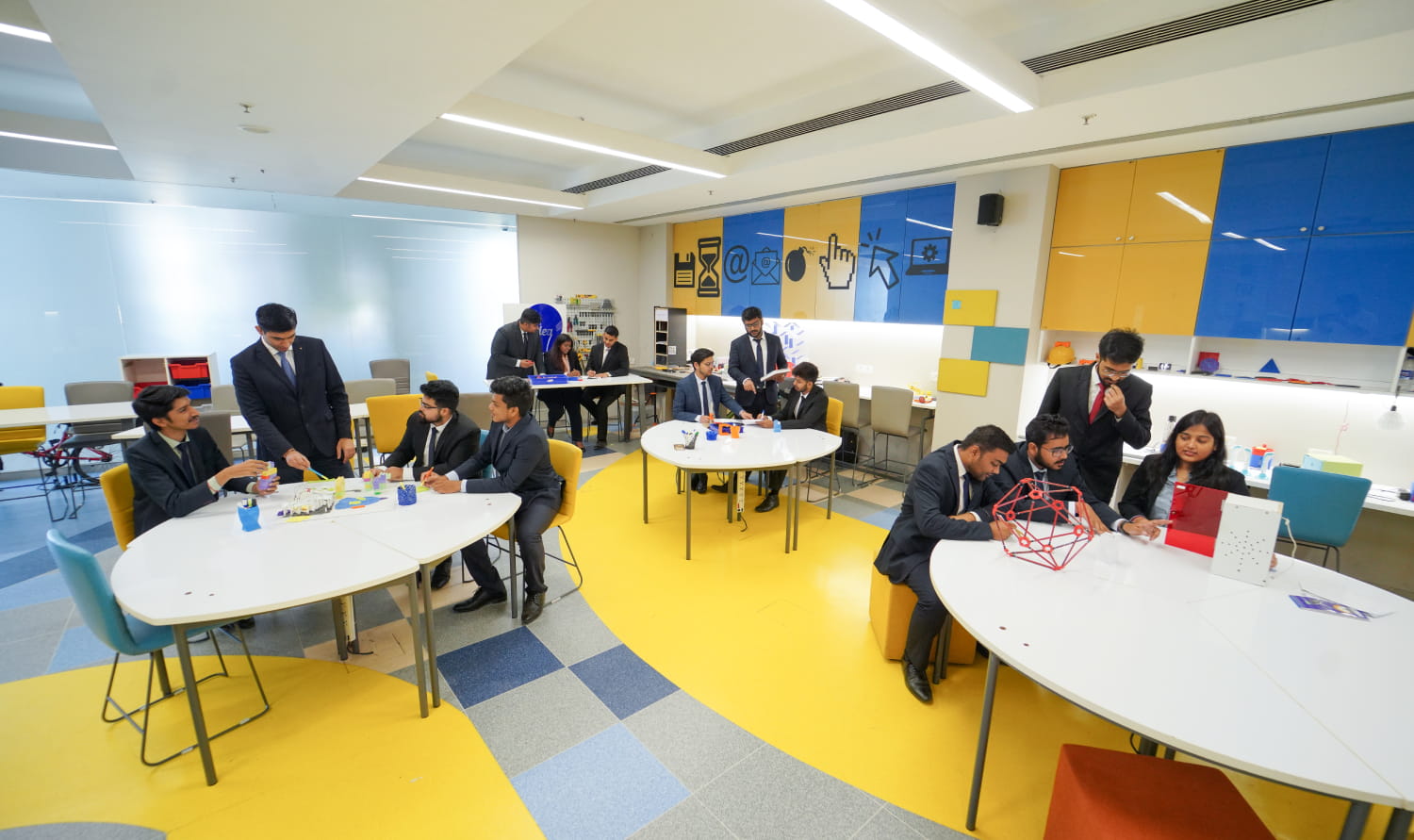
This internship-to-full-time pathway is reinforced by SPJIMR’s long-term placement consistency. The institute has maintained a 100 percent placement record for over two decades, reflecting sustained industry trust and the effectiveness of its learning-to-career model across economic cycles.
Sustaining outcomes over time
Over time, the sustained performance of placement outcomes reflects the strength of this design. By embedding internships within the broader learning system, the programme ensures that experience, reflection, and progression remain connected.
The question of whether internships prioritise learning or outcomes is often framed as a choice. SPJIMR’s internship model approaches this differently. By focusing on alignment, responsibility, and continuity, the programme demonstrates how learning and outcomes can develop in parallel, each reinforcing the other across the management education journey.
Register your interest for this programme
Please fill in the following details