

Growing together: My Abhyudaya journey
Nivetha A, PGDM 2025-27

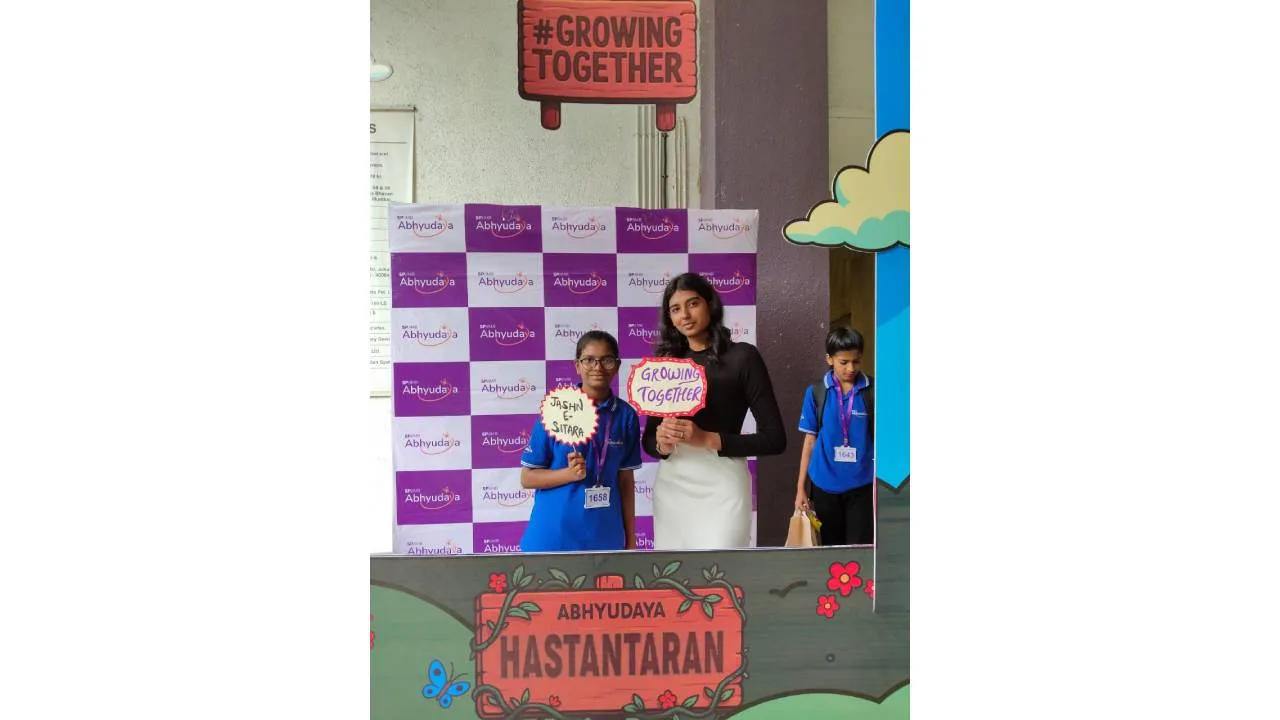
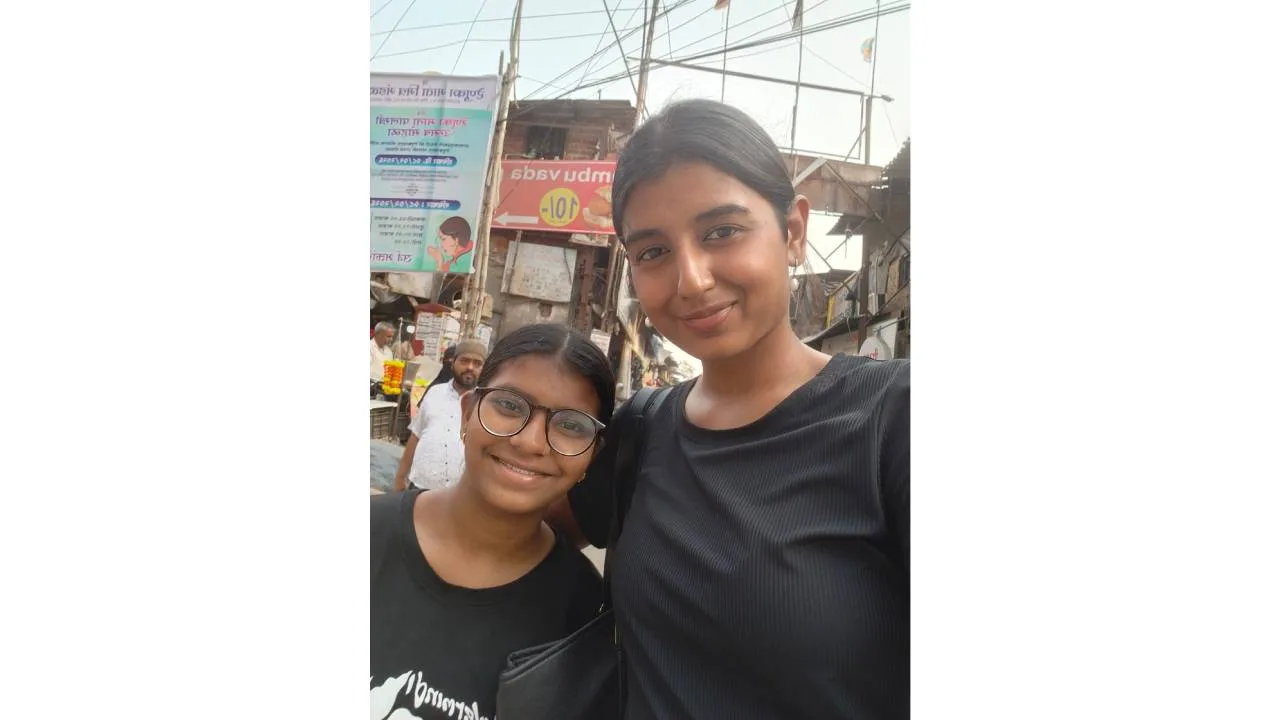
Some journeys begin with a grand plan, but mine began with a single line in the Growing Together report, “She is incredibly shy and reserved.” I read those words about Rachana, my sitara, and quietly smiled, because for the longest time, that was how people described me too.
Hastantaran felt like stepping into a story that had already begun without me, and yet somehow had space reserved just for the two of us. When I first met Rachana, she was answering my questions in polite, surface-level sentences, careful not to reveal too much, but also trying very hard to do “what is expected.” It was oddly familiar, the way she chose her words, the pauses, the small, rehearsed smiles. I could tell that she didn’t need to be “fixed” or “pushed”; she needed a space where it was okay to simply be.
Her previous mentor had written that she didn’t actively participate in extracurricular activities, except for sports occasionally, and I am the exact opposite. Sports is the one extracurricular I have carefully avoided all my life. But beneath those differences was something that felt shared, we both knew what it meant to stand at the edge of things, watching the action, wondering when (or if) to step in.
On the very day of Hastantaran, before we had even really gotten to know each other, she looked at me and asked, “Didi, what is one piece of advice you would give me? I feel like I’m not doing enough or getting out of my comfort-zone enough.” That question stayed with me long after the event ended. I told her what I have slowly been telling myself for years, it’s perfectly alright if not everything excites you, but it is still important to give things a fair chance. You don’t participate because every opportunity will change your life; you participate so you can gently filter out what doesn’t fit and slowly move towards what does. In that moment, I wasn’t speaking as a mentor who had it all figured out. I was speaking as someone who also knows what it feels like to wonder if she’s “doing enough.”
My first visit to her home began at the main road and then slipped into a narrow, bustling alley that seemed to hold a thousand lives at once – tiny shops, hurried footsteps, and conversations overlapping in languages I barely understood. Her house opened directly into a small kitchen, an almost upright staircase leading to a compact room upstairs where we would talk, watch documentaries, and work through her writing and speaking skills.
In that little room, Abhyudaya became more than just a program, something deeply personal – a safe space for her, and strangely, for me as well. The language barriers, the crowded lanes, the noise outside, all of that faded when we sat together with a TED Talk or a documentary, pausing every now and then to clarify a word, an idea, or sometimes just to laugh at something small.
Over time, I realised that “safety” for her meant not being forced into “doing more”, but being invited into experiences at her own pace. For me, it meant allowing myself to care deeply about someone else’s dream without overthinking whether I was “qualified enough” to guide it. The shifts in her didn’t happen overnight. They showed up in tiny, almost blink-and-miss moments. On one campus visit, she hesitantly walked to the front of the room to perform a rhyme during an activity, and I remember feeling disproportionately proud of that small act of courage. During Khel Mela, she spoke animatedly about her relay race and how her team placed second, her eyes lighting up in a way I hadn’t seen before. This was the most active and alive I had ever seen her, and it felt like watching someone quietly step into a fuller version of themselves.
Somewhere along the way, our conversations moved from textbook chapters to K-dramas, paper quilling, friends in Andheri, and her love for English as a subject. The girl who once answered in careful, one-line responses now spoke freely about her interests, her school life, and her worries about choosing the “right” stream after 10th. Her dream is simple yet profound, to become an English teacher. She credits her own teachers for this, and I couldn’t help but connect it to the role my English teachers played during my early years. There was something almost cyclical about it – a former student, shaped by her teachers, now guiding a girl who dreams of becoming one.
During our visits, we sat down with a rough roadmap – streams, possible combinations, undergraduate options, even the idea of a Master’s degree. We tried to translate a big, hazy dream into smaller, doable steps. We also created a vision board, not the Pinterest-perfect kind, but one filled with handwritten goals, scribbled timelines, and a shared understanding that things may change, and that’s okay.
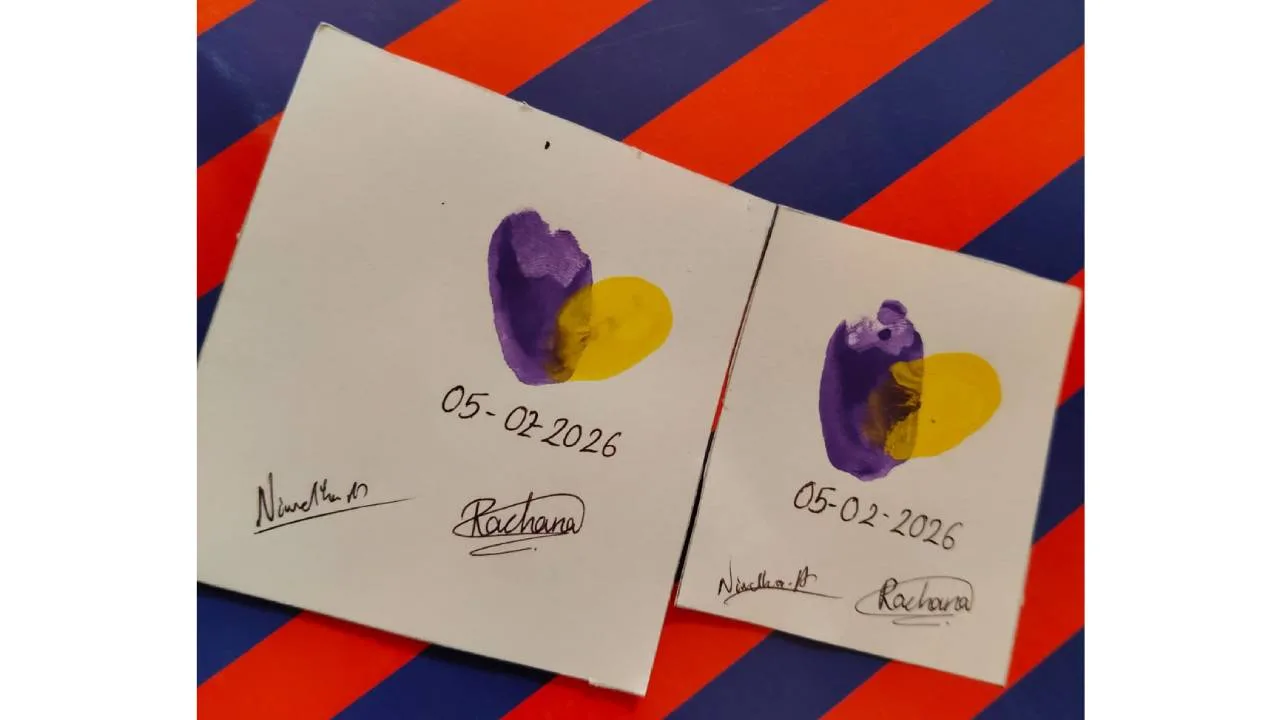
One of my favourite moments was when we painted together and she suggested we make keepsakes using both our handprints. It felt fitting: two different lives, two very different starting points, leaving a mark on the same page. Looking back from Hastantaran to our final home visit, what has changed is easy to see, she is more open, more expressive, more willing to try new things. What has remained constant is the warmth of her family and the quiet determination with which she holds on to her dream. What surprised me most, however, was the change in myself. Abhyudaya is built on the idea of “growing together”, but I don’t think I fully understood that until I realised how much this journey had nudged me too; to listen more carefully, to notice what isn’t being said, and to honour small, slow transformations as much as big milestones.
Abhyudaya’s true magic lies in making moments like ours feel inevitable, not accidental. Nine visits turned Rachana’s quiet dream of teaching English into a roadmap we sketched for her, while quietly teaching me to listen beyond words. We both grew, her into bolder steps, me into steadier guidance. This program doesn’t just pair people, it builds futures, one trusting visit at a time.
About Post Graduate Diploma in Management (PGDM)
SPJIMR’s Post Graduate Diploma in Management (PGDM) is a two-year, full-time residential programme equivalent to an MBA. PGDM is approved by AICTE, accredited by NBA and AMBA, UK and consistently rates among India’s top 10 management programmes. The programme offers a holistic approach to leadership development with its innovative blend of classroom learning and thoughtfully curated immersive experiences.