


Many professionals excel in their roles, delivering results and ensuring operational efficiency. However, despite years of experience, they often find themselves limited to execution-focused tasks rather than being part of high-level decision-making. The transition from managing tasks to shaping business strategy is not automatic. It requires developing new capabilities—ones that organisations expect from leaders driving profitability, innovation, and long-term growth.
Moving into decision-making roles requires a shift in mindset, the ability to think strategically, and the skills to lead cross-functional teams. But how can professionals make this transition without starting over?

Why do professionals get stuck in execution roles?
One of the biggest reasons professionals struggle to move beyond execution is the focus on immediate task completion rather than long-term strategy. Many employees become specialists in their domains, mastering execution, but lack opportunities to engage with the larger business picture. This keeps them confined to operational roles rather than being seen as strategic assets to their organisations.
Another challenge is the lack of financial and business acumen. Understanding balance sheets, investment strategies, and profit drivers is essential for those who want to make an impact at the decision-making table. However, many professionals are never exposed to these aspects of business, making it difficult to step into leadership roles.
Professionals who have not developed leadership capabilities or gained cross-functional exposure often struggle to move into strategic positions.
What skills define a strong decision-maker?
A decision-maker needs to see the bigger picture. Leaders must shift their focus from short-term execution to long-term vision, ensuring that every action aligns with the organisation’s growth strategy. They must be able to analyse industry trends, competitor moves, and market demands while staying ahead of disruptions. Here are a few skills that mid-career professionals should possess:

Big-picture thinking
Leaders must transition from short-term execution to long-term strategic planning, ensuring decisions align with organisational goals and market trends.

Financial acumen
Understanding revenue models, cost structures, and investment strategies helps leaders make informed financial decisions and drive business growth.

Risk assessment and crisis management
Decision-makers must evaluate risks, anticipate challenges, and develop contingency plans to safeguard organisational stability.

People leadership and influence
Effective leaders inspire teams, manage stakeholders, and create a culture of accountability and innovation.

Data-driven decision-making
Strong leaders use analytics, market research, and financial insights to make informed, strategic choices.

Negotiation and conflict resolution
Leaders must mediate disputes, align diverse perspectives, and foster collaboration across departments.

Adaptability and innovation
Decision-makers must embrace change, leverage emerging technologies, and drive continuous improvement.

Execution excellence
While strategic vision is key, strong leaders also ensure that decisions translate into effective, measurable actions.
Register your interest for this programme
Please fill in the following details
How can mid-career professionals shift from execution to strategy?
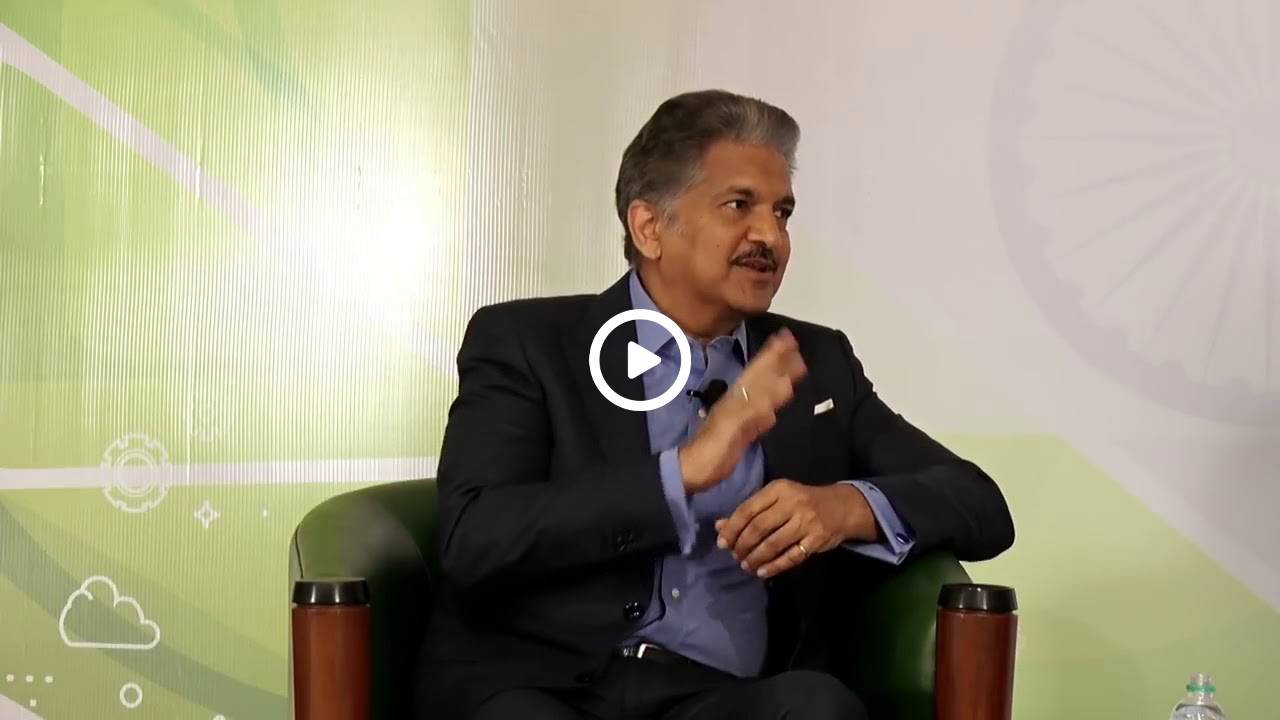
A strong example of someone who transitioned from execution to strategic leadership is Anand Mahindra, the Chairman of the Mahindra Group. His career journey illustrates the mindset and skills required to move beyond task management into high-level decision-making.

Develop a strategic mindset
Look beyond daily deliverables—ask how your role influences larger business goals.

Master financial literacy
Understand budgeting, investments, and cost-benefit analysis to contribute meaningfully to discussions.

Excel in people management
Lead diverse teams, empower others, and foster innovation.

Embrace change
Treat disruptions as opportunities. Stay agile and ready to pivot.
By developing these qualities, mid-career professionals can step out of their execution roles and position themselves as strategic leaders within their companies.

How SPJIMR’s PGEMP enables the transition
A full-time MBA is often impractical for working professionals. That’s where SPJIMR’s PGEMP (Post Graduate Executive Management Programme) stands out—it helps mid-career professionals upskill without pausing their careers.

Designed for working professionals
With its modular format, PGEMP allows participants to balance work and education while applying learnings in real-time.

Industry-relevant curriculum
Focused on strategic thinking, financial intelligence, and people management—key pillars of leadership.

Experiential learning
Real-world business challenges, case studies, and simulations build practical decision-making capabilities.

Peer networking
Engage with industry leaders, faculty, and diverse peers for learning and collaboration opportunities that extend beyond the classroom.
PGEMP alumni success stories: From execution to strategy

Case study 1: Rana Ashutosh Kumar Singh
Driving digital transformation in banking
Rana Ashutosh Kumar Singh, a PGEMP alumnus, brought his extensive experience in banking to the programme, seeking to broaden his strategic and leadership capabilities. Through PGEMP, he strengthened his understanding of digital innovation, strategic decision-making, and organisational leadership. Post-PGEMP, he took on transformative roles, and today, he is recognised for leading large-scale digital transformation efforts in the banking sector, blending deep industry experience with a future-focused mindset.
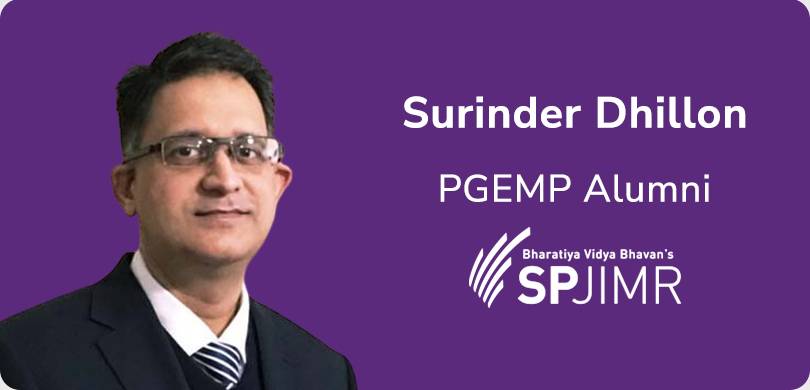
Case study 2: Surinder Dhillon
Elevating to strategic roles in technology
With a background in technology solutions, Surinder Dhillon recognised the need for strategic insight and financial acumen to move beyond operational roles. PGEMP provided him with a comprehensive understanding of business environments, allowing him to step into a leadership role at Cognizant, where he now oversees technology solutions and strategic business initiatives.
Becoming a decision-maker requires strategic learning
Execution is a valuable skill, but long-term career growth demands a shift toward strategy, financial intelligence, and leadership excellence. Companies look for professionals who not only manage tasks efficiently but also drive business impact at a strategic level.
For those looking to step into leadership roles, structured learning is the fastest way to bridge the gap between execution and strategy. SPJIMR’s PGEMP provides a transformational learning experience, equipping mid-career professionals with the capabilities needed to make strategic business decisions.
The opportunity to reinvent a career and transition into leadership is within reach. Take the next step toward becoming a decision-maker and shaping the future of your organisation.
Explore PGEMP and accelerate your leadership journey today!