


Managing a team is one thing, but leading large-scale business transformations is an entirely different challenge. Many professionals who excel in people management struggle to break into senior leadership roles because their focus remains on execution rather than organisational strategy.
To climb the corporate ladder, mid-career professionals must move beyond task management and develop a leadership mindset that drives business-wide change. This transition requires strategic vision, financial acumen, and the ability to influence key stakeholders and navigate complex business transformations.
The question is: How can managers evolve into transformation leaders without disrupting their career trajectory?
But before we move to the answer, let’s find out what traits a business transformation leader possesses.

What defines a business transformation leader?

Strategic vision: How do leaders think beyond daily operations?
Business transformation leaders go beyond delivering short-term results—they align their teams with long-term business objectives, market trends, and industry disruptions. Instead of just focusing on immediate tasks, they shape the future direction of the company through proactive decision-making.

Financial expertise: Why do leaders need strong business acumen?
Senior leadership roles require deep financial understanding—from investment planning and budgeting to profit optimisation and risk assessment. Decision-makers must be comfortable analysing financial data, making informed investments, and aligning business goals with profitability.

Change leadership: How to drive large-scale organisational shifts?
Managing teams focuses on stability and efficiency, but leading transformations requires embracing change and fostering innovation. Transformation leaders drive company-wide initiatives, implement new business models, and navigate organisational shifts with confidence.

Cross-functional influence: How to lead beyond one’s department?
True leaders operate beyond departmental boundaries. They collaborate with cross-functional teams, influence executive decision-making, and align different business functions towards a common goal. Leading transformation means working across finance, marketing, operations, and strategy to ensure seamless execution.
How can mid-career professionals move from managing teams to leading transformations?

Shift from people management to
enterprise leadership:
A successful transition begins with a mindset shift. Instead of focusing only on team performance, professionals must understand broader business objectives, contribute to high-level discussions, and align leadership efforts with company strategy.

Gain financial and strategic expertise:
Mastering financial literacy is essential to confidently make high-impact decisions. Business transformation leaders must be able to assess budgets, investment risks, and long-term growth strategies to influence business-wide initiatives.

Build organisational influence and
leadership presence:
Moving beyond execution requires professionals to build executive presence, develop stakeholder management skills, and cultivate strong relationships with key decision-makers. This ensures that they are recognised as strategic thinkers capable of driving large-scale initiatives.

Leverage continuous learning without pausing
career growth:
Structured leadership development programmes help professionals acquire high-level leadership, strategy, and financial skills while applying these learnings in real time. This ensures that professionals can climb the corporate ladder without stepping away from their current roles.
How does SPJIMR’s PGEMP equip managers to lead business transformations?
Transitioning from a manager to a leader requires more than experience—it demands structured learning, strategic exposure, and mentorship. The Post Graduate Executive Management Programme (PGEMP) at SPJIMR is designed for mid-career professionals looking to make this leap.

Strategic and financial leadership
The programme builds expertise in financial planning, investment strategies, and business transformation leadership.

Cross-industry learning
Interacting with senior professionals from various industries helps participants gain fresh perspectives on business leadership.

Action-based leadership development
Participants engage in real-world problem-solving, simulations, and strategy-focused projects that enhance decision-making capabilities.

Immediate workplace impact
The modular learning format ensures that professionals can implement leadership insights in real-time within their organisations.
By equipping professionals with financial expertise, leadership presence, and strategic acumen, PGEMP enables managers to seamlessly transition into business transformation leaders.
PGEMP alumni success stories: From team managers to business transformation leaders
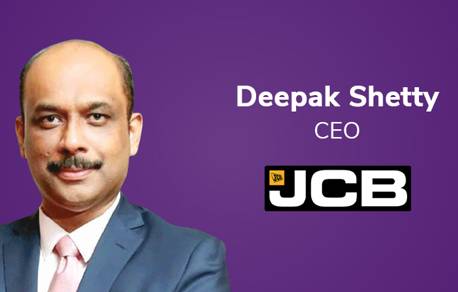
Deepak Shetty: From team management to CEO of JCB India
Deepak Shetty, an alumnus of SPJIMR’s PGEMP, ascended to the position of CEO and Managing Director at JCB India. His journey exemplifies how the programme’s emphasis on strategic leadership and financial expertise can propel professionals to the highest echelons of corporate management. In a recent fireside chat during the inauguration of the 100th PGEMP batch, Deepak shared insights into how the programme influenced his career trajectory.
Mohit Bhatia: Enhancing strategic decision-making
Mohit Bhatia, a PGEMP participant, shared his experience, emphasising how the programme enhanced his strategic decision-making abilities. Through a series of immersive learning modules, Mohit was able to apply theoretical concepts to real-world scenarios, thereby contributing more effectively to his organisation’s growth.
Vrushali Raut: Transitioning to leadership roles
Vrushali Raut, another PGEMP alumna, discussed how the programme facilitated her transition from a managerial position to a leadership role. The exposure to diverse business challenges and strategic frameworks provided her with the confidence and competence to lead business transformations successfully.
Register your interest for this programme
Please fill in the following details
Elevating from team leadership to business transformation
The ability to manage teams effectively is an important leadership skill, but climbing the corporate ladder requires more than that. To lead business transformations, professionals must develop strategic foresight, financial acumen, and influence across the organisation.
Mid-career professionals looking to accelerate their leadership journey need structured learning and real-world business insights. The PGEMP programme at SPJIMR provides a proven pathway to develop these high-impact leadership capabilities.
Ready to transition from managing teams to leading business transformations? Take the next step today!
Learn more: SPJIMR PGEMP programme