


Shell PLC: a green light to continue or a signal to go green?
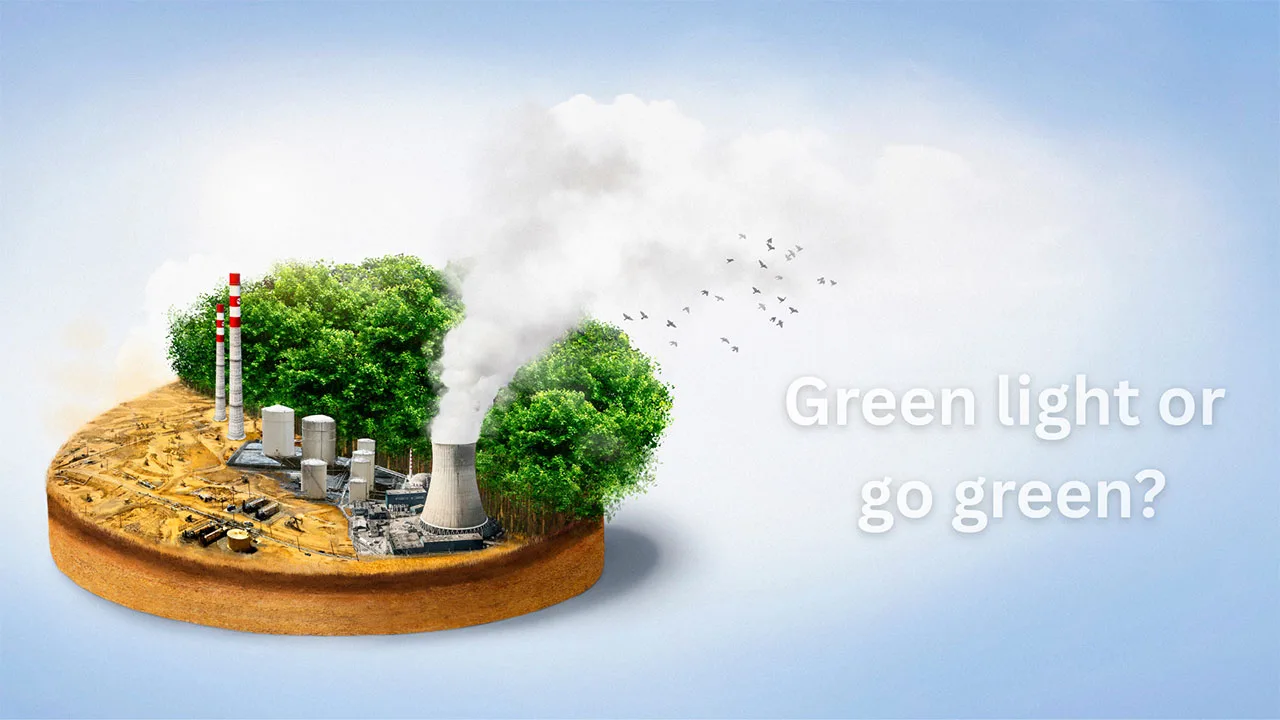
November 2024 marked a pivotal moment for Shell. The Hague Court of Appeal overturned a landmark 2021 ruling that had ordered the energy giant to slash its global greenhouse gas emissions by 45% by 2030. The court’s reasoning? There was no clear legal basis to impose such a specific target on a private company, given the absence of consensus on a global ‘social standard of care’.
Yet this wasn’t a complete vindication. The court simultaneously affirmed Shell’s ‘special responsibility’ as a major oil and gas producer to tackle climate change. This nuanced verdict left Shell’s CEO, Wael Sawan, facing a strategic crossroads that many fossil fuel executives would rather avoid.
The journey to this moment
The case began in 2019 when Milieudefensie (Friends of the Earth Netherlands), backed by over 17,000 co-plaintiffs, took Shell to court. Their argument was straightforward but powerful: Shell was breaching its duty of care and violating human rights by contributing to climate damage. The 2021 district court ruling sided with the campaigners, holding Shell accountable not just for its direct emissions but for emissions across its entire value chain, including the controversial scope 3 emissions from customers using its products.
That ruling sent shockwaves through the energy sector. It was widely seen as a watershed moment in climate litigation, potentially reshaping how corporations understood their environmental responsibilities.
A victory, but at what cost?
Shell’s successful appeal has lifted its legal obligation to meet the original emissions reduction target. But does this legal victory represent a genuine win for the company’s long-term future?
The question now facing Sawan is deceptively simple: should Shell interpret this court decision as permission to continue its fossil fuel-focused business model? Or should it use this moment to pivot strategically toward cleaner energy?
Global political momentum on climate action may be wavering in some quarters, but three forces remain inexorable: regulatory pressure, investor expectations, and societal demands for corporate climate responsibility.
Two paths diverge
If Sawan chooses to pursue a greener strategy, he faces another critical choice between two distinct approaches.
The first option is what academics call the ‘first one out’ strategy. This would mean scaling back investments in upstream oil and gas, downsizing that division, and returning value to shareholders through dividends and share buybacks. It’s a managed retreat that prioritises shareholder returns while acknowledging the sunset of the fossil fuel era.
The second path is planned transformation. This approach involves gradually reducing reliance on oil and gas while simultaneously building out a competitive, revenue-generating renewable energy business. It’s messier, requires patience from investors, and demands significant capital allocation to unproven technologies and markets.
The broader implications
Shell’s decision will reverberate far beyond its own boardrooms. As one of the world’s largest energy companies, the strategic direction it chooses will signal to the entire industry how seriously fossil fuel majors are taking the energy transition.
The court may have removed Shell’s legal obligation to cut emissions by a specific amount. But it hasn’t removed the company’s responsibility to contribute to solving the climate crisis. That responsibility exists regardless of what any court says.
The real question isn’t whether Shell has a legal duty to transform. It’s whether Shell has the strategic wisdom to recognise that transformation is inevitable and that companies that move early and deliberately will be better positioned than those dragged kicking and screaming into a low-carbon future.
Sawan stands at a crossroads that defines not just Shell’s future, but the credibility of the entire oil and gas sector’s claims to be part of the climate solution. The court has given Shell a green light to continue. Whether it chooses instead to go green will be one of the defining corporate decisions of this decade.
About the faculty

Tulsi Jayakumar
Tulsi Jayakumar holds a Ph.D. from the University of Rajasthan, with doctoral research focused on the practice, reporting, and communication of Corporate Social Responsibility (CSR) in Indian firms. She has completed triple master’s degrees in Business Administration, Philosophy, and Arts from acclaimed institutions in India.
More from Tulsi Jayakumar
-
When family mindsets rewrite the rules for women leaders
Read more -
From follower to frontrunner: Google’s Gemini at a crossroads
Read more -
PepsiCo’s $1.95 billion Poppi gamble: Has the beverage giant overpaid for gut health’s future?
Read more -
On track to net zero? Indian Railways’ electrification dilemma
Read more - Read more
Recent faculty blogs
- Read more
-
Pre-trends matter for estimating the causal effect of the WTO on bilateral trade
Read more -
Beyond the label: Why consumer vulnerability is a business imperative, not just a policy problem
Read more -
If I already trust life, what role does Īśvara play?
Read more -
Do we really need Īśvara? A dialogue with a secular humanist
Read more
Most read faculty blogs
-
Organisational responses to hybrid work—Rethinking culture and civility in India
Read more -
When Amazon arrived late to India’s quick commerce party
Read more -
Reimagining travel through AI: Making every journey smarter and more personal
Read more -
Budget 2025: Unlocking opportunities for the private sector
Read more - Read more