

Great talks, greater learnings: What SParc taught me!
Dhun Rathod PGDM 2025-27

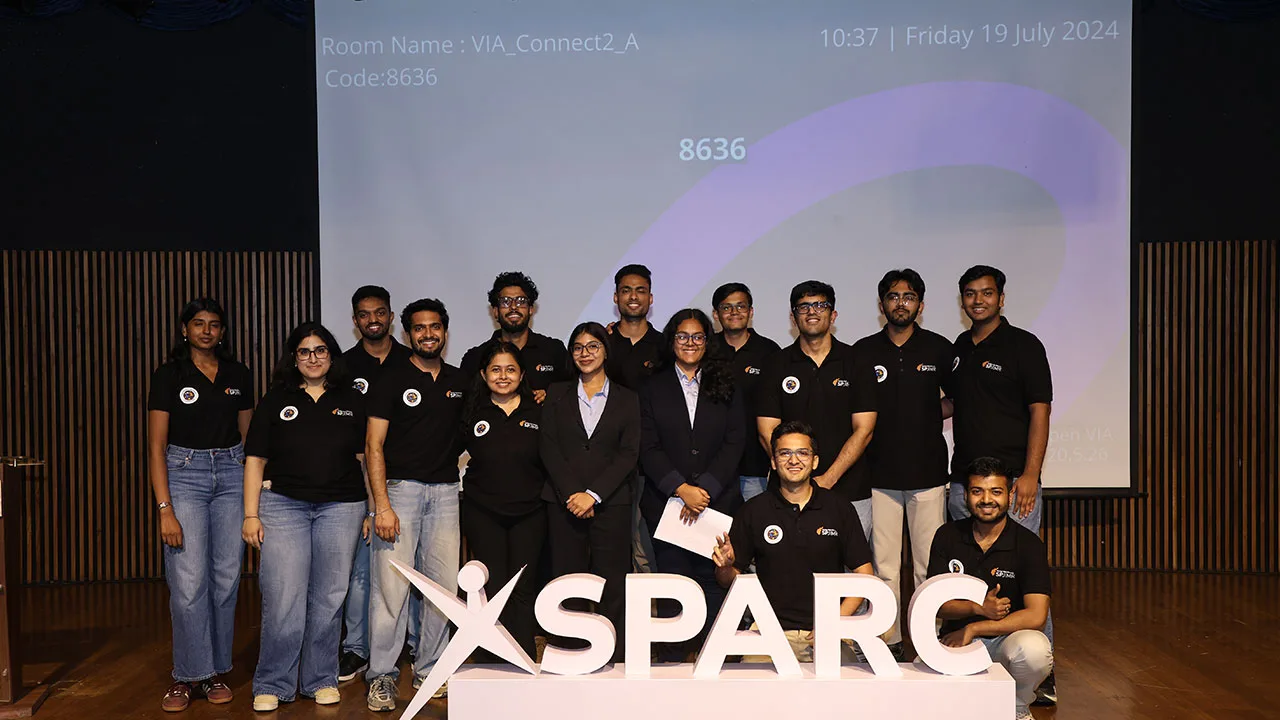
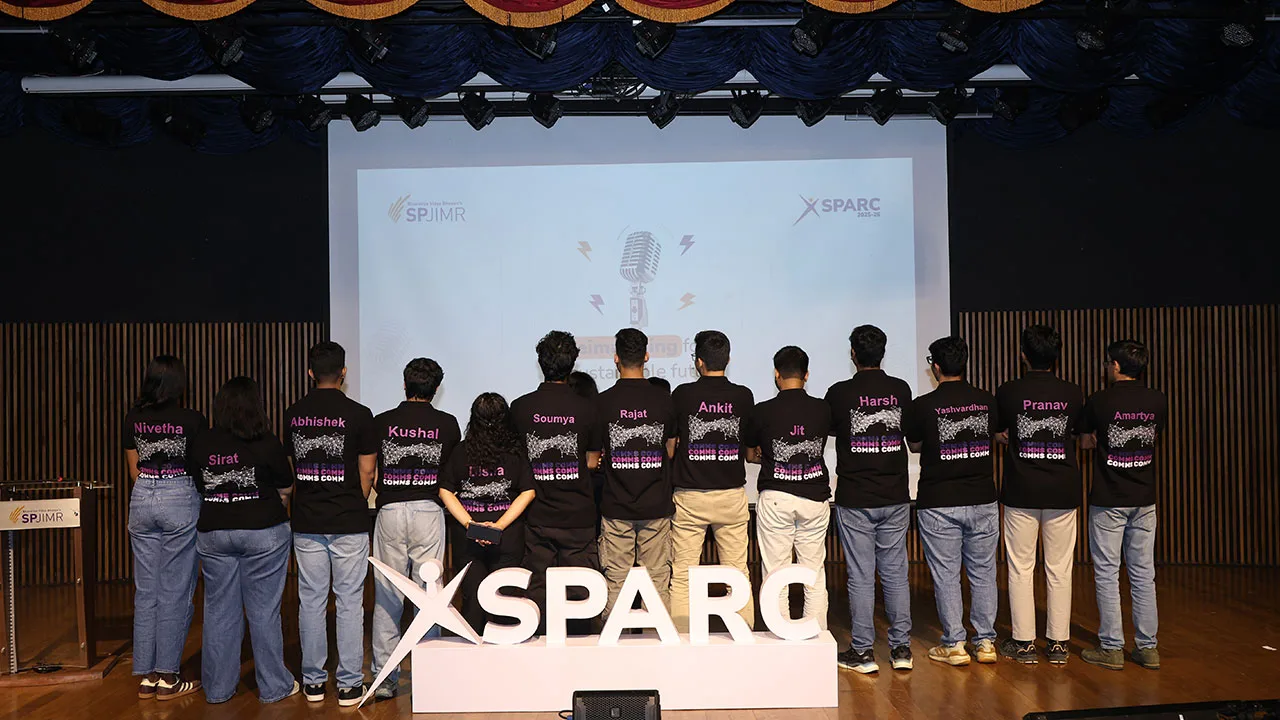
After the first meeting of our ADMAP, Central Communications Committee, we were asked to divide ourselves into four sub-teams, each responsible for handling various buckets of tasks, one of which was organising SParc, the flagship talk series at SPJIMR. While we sorted ourselves into these sub-groups, I almost instantly found myself volunteering to be a part of the SParc team.
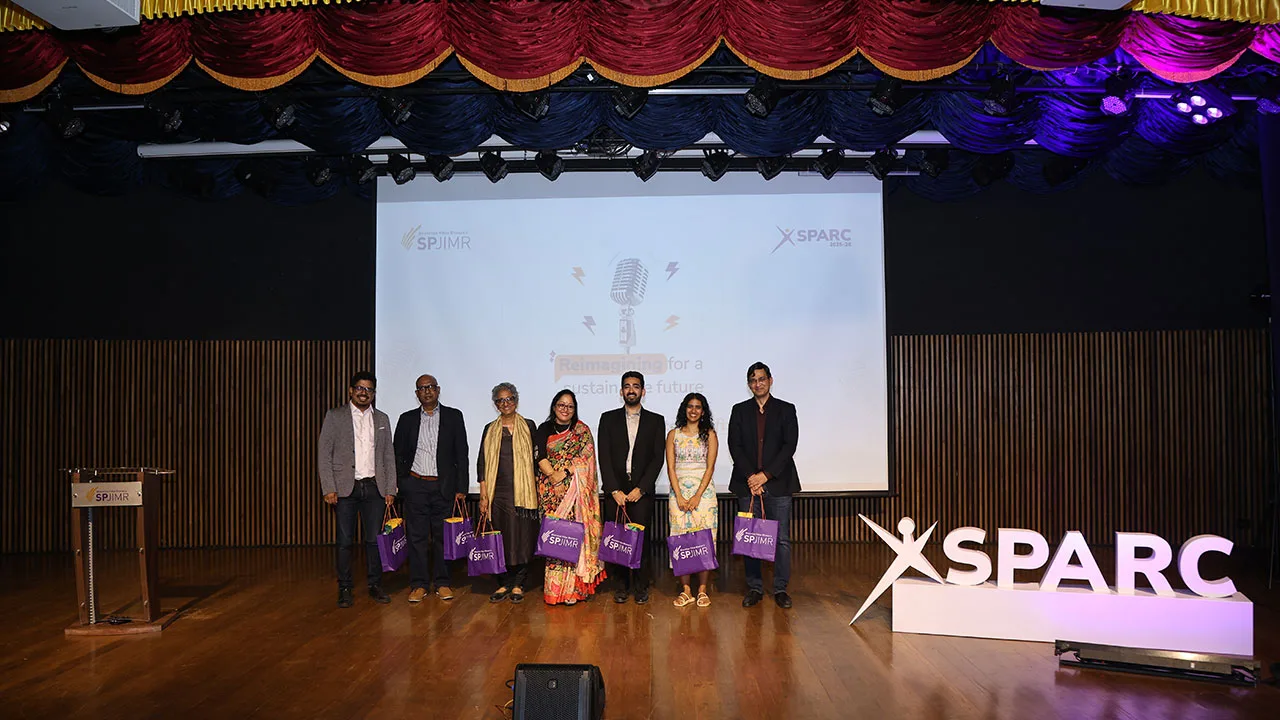
From that day to January 16, 2026, working for SParc is certainly going to be one of the fondest MBA stories I’ll narrate in the future. They say it takes a village to raise a child—I guess SParc was the Comms Comm baby in every sense of the phrase! Fifteen of my batchmates, seven members from the admin team, and vendors for AV, F&B and merchandise—I might certainly be missing a few individuals, but the event was the outcome of the cumulative effort put in by all of us. Every experience leaves behind a set of stories, learnings and memories, and this one was no exception. If I had to summarise my experience and learnings from being a part of SParc, I would do it in the following eight points:
1. It is never too early to start!
The usual phrase is that it’s never too late to start, but apparently, the flip side is also true! In hindsight, we were glad that we began a little early. We weren’t sure if we would be able to onboard enough speakers but eventually ended up surpassing the usual figure of six to seven. Despite that, there were still a few things that struck at the 11th hour—but honestly, I think they are always meant to be! So yes, all in all, it is never too early to start.
2. It’s basic but maintain one email thread!
Nine speakers, nine invites, nine follow-ups, nine travel arrangements, nine social media posts and nine thank-you emails—as much as we tried to keep things consolidated, tracing a few details back did get difficult. The more organised your mailbox seems, the easier it becomes to handle both internal and external communications for the event.
3. It is about people but also about toothpastes and towels!
There was one very stark moment I encountered. I was sending out emails to the speakers and calling them with my colleagues to check if they needed any help, and the very next day one of my colleagues who was handling the travel arrangements said, “Dhun, I’ll go and get the rooms for the guests cleaned and ensure that they have toiletries and a bath towel.”
It was then that I realised that behind a successful event lie nuances that never show on the surface but are diligently taken care of.
4. Doing work is a task; getting work done is a challenge!
We were fortunate enough to have 30 hands working behind making those two hours count, but often doing a task on your own seems easier than getting it done! A lot of my colleagues had similar experiences while coordinating with external stakeholders, but luckily, we were able to navigate our way out of every twist and turn.
5. Backstage harbours chaos like no place else does!
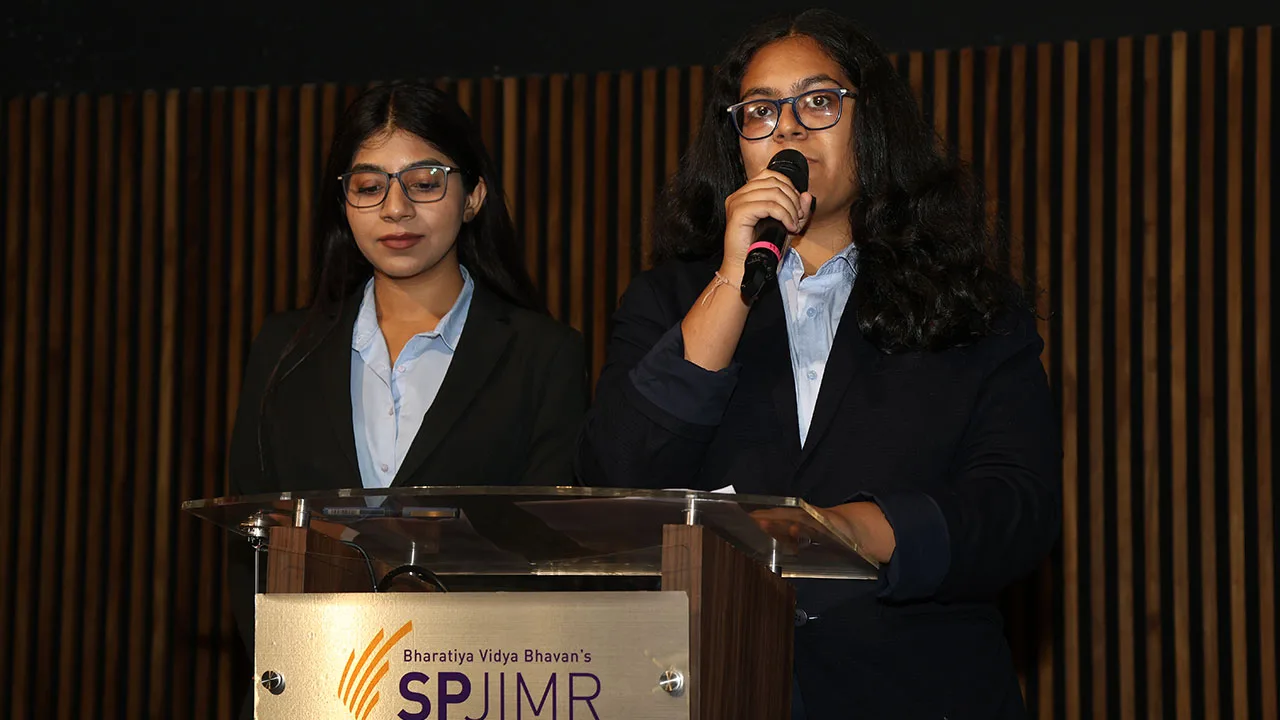
A friend of mine and I were the hosts for the evening and were thus on the other side of the auditorium. From there, everything looked peaceful—but it was at the dinner table where stories unfolded! A missing clicker, a momentary technical glitch, or merely an unintended time lag—the backstage, if nothing else, is completely chaotic.
But it is thriving in this chaos and making ends meet that holds the event together at its foundation and later turns dinner conversations into moments of endless laughter and whispers, at times.
6. Plan Bs have your back—make sure you have them in place!
Person 1: “Is the standee here?”
Person 2: “Tell me what if it isn’t?”
Person 1: “Is the SParc signage from last year intact?”
Person 2: “What will we do if it isn’t?”
This is how many of our conversations sounded. Thankfully, most of our Plan As landed well, but it was our confidence in the Plan Bs that gave us the courage to run behind our Plan As.
7. Have your own metrics to measure success!
You can succeed and fail simultaneously—it all depends on the parameters you define for yourself. To be honest, we couldn’t entice enough of our batchmates to attend and listen to the speakers, and on that front, maybe we failed. On the other hand, if the metric was guest hospitality and delivering a seamless experience to the speakers, we didn’t give any of them a chance to complain—and maybe on that front, we succeeded.
In summary, the glass is always half-filled and half-empty. While we must know how to fill the empty half, we must not forget that we have already filled half of it.
8. The event does not end even when it ends!
We sorted and sent images to all our speakers post the event, along with a thank-you note. Our finances are still getting wrapped up, and one final email—with a YouTube link to their talk—still has to reach them. So yes, the event ends a little after the event actually ends.
Looking back, SParc taught me that organising an event is as much about foresight and planning as it is about reacting calmly when things don’t go exactly as planned. Somewhere between emails, Plan Bs and ensuring that bath towels exist where they should, I learnt a few lessons that I’ll always remember. And if years later, SParc is remembered not for what went wrong but for how smoothly it ran — especially with all the to and fro only visible through the OC eyes, I think that’s a win worth claiming!
About Post Graduate Diploma in Management (PGDM)
SPJIMR’s Post Graduate Diploma in Management (PGDM) is a two-year, full-time residential programme equivalent to an MBA. PGDM is approved by AICTE, accredited by NBA and AMBA, UK and consistently rates among India’s top 10 management programmes. The programme offers a holistic approach to leadership development with its innovative blend of classroom learning and thoughtfully curated immersive experiences.