


In today’s world, change is a constant and not just an occasional event. There can be shifts in the markets, new technology can come up, and customer expectations are very fluid. In this landscape, competitive advantage no longer comes just from products or pricing. It actually comes from how quickly an organisation can learn to adapt and also be ready to unlearn and relearn.
That’s where structured learning interventions come in. Far from being just another ‘training session’, these interventions are customised not just to the learning needs of the participants but also to the business strategy of the organisation. They enable organisations to not only respond to change but to lead it.
Organisations that are thinking ten steps ahead now see and recognise that learning is an imperative part of the overall business strategy. Investing in people’s learning and leadership capabilities is directly tied to growth, innovation, and resilience.
Moving from ad-hoc training to strategic learning
Many companies still depend on one-off training sessions, short workshops or motivational talks that are often fragmented but rarely create lasting impact. While such efforts can boost morale for a short period of time, they are often unable to teach or create deep capability or renewed behaviours in teams.
On the other hand, if an organisation focuses on structured learning programmes, they are able to have a more holistic view of its team growth. They are anchored in business objectives and tailored to the organisation’s on-ground context. The design of such a learning intervention integrates deep reflection, constant feedback, and practical application to real-world challenges.
In other words, structured learning is not about simply ticking a box; it’s about aligning learning with key business goals and strategy. It ensures that the investment in skill development directly contributes to key outcomes through better decision-making, stronger leadership, and improved collaboration among employees.
Global leaders like Unilever and IBM have built their long-term success on this principle. Unilever’s Future Leaders Programme (UFLP) and IBM’s Corporate Learning Platform are examples of how structured, continuous learning can shape culture and value-based performance.
(The UFLP is a full-time, accelerated management trainee programme designed to fast-track fresh graduates and young professionals into leadership roles, typically over a period of three years. The primary objective is to develop well-rounded leaders ready for a manager-level promotion upon completion. Successful applicants receive a competitive salary, an annual performance-based bonus, health and well-being support, and opportunities for flexible working.)
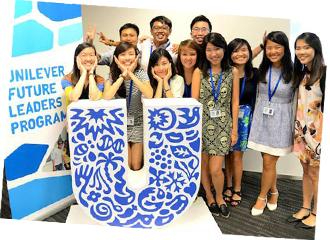
Image credit: Unilever
Why structured learning matters
Structured learning brings order, focus, and sustainability to how people grow within an organisation. Its impact can be seen in several dimensions:
 Consistency and clarity
When learning is planned and linked to strategy, employees at all levels receive consistent messages about what matters most. This clarity reduces confusion and aligns everyone towards shared goals.
 Scalability
Structured interventions can be replicated and scaled across business units and geographies, ensuring the same standards of excellence. For organisations expanding rapidly, this consistency builds a unified culture.
 Measurement and accountability
Because structured programmes have clear objectives and evaluation mechanisms, leaders can track progress and measure return on learning investment. This ensures that the learning is a data-driven strategic lever.
 Culture of growth
Structured learning sends a powerful signal: that the organisation values growth and development. This fosters motivation, psychological safety, and engagement, all essential ingredients for high performance.
A study by Deloitte found that organisations with strong learning cultures are 92% more likely to innovate, 52% more productive, and 17% more profitable than peers without such a focus. The numbers speak for themselves.
The business impact of learning interventions
Structured learning doesn’t just build individual skills; it transforms how an organisation thinks and operates. It strengthens leadership pipelines, fosters innovation, and improves retention.
For instance, Infosys has long been known for its Global Education Centre in Mysuru, one of the world’s largest corporate universities. By institutionalising learning, Infosys has maintained a strong talent base even through massive industry shifts.
Similarly, Google’s ‘Googler-to-Googler (g2g)’ learning network and Microsoft’s ‘Growth Mindset’ framework show how deliberate, structured interventions can shape company culture. These are not ad hoc training efforts; they are embedded systems that enable continuous improvement and collaboration.
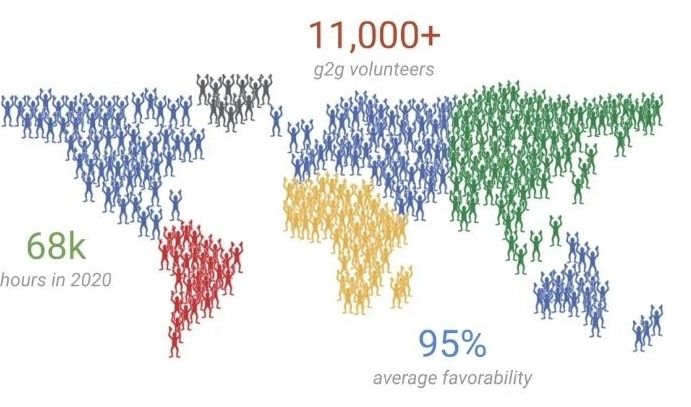
Image credit: Sarah Devereaux
Such examples demonstrate that learning interventions are not peripheral activities — they are central to strategic execution.
SPJIMR’s approach to Management Development Programmes (MDPs)
At S.P. Jain Institute of Management & Research (SPJIMR), structured learning interventions are at the core of how we help organisations and leaders transform. Our Management Development Programmes (MDPs) are built on a simple yet powerful philosophy: combine academic insight with real-world relevance.
Each programme is customised not only to the unique learning needs of the participants but also to the competencies that are essential for the organisation’s strategy. SPJIMR professors collaborate with the organisation’s leaders to ensure that the content and pedagogy are customised to the aforementioned context. SPJIMR also aids the organisation in creating the relevant matrices that facilitate the impact assessment of the MDP.
SPJIMR’s MDPs span key areas such as:

Leadership and people management

Strategic thinking and innovation

Marketing and brand management

Finance and risk management

Digital transformation and analytics

Operations and supply chain excellence

AI – For leaders and AI at work

Sustainability and ESG
There are two broad formats:
- Open programmes, where individuals from various organisations learn together and exchange perspectives.
- Custom programmes, co-created with client organisations to target their unique challenges and goals.
Participants not only learn from SPJIMR’s distinguished faculty but also through peer discussions, simulations, and live case studies. This experiential approach ensures the learning journey is immersive, reflective, and outcome-orientated.
SPJIMR’s MDPs have been trusted by leading Indian and global companies across industries, from BFSI and FMCG to manufacturing and technology.
For instance, leadership development interventions designed for senior executives of manufacturing firms have helped create stronger succession pipelines and improve strategic alignment. In service-orientated sectors, SPJIMR’s custom MDPs have supported cultural transformation and team collaboration during large-scale digital transitions.
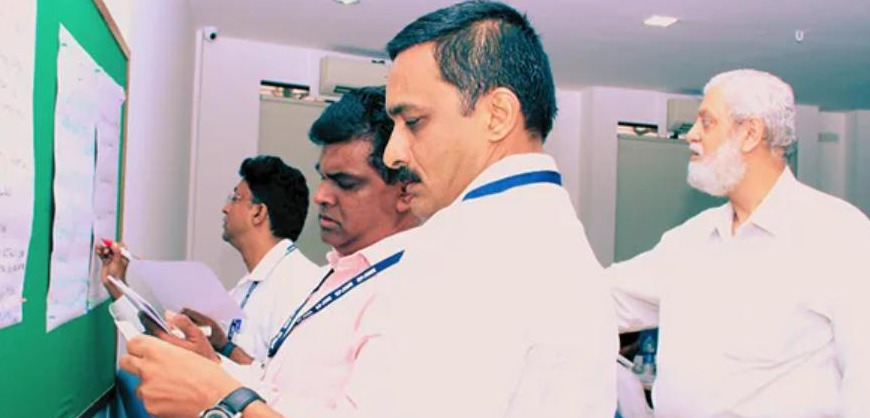
Image credit: SPJIMR
Participants often highlight how MDPs equip them to think beyond functional silos, approach problems with a systems perspective, and communicate with greater impact. Many alumni credit their MDP experience for giving them the clarity and confidence to take on larger roles.
Mr. Gandhi from Saint Gobain believes that at each phase of leadership, the style of leadership should change, and the MDP ‘Finance Leadership Development’ by SPJIMR will act as a catalyst in doing so.
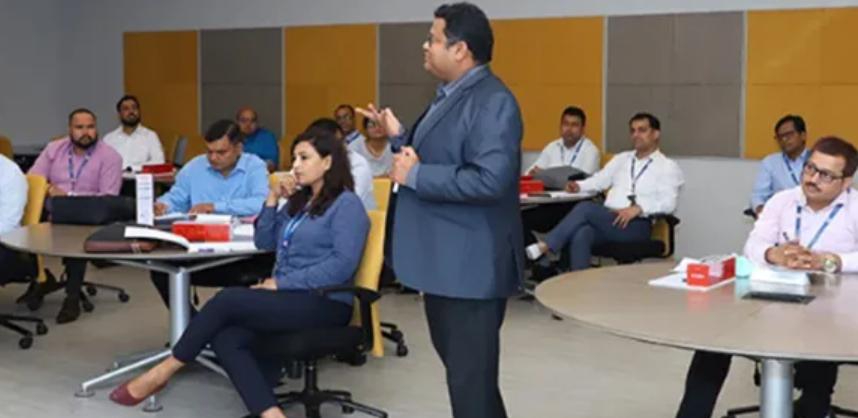
Image credit: SPJIMR
Learning in the age of AI and disruption
As artificial intelligence, automation, and hybrid work redefine the modern enterprise, the half-life of skills continues to shrink. A professional’s expertise today could be outdated in just a few years.
In such times, continuous, structured learning becomes a competitive necessity. Organisations that prioritise upskilling and reskilling can stay resilient even when technology or market dynamics shift dramatically.
SPJIMR’s MDPs address this reality by focusing on learning agility, which is the ability to learn, adapt, and apply knowledge quickly. Through real-world simulations, reflective exercises, and multidisciplinary exposure, participants build the mindset to thrive amid uncertainty.
SPJIMR’s Management Development Programmes are built precisely for this purpose, to help organisations unlock their collective potential and lead with purpose.