

SParc 2025-26: Reimagining not only our future but also ourselves
Surajit Chandra, PGDM 2025-27

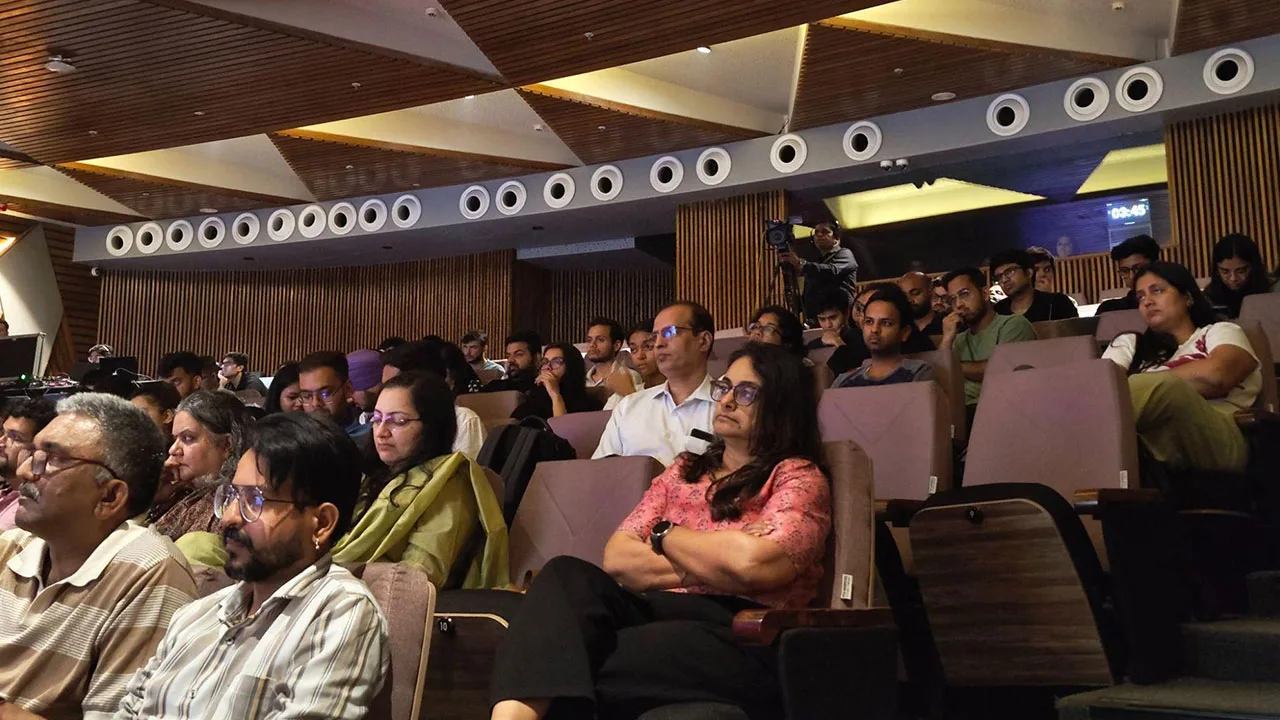


As the event was about to start and the lights of the MLS Auditorium went dim, it seemed to pull away the air along with it. The hum of the AC suddenly felt colder than usual against our merchandised T-shirts, and a heavy silence fell among the crowd. In a moment, months of frantic e-mails, late-night ‘war-room’ discussions, social media campaigns, and vendor negotiations materialised into one truth. SParc 2025-26 is no longer a project on a spreadsheet. It was alive.
When we first began discussing the topic of ‘Reimagining for a Sustainable Future,’ it felt like a lofty and far-distant academic goal. Our core mission was to bridge the gap between classroom discussion and theory to industry reality by inviting thought leaders like Pinaki Laskar, Bharti Singh Chauhan and Varun Nagraj and many more. But as we moved forward, from initial speaker outreach into the intricacies of logistics, I felt something had changed. The theme stopped being the title of our event’s posters and became something personal for all of us. We understood we were not just organising a talk series for our audience; we were creating a dialogue about the world and how to preserve and develop what we inherit from previous generations.
The success of SParc was not accidental; it was curated under the ‘Core-to-Expansion’ strategy that tested our capabilities as both individual contributors and leaders. By deciding our theme and outreach of speakers early on, we established our ‘North Star’ that provided us direction in the middle of chaos. We empowered individual members through providing them with responsibilities of F&B, logistics, social media, and speaker relations that turned the chaos into a well-functioning machine. Still, even the best of plans sometimes hit a wall. For us, there was a slump in the registrations of attendees, and the pressure was immense. At that time, guidance from Priya mam proved invaluable. Her guidance proved to be of immense help; she suggested targeted email campaigns – a masterclass for agile marketing that allowed us to drive our registrations up.
The true heat of the event was felt on the penultimate day of the event. If the event was the performance, then the pre-final day was a gruesome rehearsal. From the arrival of the standees to making sure each merchandise is flawless. Those twelve hours of pre-event day taught us more about vendor management than any MBA textbook ever could. During our informal evening meetings, ideas started to flow in a certain ‘resonance’. We were not just finishing up the tasks distributed to us. We were one mind thinking together to come up with solutions for a shared vision, which proved that the day before MBA is when real management happens, and as MBA students call it, ‘Just in Time’.
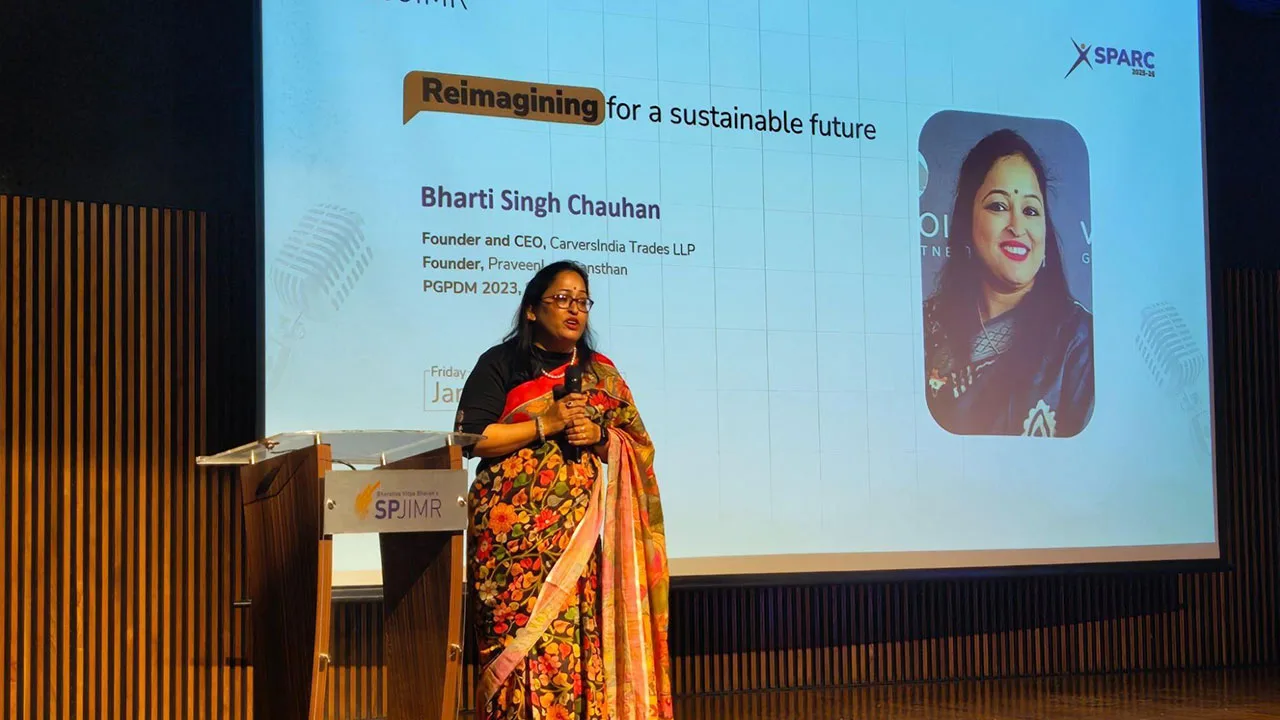
Once the event started, the stage became a kaleidoscope of ‘Wise Innovation’ featuring 9 distinguished speakers. Two moments, in particular, redefined our perspective towards sustainability. Our Dean, Prof. Varun Nagaraj reminded us that sustainability is fundamentally a human goal. Through his ‘5 elements of well-being’, he motivated us to first protect those that already exist before we rush to ‘reimagine’. His persuasion was a call to lead with competence and conscience in order for greater benefit, ensuring it serves the Three P’s – People, Profit, Planet. Shortly after, Bharti Singh Chauhan, also known as ‘Pad Woman of India’, brought the auditorium to a standstill. Her social entrepreneurship program, Titli Skill Development, showed us that social entrepreneurship is about upcycling waste while simultaneously upscaling human dignity. Her mantra that truly resonated with me was ‘No planet can truly be sustainable if people are left behind’.
People often ask what we truly gain from the ADMAP course. Before Sparc, many of us viewed management as a simple set of choices to be made, like a checkbox: delegate, monitor, report. But standing in the empty MLS auditorium after the final set of guests had departed, and the team was clicking core committee pictures, I realised that I had left the checkbox mentality behind. I learned that a manager’s true job is not just to oversee the process and ensure all the checkboxes are checked. But also to maintain the team’s spirit under pressure. We walked in as students with a task to be done. We walked out as students who understood that resilience is the most sustainable resource that we can have. As the lights went on, we were not only celebrating the success of the event but also the people we had become in the process.
About Post Graduate Diploma in Management (PGDM)
SPJIMR’s Post Graduate Diploma in Management (PGDM) is a two-year, full-time residential programme equivalent to an MBA. PGDM is approved by AICTE, accredited by NBA and AMBA, UK and consistently rates among India’s top 10 management programmes. The programme offers a holistic approach to leadership development with its innovative blend of classroom learning and thoughtfully curated immersive experiences.