

When conversations force you to relearn what you call knowledge
Harsh Tiwari, PGDM 2025-27



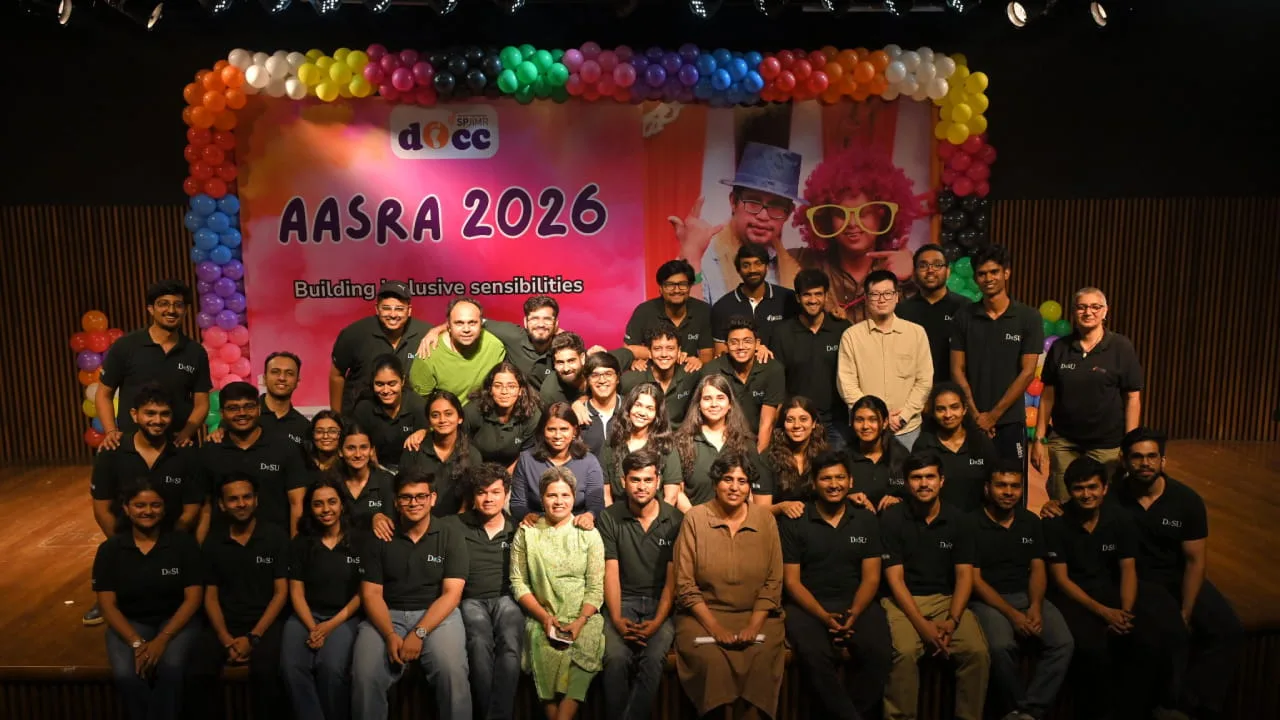
The Social Impact Awards 2025, organised by SPJIMR’s Development of Corporate Citizenship initiative and the students of the Development of Sustainability ADMAP committee, served as a reminder of what thoughtful engagement with social change can look like. The awards aim to recognise organisations that create sustained, on-ground impact rather than short-term visibility, and this year’s response reflected both scale and seriousness.
SIA 2025 saw 550 registrations from across the country. After a rigorous evaluation process, 114 organisations were shortlisted as semi-finalists, leading to 49 finalists across six categories. The process was supported by 50+ panellists and 190+ organisations, making it one of the most comprehensive editions of the awards to date. The winning organisations represented diverse but deeply connected areas of impact:
- Agriculture and Livelihoods: Friends of Women’s World Banking
- Disability: The Maalish Co.
- Education and Skill Development: The Akshaya Patra Foundation
- Sustainability: RNisarg Foundation
- WASH (Health, Sanitation and Water): St. Jude India ChildCare Centres
- Women Empowerment: PURE India Trust
While the awards highlighted inspiring work across sectors, the moment that stayed with me most was Dr. Harish Hande’s keynote address. They say conversations have the power to change the world, and if that is true, listening to him speak felt like one of those moments where ideas do more than inform. They unsettle you. They stay.
He spoke about our deep-rooted bias between intellectual poverty and financial poverty. We often assume that the presence of the latter automatically denies the former. In doing so, we dismiss generations of lived knowledge. He shared a powerful example of how a farmer from Assam, someone with deep agricultural expertise, may be forced to become an Uber driver to survive, while society continues to elevate formal degrees as the only valid marker of expertise. In the process, we actively deskill people who already know far more than we are willing to acknowledge.
Another thought that lingered was his reflection on aspiration and hierarchy. We want promotions every year. We expect our designations to change constantly as proof of progress. Yet we continue to refer to a driver by the same title even after decades of experience. Growth, it seems, is something we reserve for ourselves. Others remain frozen in labels that deny dignity, progression, and recognition.
That contradiction forces an uncomfortable question. Are we truly creating value for society through the education and privilege we receive, or are we simply reinforcing a system where the ‘haves’ continue to define worth while remaining blind to their own limitations?
SIA 2025 did not attempt to answer these questions. Instead, it created space to reflect, to listen, and to challenge the assumptions we often take for granted. Sometimes, that is where real impact begins.
Registrations for Social Impact Awards 2026 have now begun.
If you or your organisation are creating meaningful social impact, you can register using this form
To know more about the awards and the process, click here
About Post Graduate Diploma in Management (PGDM)
SPJIMR’s Post Graduate Diploma in Management (PGDM) is a two-year, full-time residential programme equivalent to an MBA. PGDM is approved by AICTE, accredited by NBA and AMBA, UK and consistently rates among India’s top 10 management programmes. The programme offers a holistic approach to leadership development with its innovative blend of classroom learning and thoughtfully curated immersive experiences.