


Viraasat 2026 explores the future of family businesses
March 14, 2026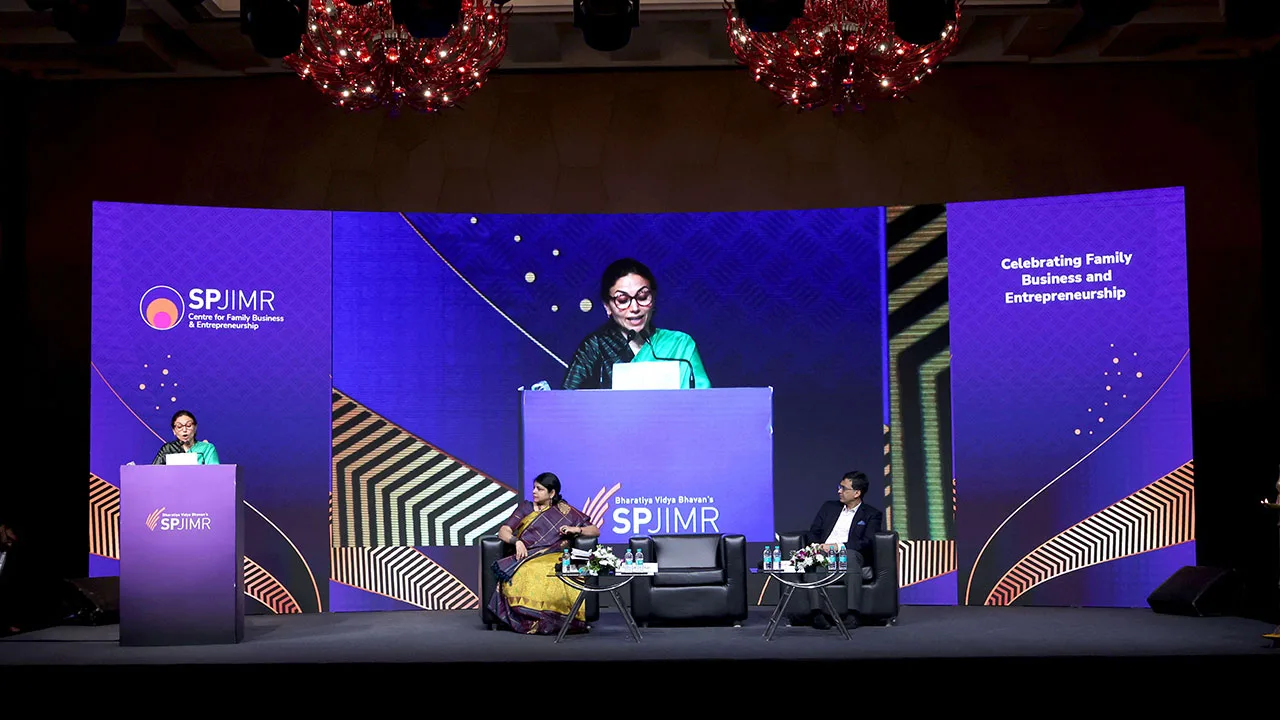
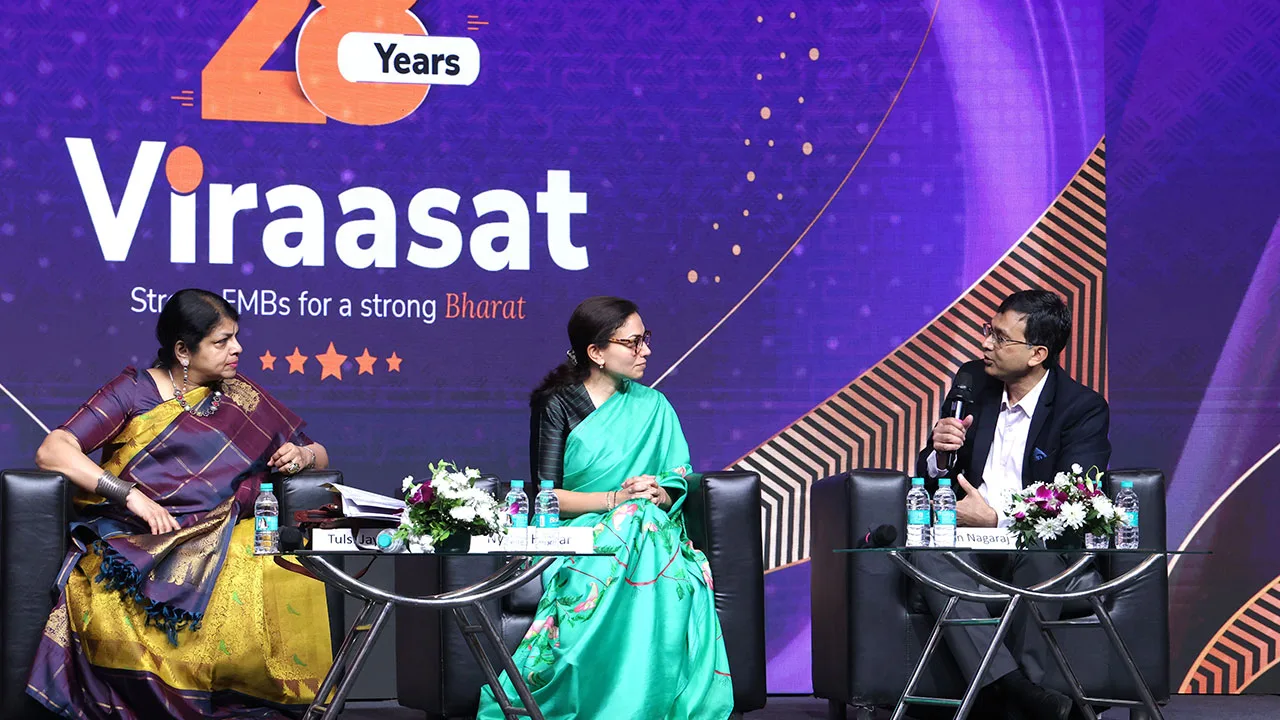
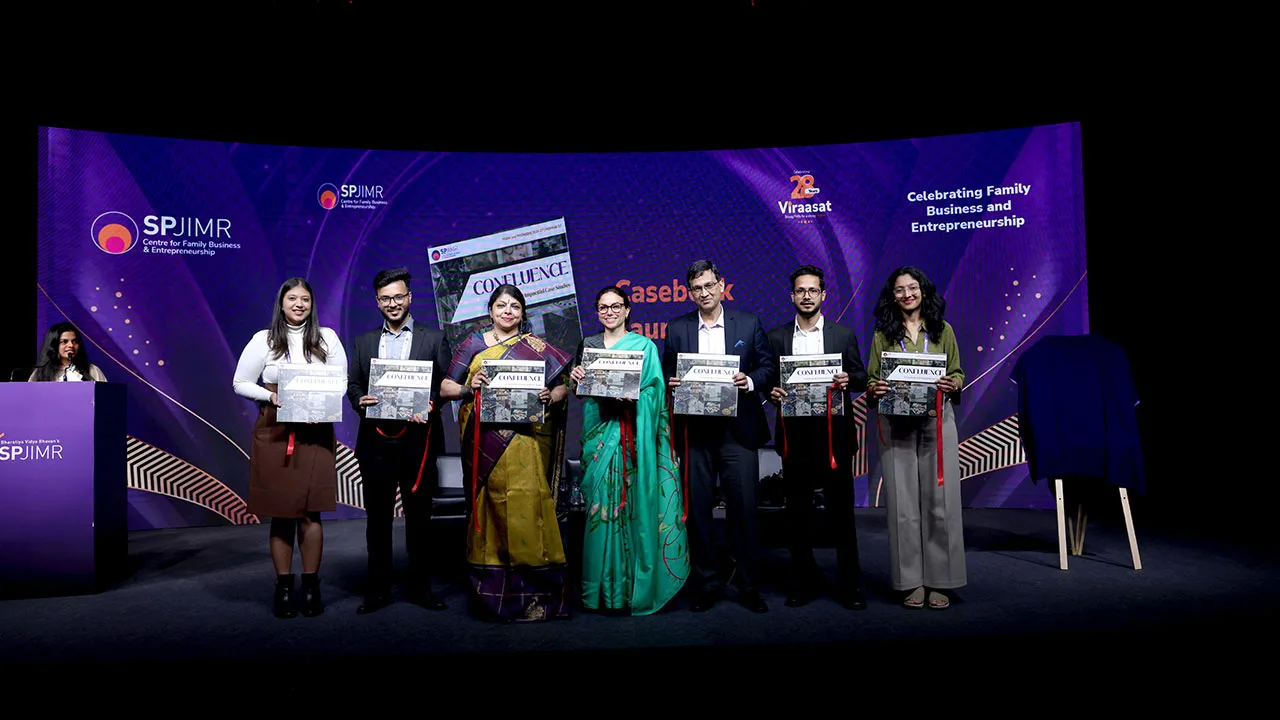
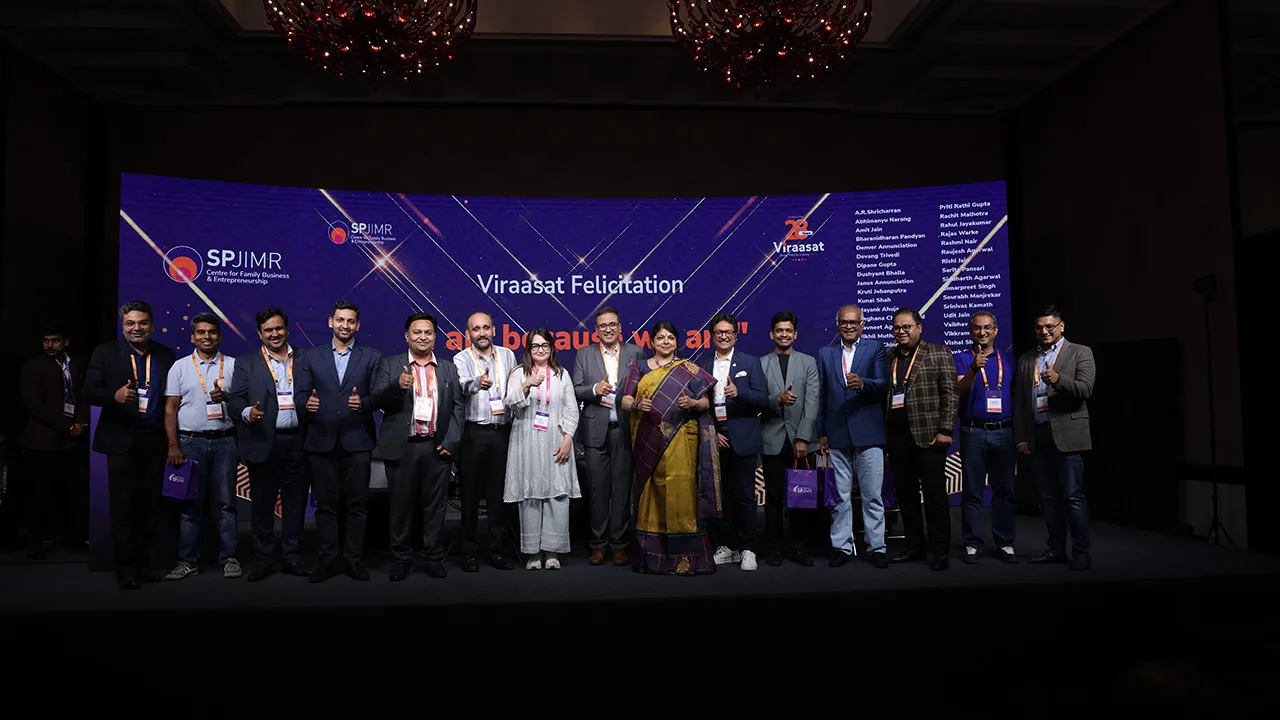
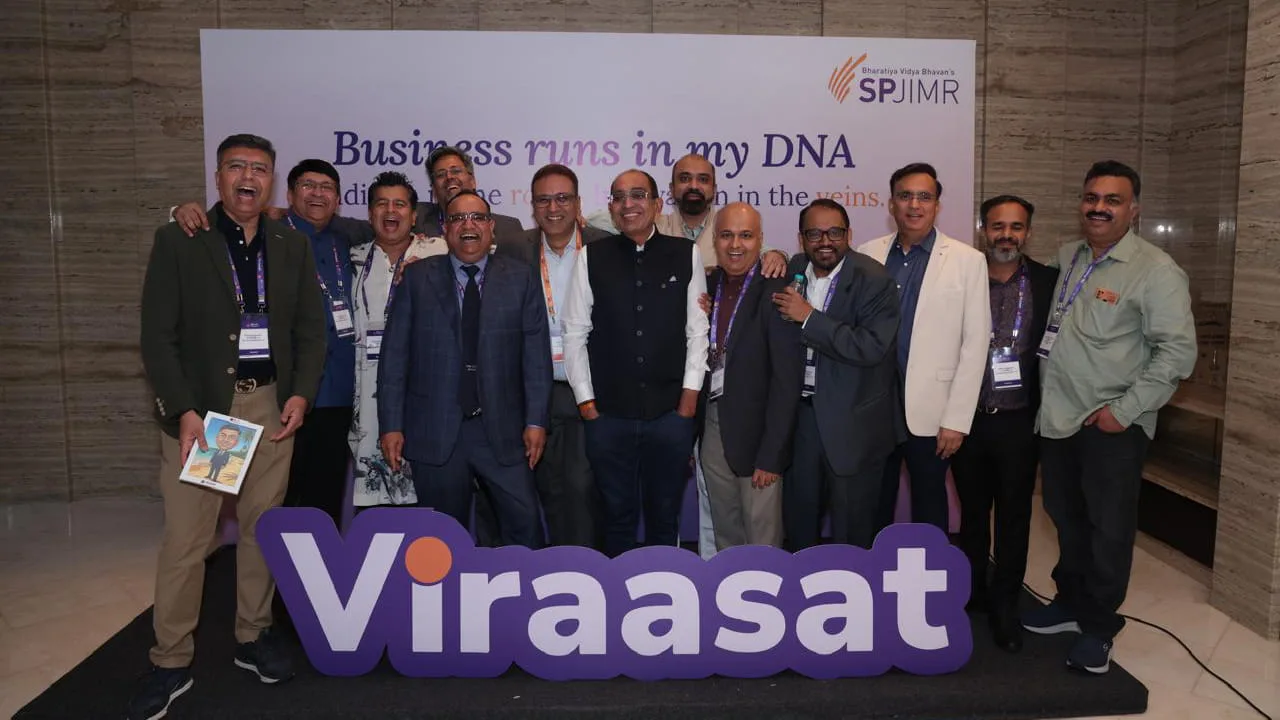
What allows a family business to endure across generations? And what must today’s leaders build so that their enterprises remain worthy of being passed on? These questions framed the conversations at Viraasat 2026, the flagship gathering of the Centre for Family Business & Entrepreneurship (CFBE) at Bharatiya Vidya Bhavan’s S.P. Jain Institute of Management & Research (SPJIMR). Held at the Taj Santacruz, Mumbai, on Saturday, March 14, the event brought together family business leaders, alumni, entrepreneurs and experts under the theme ‘Strong FMBs for a Strong Bharat’.
The conference explored the evolving challenges and opportunities shaping family-managed businesses, from artificial intelligence (AI) and geopolitics to women’s entrepreneurship and IPO journeys, while reaffirming the role of family enterprises as a cornerstone of India’s economic and social fabric.
Welcoming the gathering, Tulsi Jayakumar, Professor of Economics and Policy and Executive Director of the CFBE at SPJIMR, reflected on the institute’s pioneering role in management education for family businesses. “When SPJIMR launched the FMB programme in 1997, the vision was very clear: to empower family businesses with the management skills and strategic acumen required to compete globally, while ensuring continuity and stability within their enterprises. Today, if you place your finger anywhere on the map of India, chances are you will find one of our FMB alumni quietly building enterprises, creating livelihoods and serving communities. That is the Viraasat we celebrate today.”
Prof. Jayakumar noted that while family businesses contribute significantly to GDP, manufacturing and employment, their most valuable asset is often the currency of trust, the deep relational capital built with customers, suppliers, employees and communities over generations. She also urged participants to reflect on how family businesses can remain competitive amid disruption, strengthen governance and transparency, and prepare the next generation for responsible leadership.
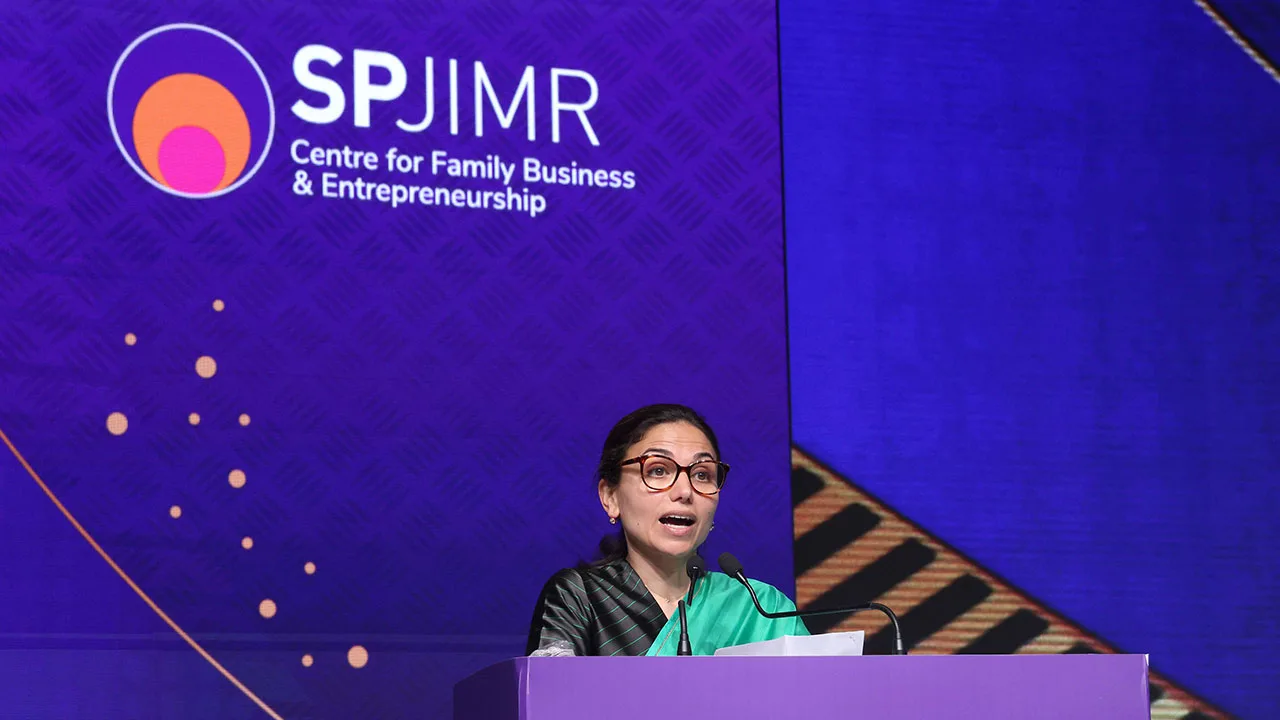
Delivering the inaugural address, Nyrika Holkar, Executive Director, Godrej Enterprises Group, spoke about legacy, stewardship and the evolving role of the next generation in family enterprises. “I would like to begin with a simple but profound question that every family business must ask: what will we build that will be worthy of being passed on? Legacy is not something we possess; it is something we hold in trust, shaped by those who came before us and carried forward by those who will come after.”
Reflecting on her own experience as a fourth-generation member of the Godrej family, Holkar highlighted the challenge of sustaining family enterprises across generations. “Only about 30% of family businesses survive into the second generation, around 12% into the third, and barely 3% into the fourth. When I hear those numbers, I don’t hear statistics, I hear responsibility. My responsibility to ensure that what I inherited—the institution, the values and the trust—is left in a better shape than when I found it.”
Holkar also spoke candidly about the complexities that accompany family enterprises and the importance of governance, professionalism and open dialogue. “Family businesses endure not because they avoid difficult conversations, but because they eventually have them. Leadership must be earned, professionalism must accompany legacy, and ego must never grow larger than the institution.”
Welcoming participants to the conference, Prof. Varun Nagaraj, Dean, SPJIMR, highlighted the global trends that family businesses must navigate in the coming decades. “Family businesses today are operating in a world shaped by powerful global trends, from artificial intelligence to geopolitical uncertainty and climate change. The key question is not only what innovations you pursue, but also how you pursue them—with wisdom, responsibility and inclusive decision-making.”
Viraasat 2026 also featured a special address by Savjibhai Dholakia, Founder and Chairman of HK Group, popularly known as the ‘Diamond King of India’. Reflecting on leadership and values in family enterprises, he emphasised the importance of generosity and strong family foundations. “At the heart of every successful family business lies a culture of giving and a deep commitment to family values. When businesses grow with purpose and responsibility, they create prosperity not only for the family but also for the communities around them.”
Conversations shaping the future of family businesses
The conference featured four plenary sessions addressing key themes shaping the future of family enterprises.
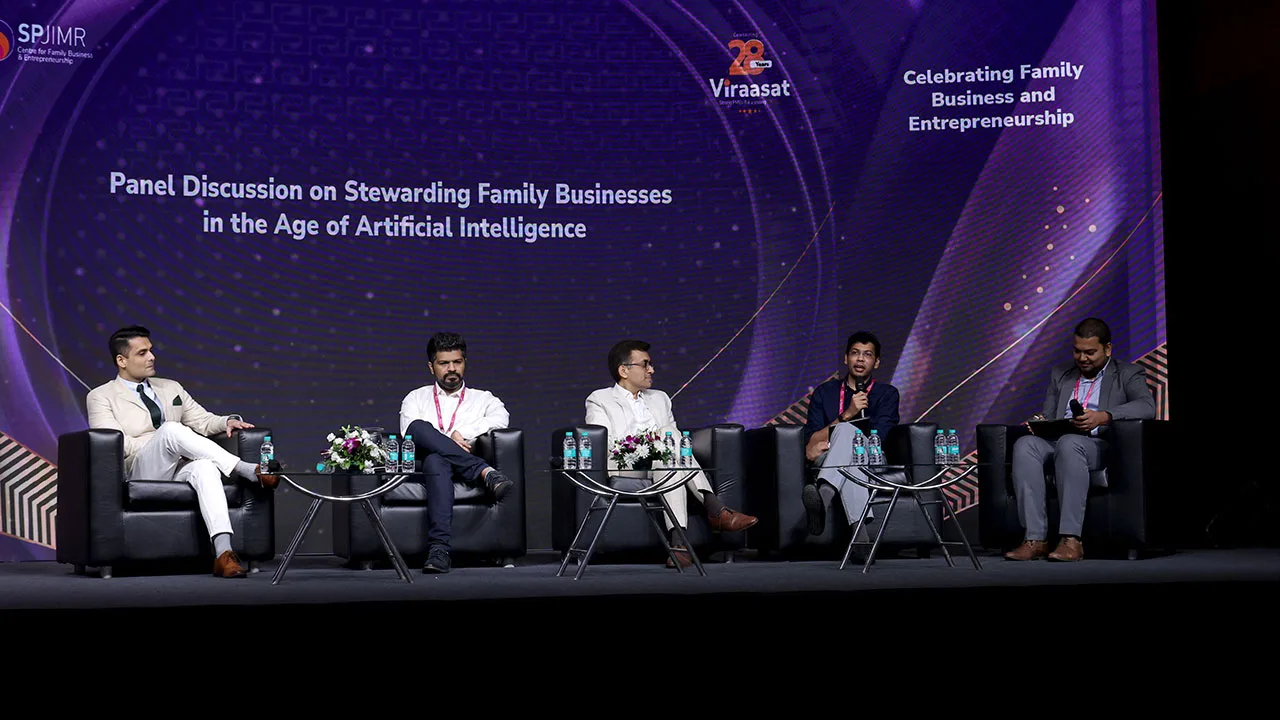
Plenary session 1: Stewarding family businesses in the age of artificial intelligence
The first session explored how family businesses are navigating the opportunities and disruptions created by artificial intelligence. Speakers included Dhaval Thanki, Executive Vice President, LogiNext; Jai Bahal, Founder, NAVIC and Co-founder, Studio ALAI (FMB 15); Suraj Dodeja, CEO, Vashi Integrated Solutions Ltd (FMB 09); and Abhinav Aggarwal, Founder, Fluid AI. The discussion was chaired by Prof. Abhishek Kumar Jha, Assistant Professor, Information Management and Analytics at SPJIMR.
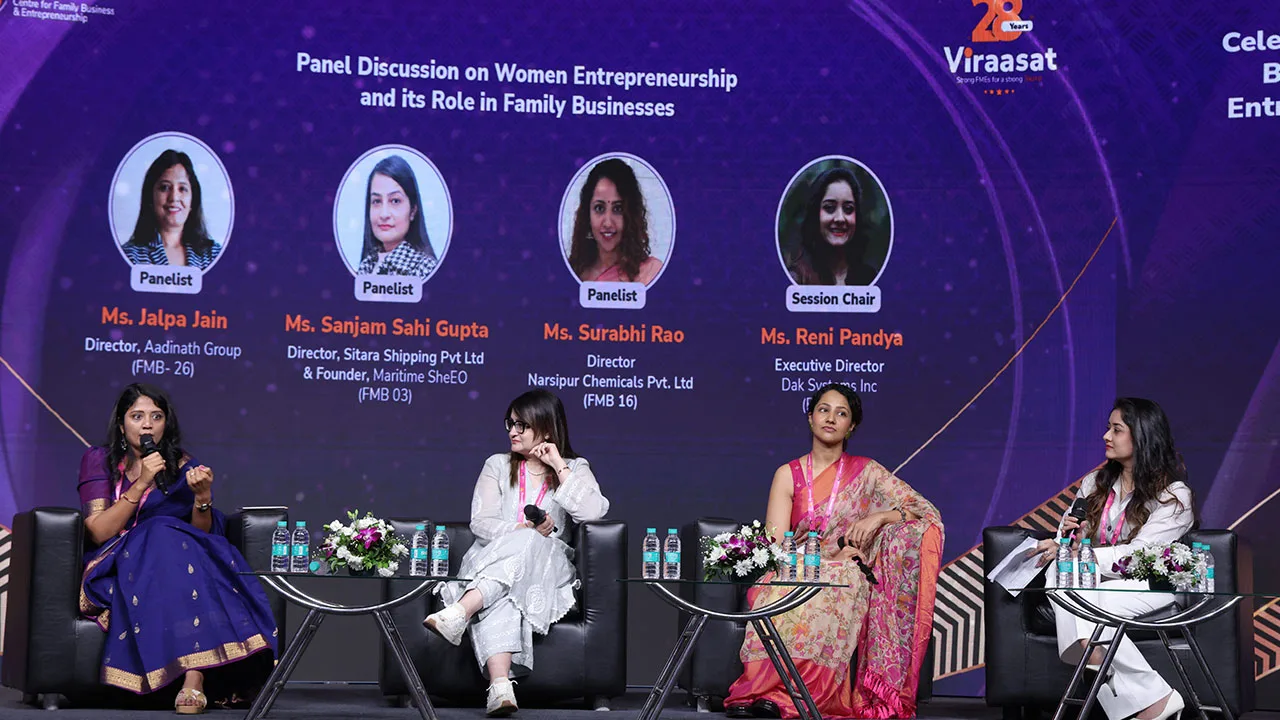
Plenary session 2: Women entrepreneurship and its role in family businesses
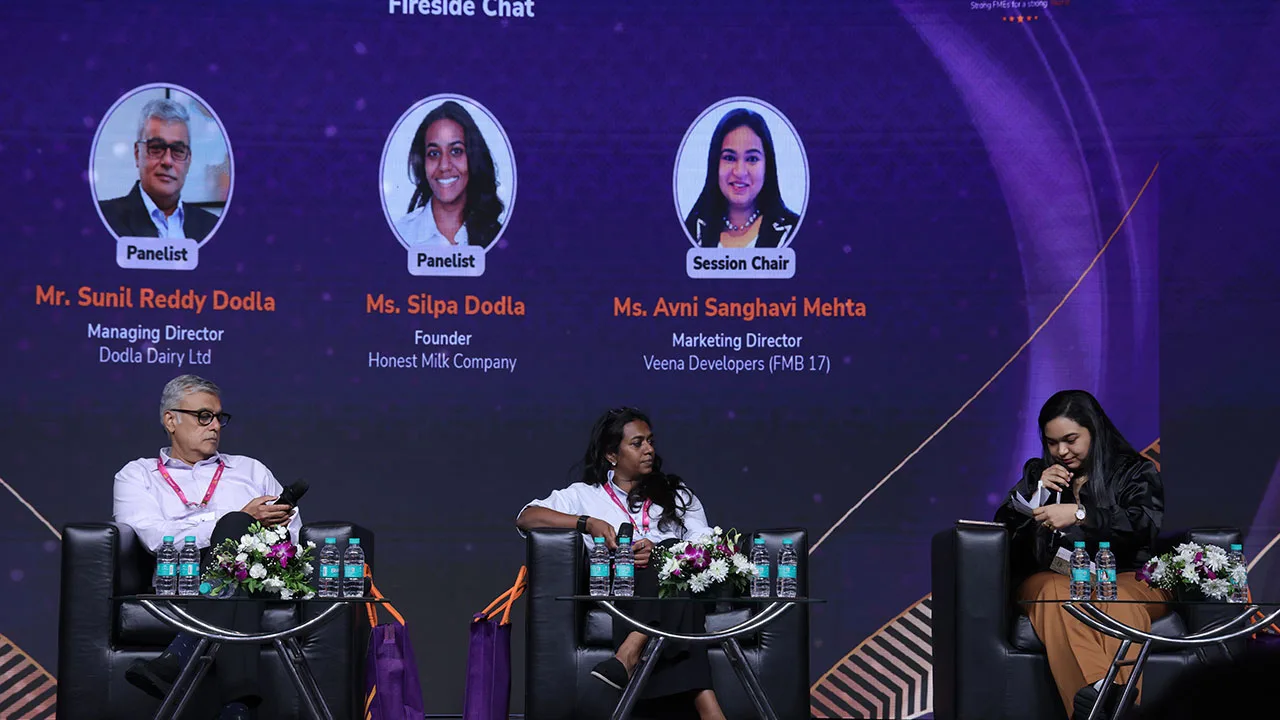
The second session focused on the growing role of women entrepreneurs within family businesses. Panellists included Jalpa Jain, Director, Aadinath Group (FMB 26); Sanjam Sahi Gupta, Director, Sitara Shipping Pvt Ltd and Founder, Maritime SheEO (FMB 03); and Surabhi Rao, Director, Narsipur Chemicals Pvt Ltd (FMB 16). The session was chaired by Reni Pandya, Executive Director, Dak Systems Inc (FMB 13). It also included a fireside chat with Sunil Reddy Dodla, Founder and Managing Director, Dodla Dairy Ltd, and Silpa Dodla, Founder, Honest Milk Company, which was chaired by Avni Sanghavi Mehta, Marketing Director, Veena Developers (FMB 17).
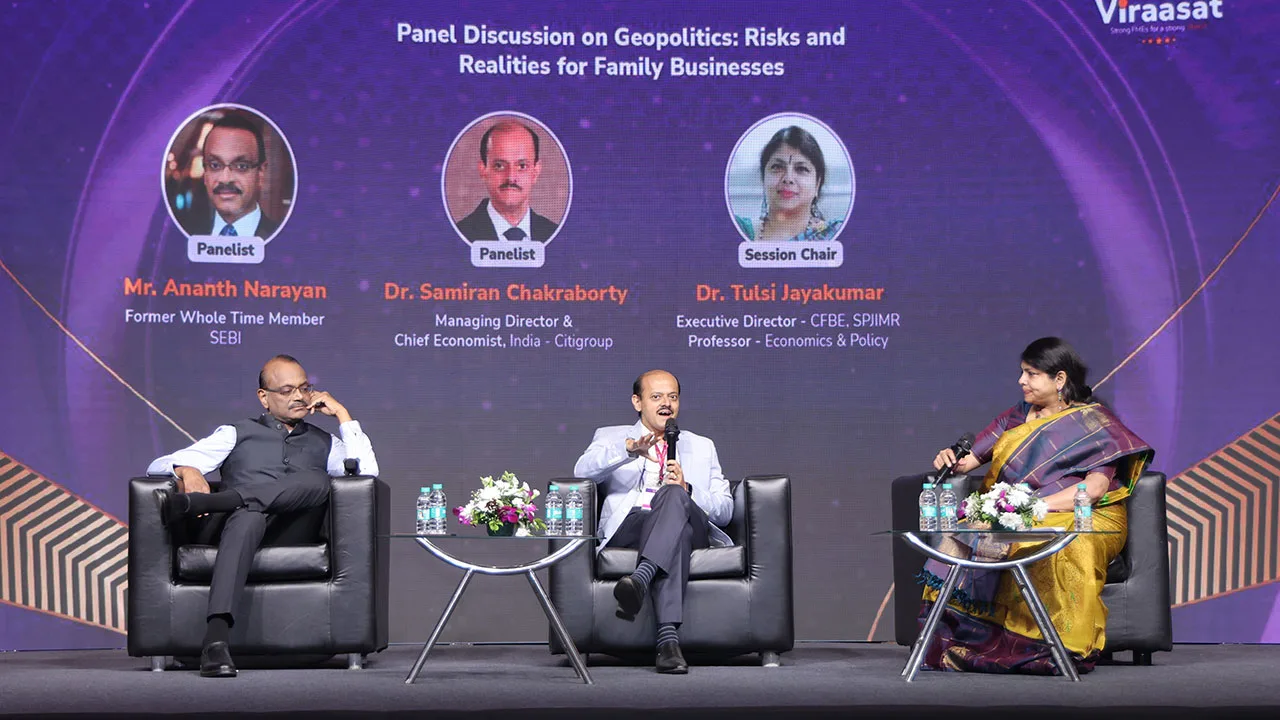
Plenary session 3: Geopolitics – risks and realities for family businesses
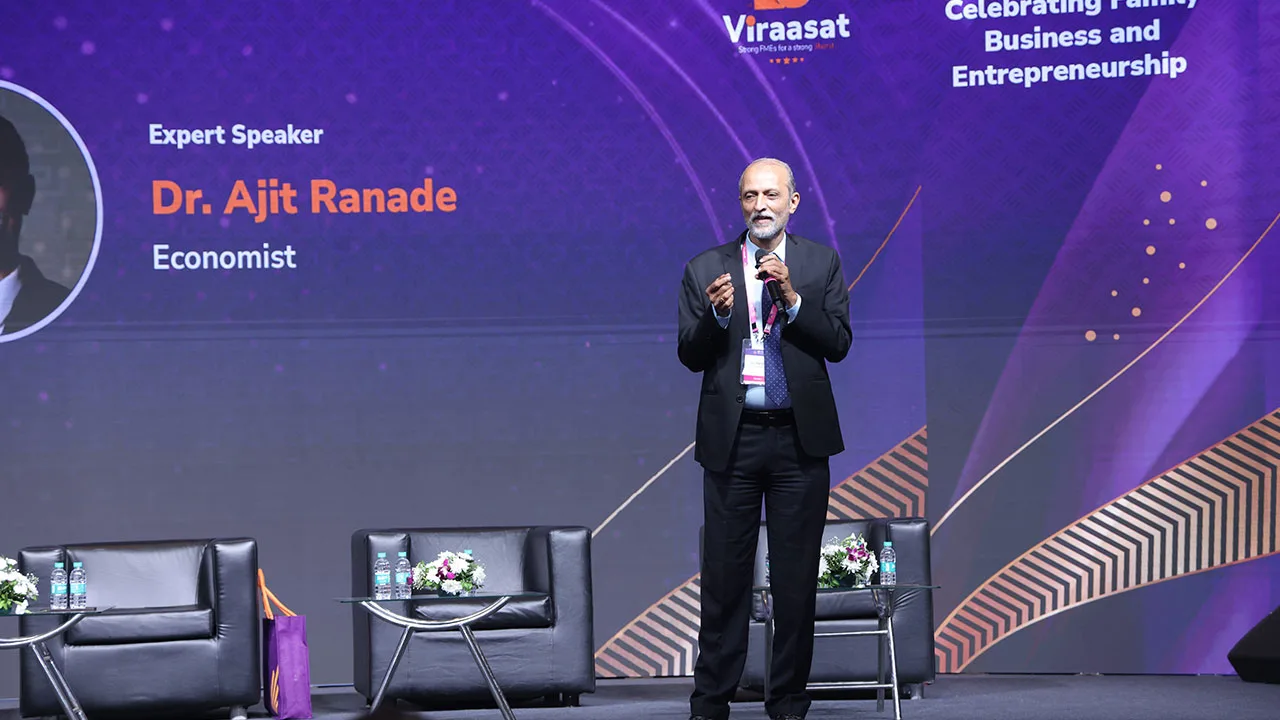
The third session examined the implications of global geopolitical shifts for family businesses. Speakers included Ananth Narayan, Former Whole-Time Member, SEBI, and Dr Samiran Chakraborty, Managing Director and Chief Economist, India, Citigroup. The discussion was chaired by Prof. Jayakumar, with economist Dr Ajit Ranade as expert speaker.
Plenary session 4: Guiding family businesses on the IPO journey
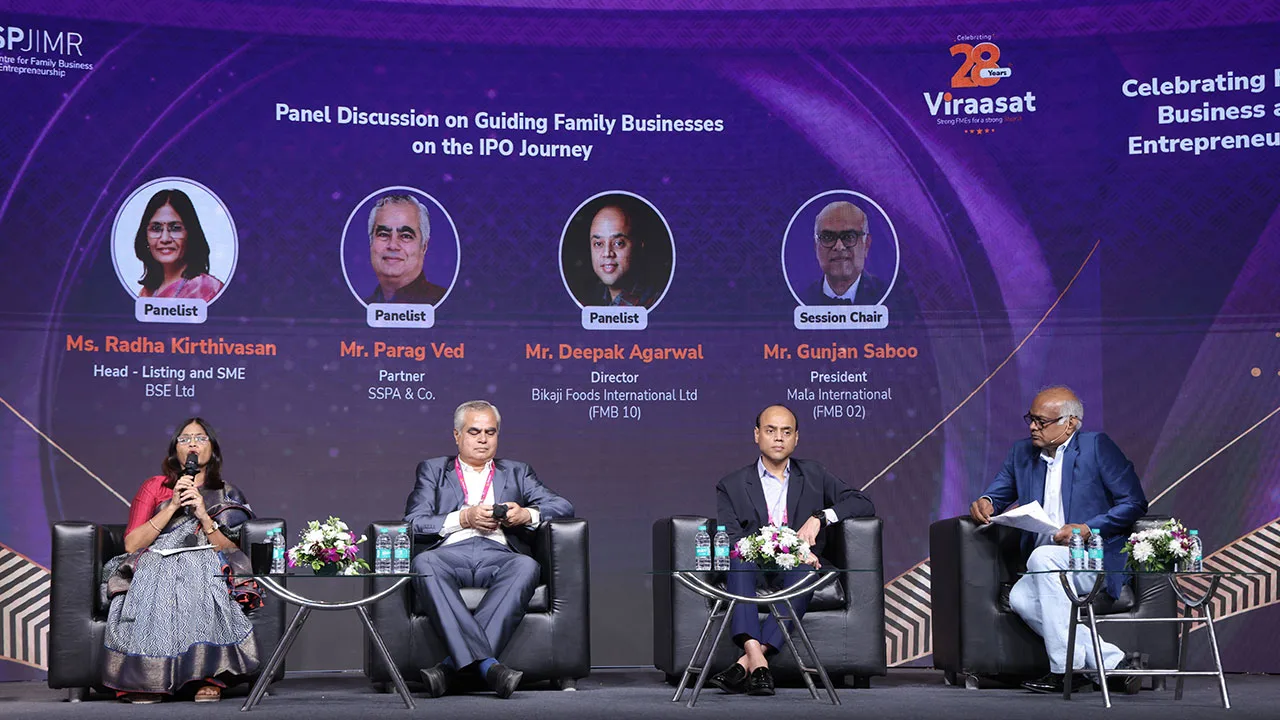
The fourth session discussed the opportunities and challenges involved in guiding family businesses through IPO journeys. Panellists included Radha Kirthivasan, Head – Listing and SME, BSE Ltd; Deepak Agarwal, Director, Bikaji Foods International Ltd (FMB 10); and Parag Ved, Partner, SSPA & Co. The session was chaired by Gunjan Saboo, President, Mala International (FMB 02).
The event also featured a Founder Talk by Shashank Mehta, Co-founder and CEO of The Whole Truth Foods, who shared insights from his entrepreneurial journey and the evolving landscape of consumer brands in India.
Celebrating legacy and community
Viraasat is the flagship gathering of SPJIMR’s Centre for Family Business & Entrepreneurship (CFBE), bringing together generations of family business leaders, alumni and experts to exchange insights, build networks and celebrate the shared legacy of the FMB community.
From conversations on artificial intelligence and geopolitics to discussions on women’s leadership and public market journeys, Viraasat 2026 reinforced a central idea: that family businesses are not merely economic institutions but enduring communities built on trust, values and long-term stewardship.
As Holkar concluded in her address: “Legacy is not something we simply inherit. It is something we hold in trust. Our responsibility is to ensure that what we pass on is stronger than what we received.”
As India looks toward becoming a $10 trillion economy, the conversations at Viraasat 2026 underscored the pivotal role family-managed businesses will play in shaping that journey. By combining entrepreneurial ambition with stewardship, governance and a deep commitment to community, family enterprises can continue to drive innovation, create livelihoods and build institutions that endure across generations.